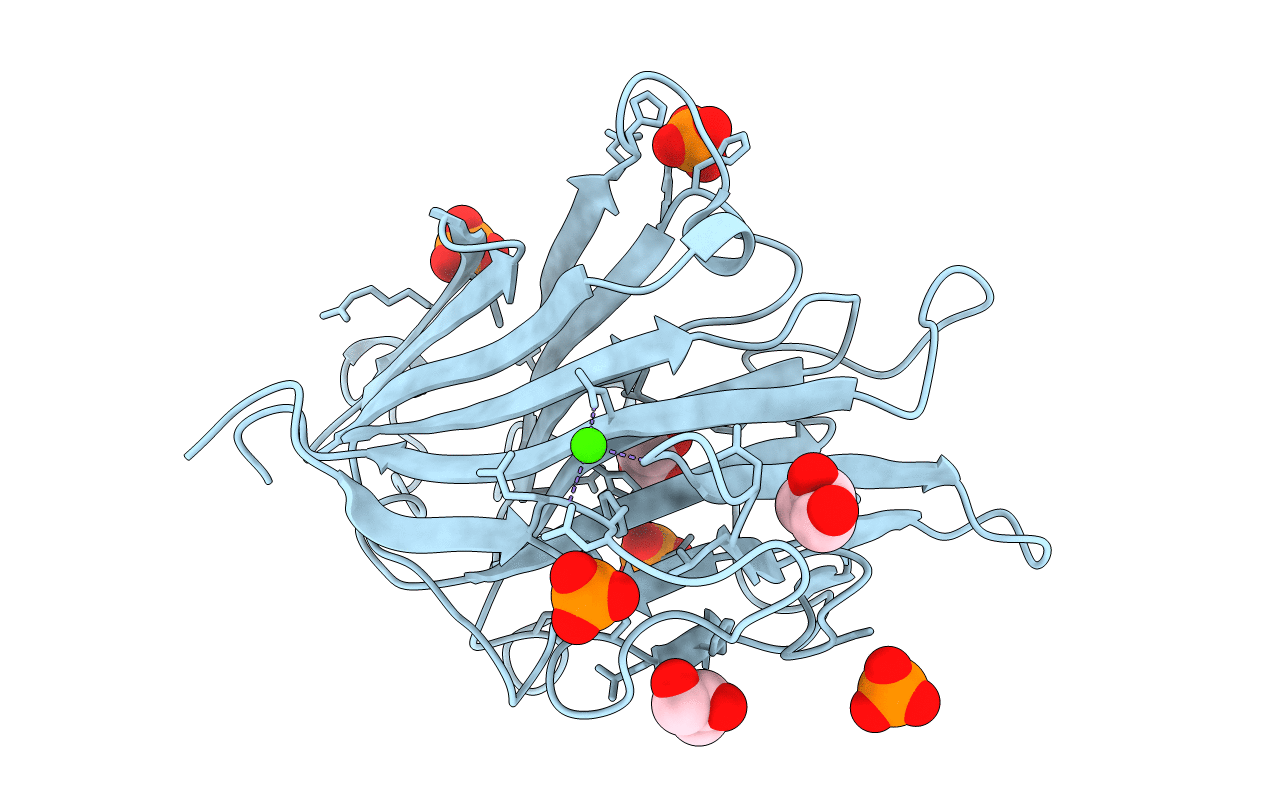
3ATG image
Deposition Date 2011-01-04
Release Date 2012-01-18
Last Version Date 2024-03-13
Entry Detail
PDB ID:
3ATG
Keywords:
Title:
endo-1,3-beta-glucanase from Cellulosimicrobium cellulans
Biological Source:
Source Organism(s):
Method Details:
Experimental Method:
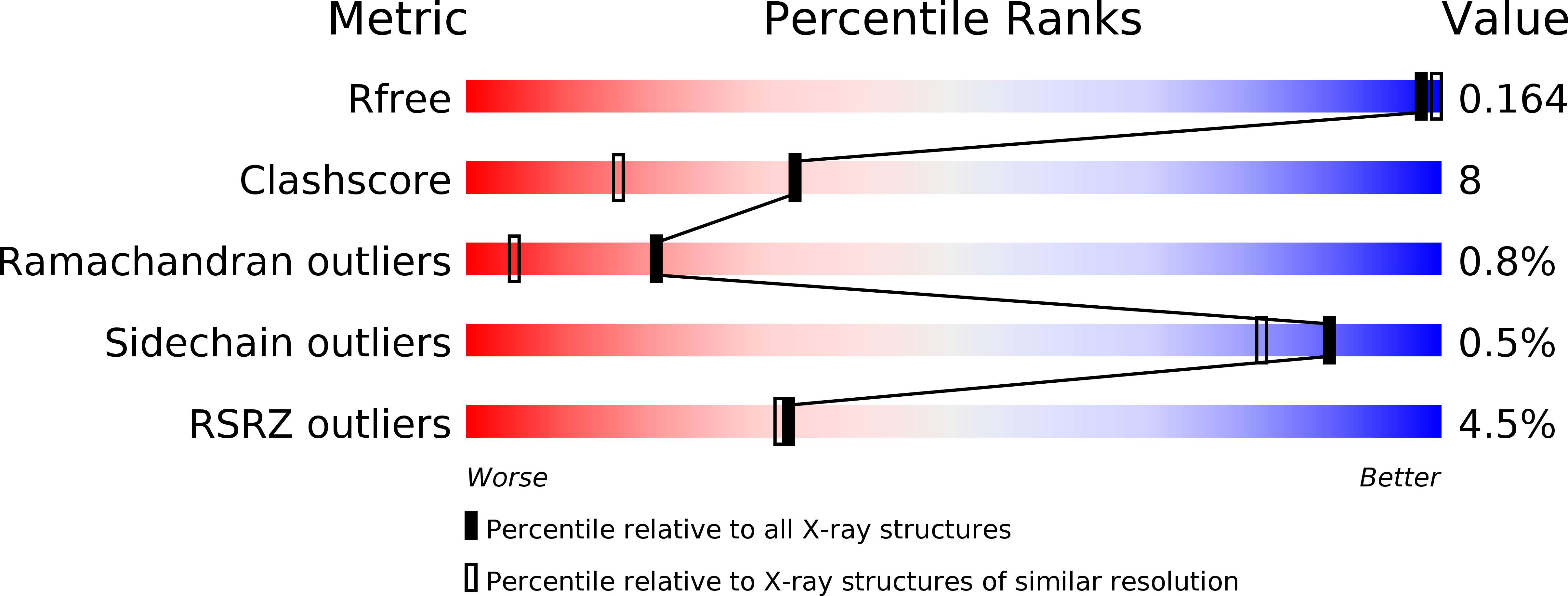
Resolution:
1.66 Å
R-Value Free:
0.16
R-Value Work:
0.14
R-Value Observed:
0.14
Space Group:
P 43
Macromolecular Entities
Structures with similar UniProt ID
Protein Blast
Polymer Type:polypeptide(L)
Molecule:GLUCANASE
Chain IDs:A
Chain Length:256
Number of Molecules:1
Biological Source:Cellulosimicrobium cellulans
Primary Citation
Structural and thermodynamic characterization of endo-1,3-beta-glucanase: Insights into the substrate recognition mechanism.
Biochim. Biophys. Acta 1866 415 425 (2018)
PMID: 29246508 DOI: 10.1016/j.bbapap.2017.12.004

Abstact

Endo-1,3-β-glucanase from Cellulosimicrobium cellulans is composed of a catalytic domain and a carbohydrate-binding module. We have determined the X-ray crystal structure of the catalytic domain at a high resolution of 1.66Å. The overall fold is a sandwich-like β-jelly roll architecture like the enzymes in the glycoside hydrolase family 16. The substrate-binding cleft has a length and a width of ~28 and ~15Å, respectively, which is thought to be capable of accommodating at least six glucopyranose units. Laminarihexaose was placed into the substrate-binding cleft, namely at the subsites +2 to -4 from the reducing end, and the complex structure was analyzed using molecular dynamics simulations (MD) and using a rotamer search of the pocket. During the MD simulations, the substrate fluctuated more than the enzyme, where the residues at the subsites toward the non-reducing end fluctuated more than those toward the reducing end. Little conformational change of the protein was observed for the subsites +1 and +2, indicating that the glucose's position could be tightly restricted inside the pocket. Substrate binding experiments using isothermal titration calorimetry showed that the binding affinity of laminaritriose was higher than that of laminaribiose and similar to those of other longer laminarioligosaccharides. Taken together, the substrates mainly bind to the subsites -1 to -3 with the highest affinity, while the part bound to the reducing end would be hydrolyzed.

Legend

Protein

Chemical

Disease

Primary Citation of related structures
Feedback Form
Name
Email
Institute
Feedback