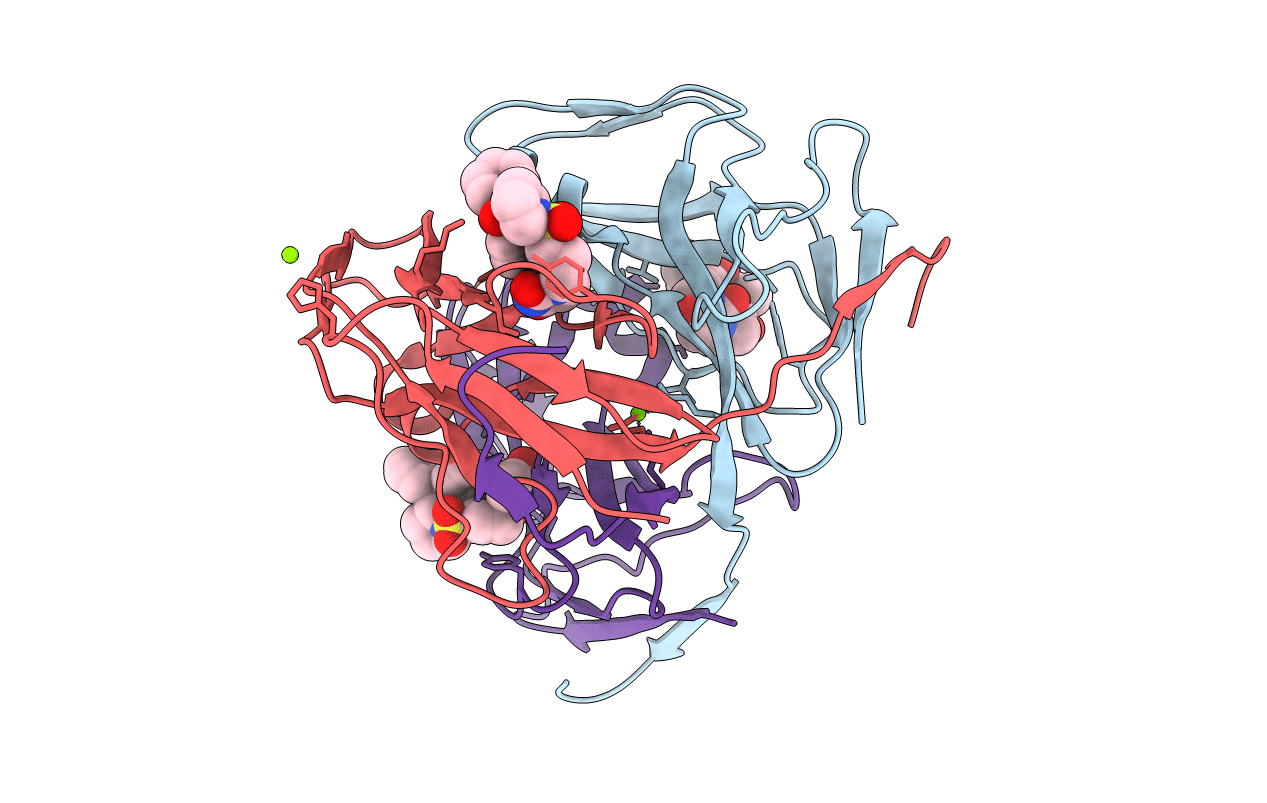
3ARA image
Deposition Date 2010-11-25
Release Date 2010-12-08
Last Version Date 2024-03-13
Entry Detail
PDB ID:
3ARA
Title:
Discovery of Novel Uracil Derivatives as Potent Human dUTPase Inhibitors
Biological Source:
Source Organism:
Homo sapiens (Taxon ID: 9606)
Host Organism:
Method Details:
Experimental Method:
Resolution:
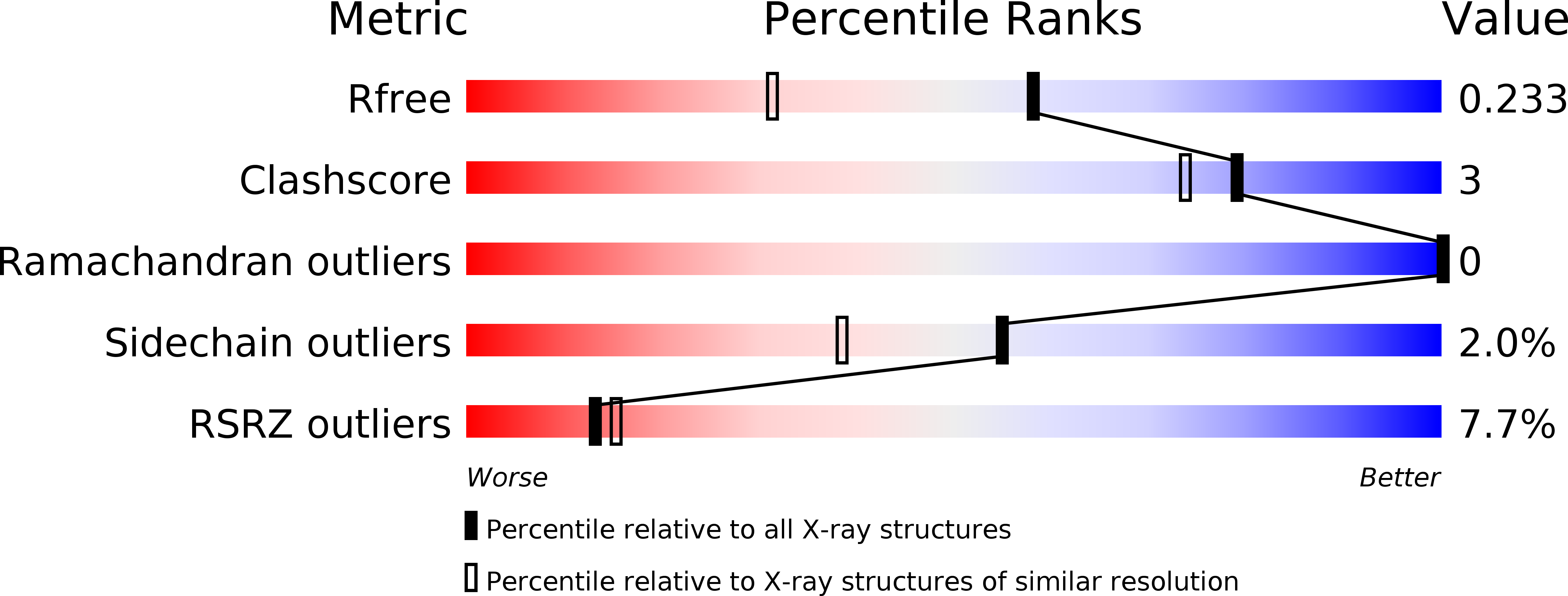
1.70 Å
R-Value Free:
0.24
R-Value Work:
0.21
R-Value Observed:
0.21
Space Group:
P 21 21 21
Macromolecular Entities
Structures with similar UniProt ID
Protein Blast
Polymer Type:polypeptide(L)
Molecule:Deoxyuridine 5'-triphosphate nucleotidohydrolase
Gene (Uniprot):DUT
Chain IDs:A, B, C
Chain Length:164
Number of Molecules:3
Biological Source:Homo sapiens
Primary Citation
Synthesis and discovery of N-carbonylpyrrolidine- or N-sulfonylpyrrolidine-containing uracil derivatives as potent human deoxyuridine triphosphatase inhibitors
J.Med.Chem. 55 2960 2969 (2012)
PMID: 22404301 DOI: 10.1021/jm201627n

Abstact

Recently, deoxyuridine triphosphatase (dUTPase) has emerged as a potential target for drug development as part of a new strategy of 5-fluorouracil-based combination chemotherapy. We have initiated a program to develop potent drug-like dUTPase inhibitors based on structure-activity relationship (SAR) studies of uracil derivatives. N-Carbonylpyrrolidine- and N-sulfonylpyrrolidine-containing uracils were found to be promising scaffolds that led us to human dUTPase inhibitors (12k) having excellent potencies (IC(50) = 0.15 μM). The X-ray structure of a complex of 16a and human dUTPase revealed a unique binding mode wherein its uracil ring and phenyl ring occupy a uracil recognition region and a hydrophobic region, respectively, and are stacked on each other. Compounds 12a and 16a markedly enhanced the growth inhibition activity of 5-fluoro-2'-deoxyuridine against HeLa S3 cells in vitro (EC(50) = 0.27-0.30 μM), suggesting that our novel dUTPase inhibitors could contribute to the development of chemotherapeutic strategies when used in combination with TS inhibitors.

Legend

Protein

Chemical

Disease

Primary Citation of related structures
Feedback Form
Name
Email
Institute
Feedback