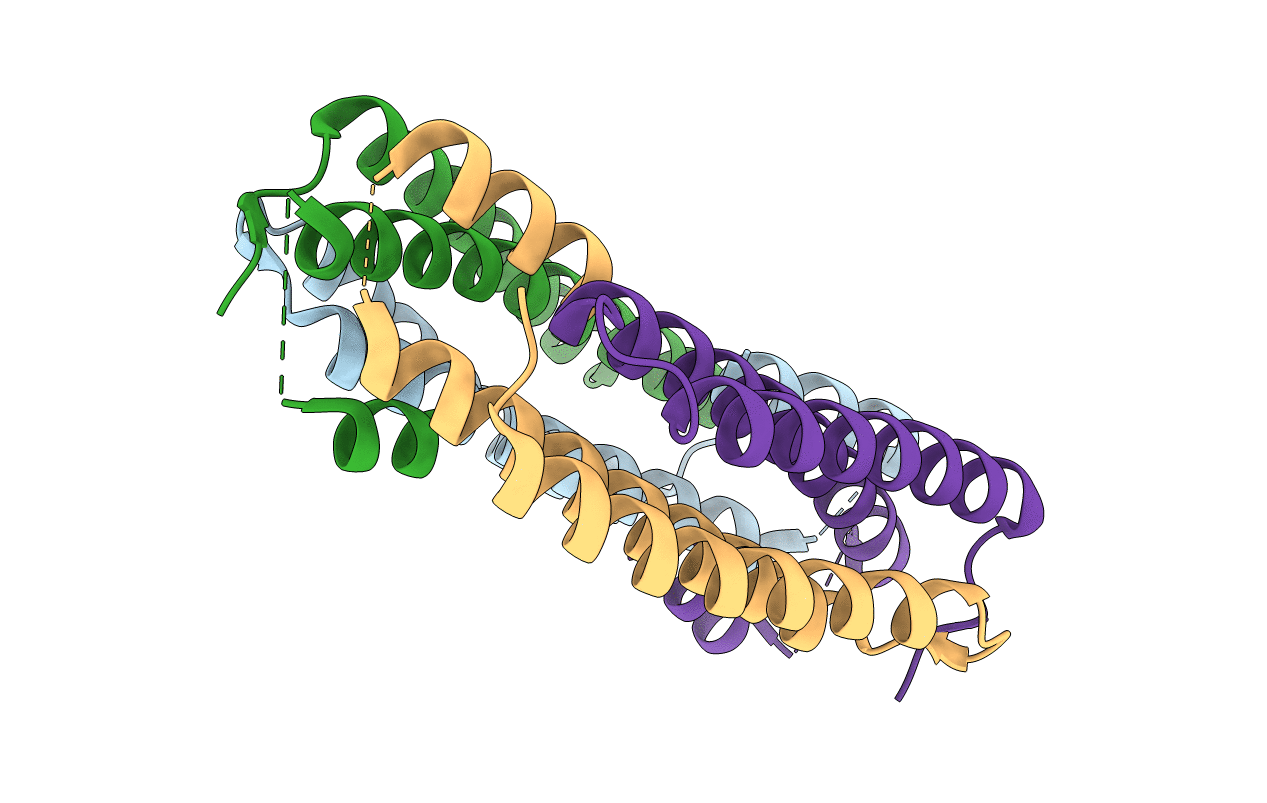
3AAI image
Deposition Date 2009-11-17
Release Date 2010-04-28
Last Version Date 2024-10-30
Entry Detail
PDB ID:
3AAI
Keywords:
Title:
X-ray crystal structure of CsoR from Thermus thermophilus HB8
Biological Source:
Source Organism:
Host Organism:
Method Details:
Experimental Method:
Resolution:
2.10 Å
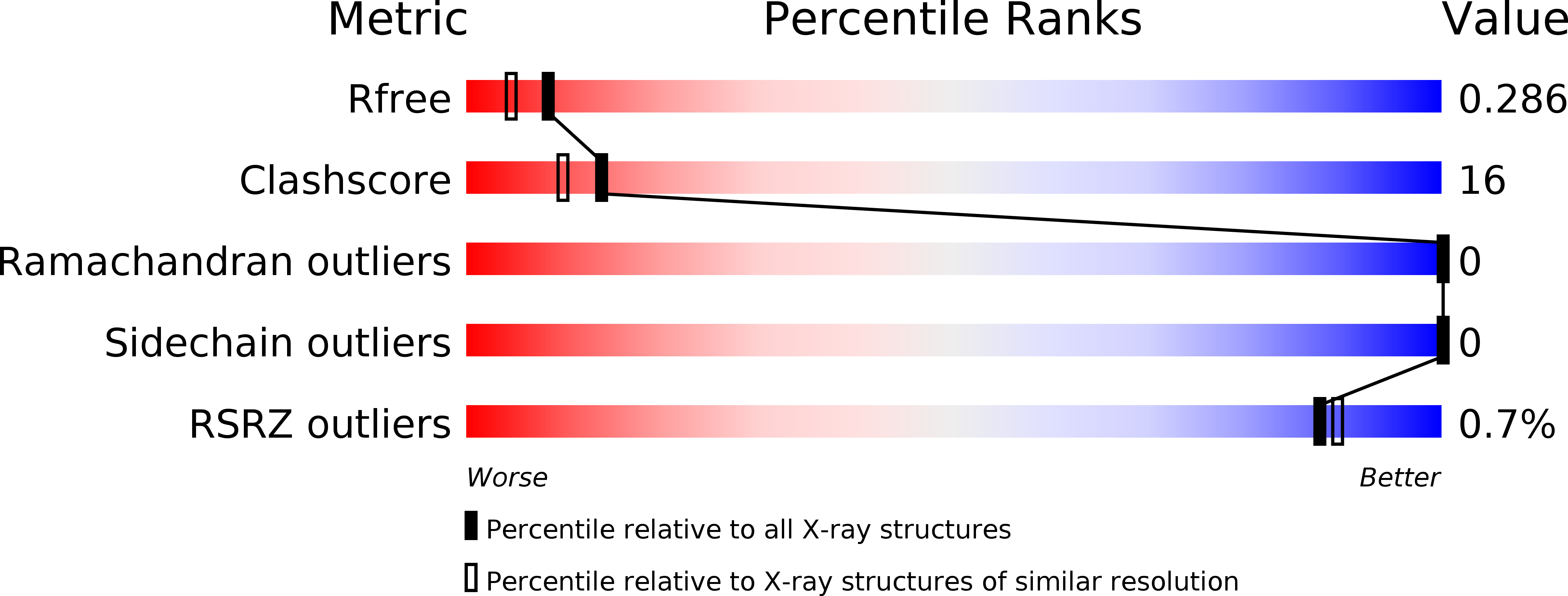
R-Value Free:
0.28
R-Value Work:
0.24
R-Value Observed:
0.24
Space Group:
P 32
Macromolecular Entities
Structures with similar UniProt ID
Protein Blast
Polymer Type:polypeptide(L)
Molecule:Copper homeostasis operon regulatory protein
Gene (Uniprot):TTHA1719
Chain IDs:A, B, C, D
Chain Length:94
Number of Molecules:4
Biological Source:Thermus thermophilus
Modified Residue
Compound ID Chain ID Parent Comp ID Details 2D Image
MSE A MET SELENOMETHIONINE
Primary Citation
Structural and functional characterization of the transcriptional repressor CsoR from Thermus thermophilus HB8
Microbiology 156 1993 2005 (2010)
PMID: 20395270 DOI: 10.1099/mic.0.037382-0

Abstact

The TTHA1719 gene from Thermus thermophilus HB8 encodes an orthologue of the copper-sensing transcriptional repressor CsoR. X-ray crystal structure analysis of T. thermophilus CsoR indicated that it forms a homotetramer. The structures of the CsoR monomer and dimer are similar to those of Mycobacterium tuberculosis CsoR. In the absence of copper ions, T. thermophilus CsoR bound to the promoter region of the copper-sensitive operon copZ-csoR-copA, which encodes the copper chaperone CopZ, CsoR and the copper efflux P-type ATPase CopA, to repress their expression, while in the presence of approximately an equal amount of copper ion, CsoR was released from the DNA, to allow expression of the downstream genes. Both Cu(II) and Cu(I) ions could bind CsoR, and were effective for transcriptional derepression. Additionally, CsoR could also sense various other metal ions, such as Zn(II), Ag(I), Cd(II) and Ni(II), which led to transcriptional derepression. The copper-binding motif of T. thermophilus CsoR contains C-H-H, while those of most orthologues contain C-H-C. The X-ray crystal structure of T. thermophilus CsoR suggests that a histidine residue in the N-terminal domain is also involved in metal-ion binding; that is, the binding motif could be H-C-H-H, like that of Escherichia coli RcnR, which binds Ni(II)/Co(II). The non-conserved H70 residue in the metal-binding motif of T. thermophilus CsoR is important for its DNA-binding affinity and metal-ion responsiveness.

Legend

Protein

Chemical

Disease

Primary Citation of related structures
Feedback Form
Name
Email
Institute
Feedback