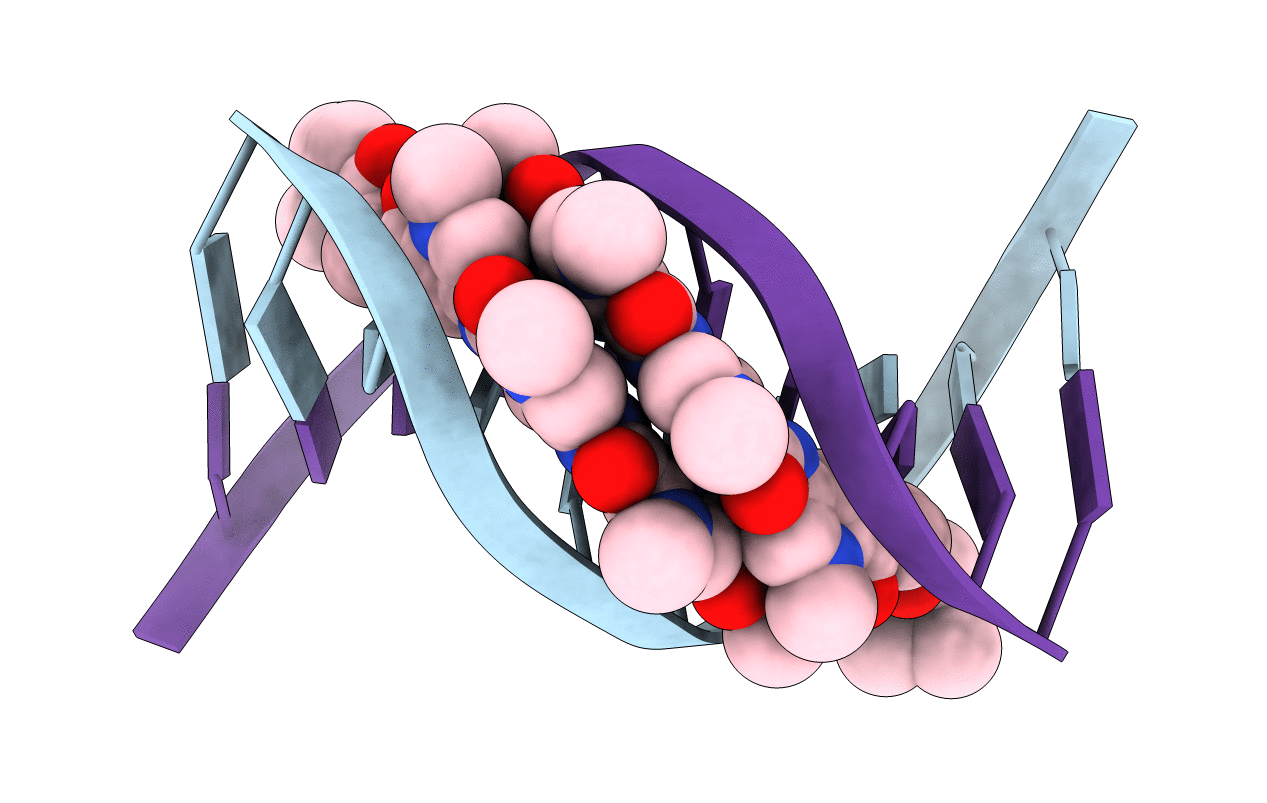
365D image
Deposition Date 1997-12-17
Release Date 1998-02-05
Last Version Date 2024-02-21
Entry Detail
PDB ID:
365D
Keywords:
Title:
STRUCTURAL BASIS FOR G C RECOGNITION IN THE DNA MINOR GROOVE
Biological Source:
Source Organism:
Method Details:
Experimental Method:
Resolution:
2.00 Å
R-Value Free:
0.26
R-Value Work:
0.22
R-Value Observed:
0.22
Space Group:
P 21 21 21

Macromolecular Entities
Polymer Type:polydeoxyribonucleotide
Molecule:DNA (5'-D(*CP*CP*AP*GP*GP*(CBR)P*CP*TP*GP*G)-3')
Chain IDs:A, B
Chain Length:10
Number of Molecules:2
Biological Source:
Modified Residue
Compound ID Chain ID Parent Comp ID Details 2D Image
CBR A DC ?
Ligand Molecules
Primary Citation
Structural basis for G.C recognition in the DNA minor groove.
Nat.Struct.Biol. 5 104 109 (1998)
PMID: 9461074 DOI: 10.1038/nsb0298-104

Abstact

Small molecules that target specific DNA sequences offer a potentially general approach for the regulation of gene expression. Pyrrole-imidazole polyamides represent the only class of synthetic small molecules that can bind predetermined DNA sequences with affinities and specificities comparable to DNA binding proteins. Antiparallel side-by-side pairings of two aromatic amino acids, imidazole (Im) and pyrrole (Py), distinguish G.C from C.G, and both from A.T/T.A base pairs. A high resolution X-ray crystal structure of a four-ring pyrrole-imidazole polyamide specifically bound as a dimer to a six-base pair predetermined DNA site reveals a structural framework of hydrogen bonds and interactions with the walls of the minor groove that underlies the pairing rules for DNA recognition.

Legend

Protein

Chemical

Disease

Primary Citation of related structures
Feedback Form
Name
Email
Institute
Feedback