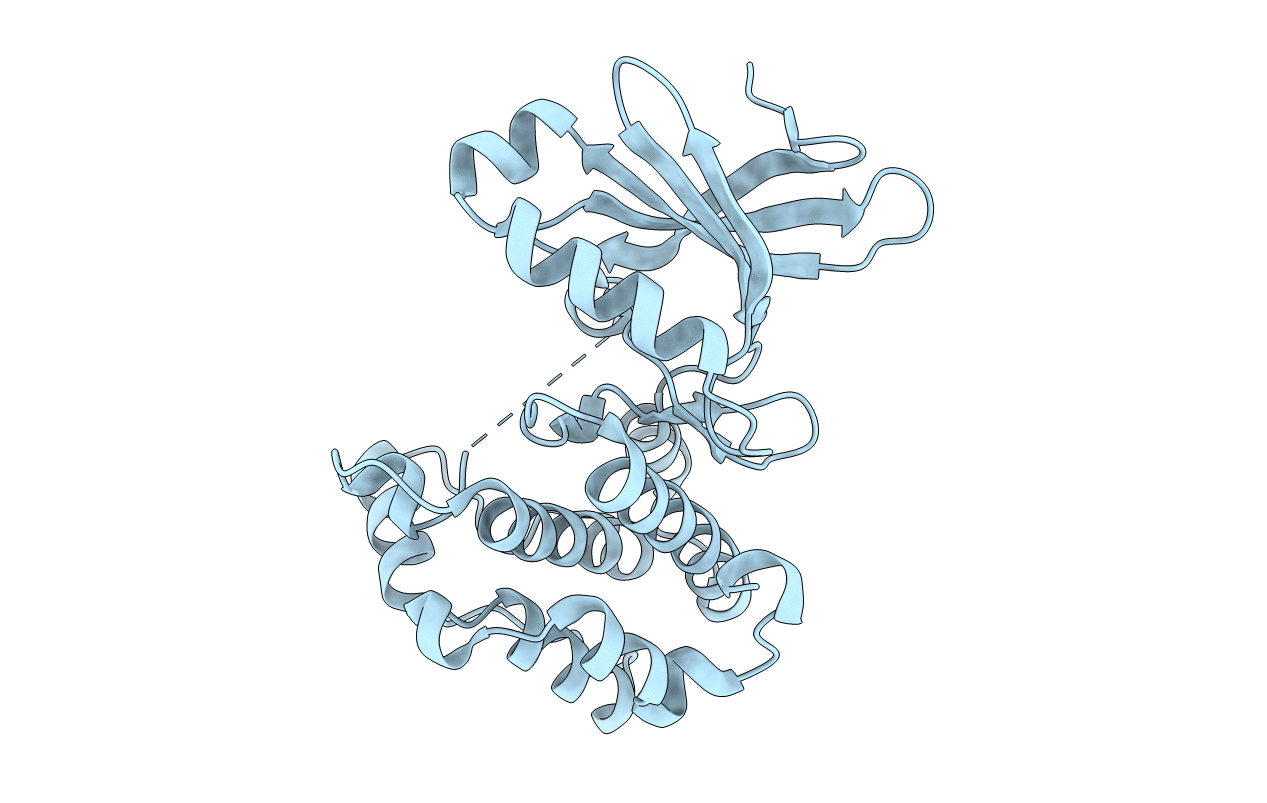
2h6d image
Deposition Date 2006-05-31
Release Date 2006-06-27
Last Version Date 2023-08-30
Entry Detail
PDB ID:
2H6D
Title:
Protein Kinase Domain of the Human 5'-AMP-activated protein kinase catalytic subunit alpha-2 (AMPK alpha-2 chain)
Biological Source:
Source Organism:
Homo sapiens (Taxon ID: 9606)
Host Organism:
Method Details:
Experimental Method:
Resolution:
1.85 Å
R-Value Free:
0.22
R-Value Work:
0.18
R-Value Observed:
0.19
Space Group:
P 1 21 1
Macromolecular Entities
Structures with similar UniProt ID
Protein Blast
Polymer Type:polypeptide(L)
Molecule:5'-AMP-activated protein kinase catalytic subunit alpha-2
Gene (Uniprot):PRKAA2
Chain IDs:A
Chain Length:276
Number of Molecules:1
Biological Source:Homo sapiens
Primary Citation
A conserved mechanism of autoinhibition for the AMPK kinase domain: ATP-binding site and catalytic loop refolding as a means of regulation.
Acta Crystallogr.,Sect.F 66 143 151 (2010)
PMID: 20124709 DOI: 10.1107/S1744309109052543

Abstact

The AMP-activated protein kinase (AMPK) is a highly conserved trimeric protein complex that is responsible for energy homeostasis in eukaryotic cells. Here, a 1.9 A resolution crystal structure of the isolated kinase domain from the alpha2 subunit of human AMPK, the first from a multicellular organism, is presented. This human form adopts a catalytically inactive state with distorted ATP-binding and substrate-binding sites. The ATP site is affected by changes in the base of the activation loop, which has moved into an inhibited DFG-out conformation. The substrate-binding site is disturbed by changes within the AMPKalpha2 catalytic loop that further distort the enzyme from a catalytically active form. Similar structural rearrangements have been observed in a yeast AMPK homologue in response to the binding of its auto-inhibitory domain; restructuring of the kinase catalytic loop is therefore a conserved feature of the AMPK protein family and is likely to represent an inhibitory mechanism that is utilized during function.

Legend

Protein

Chemical

Disease

Primary Citation of related structures
Feedback Form
Name
Email
Institute
Feedback