2ZYG image
Deposition Date 2009-01-21
Release Date 2009-09-01
Last Version Date 2023-11-01
Entry Detail
PDB ID:
2ZYG
Keywords:
Title:
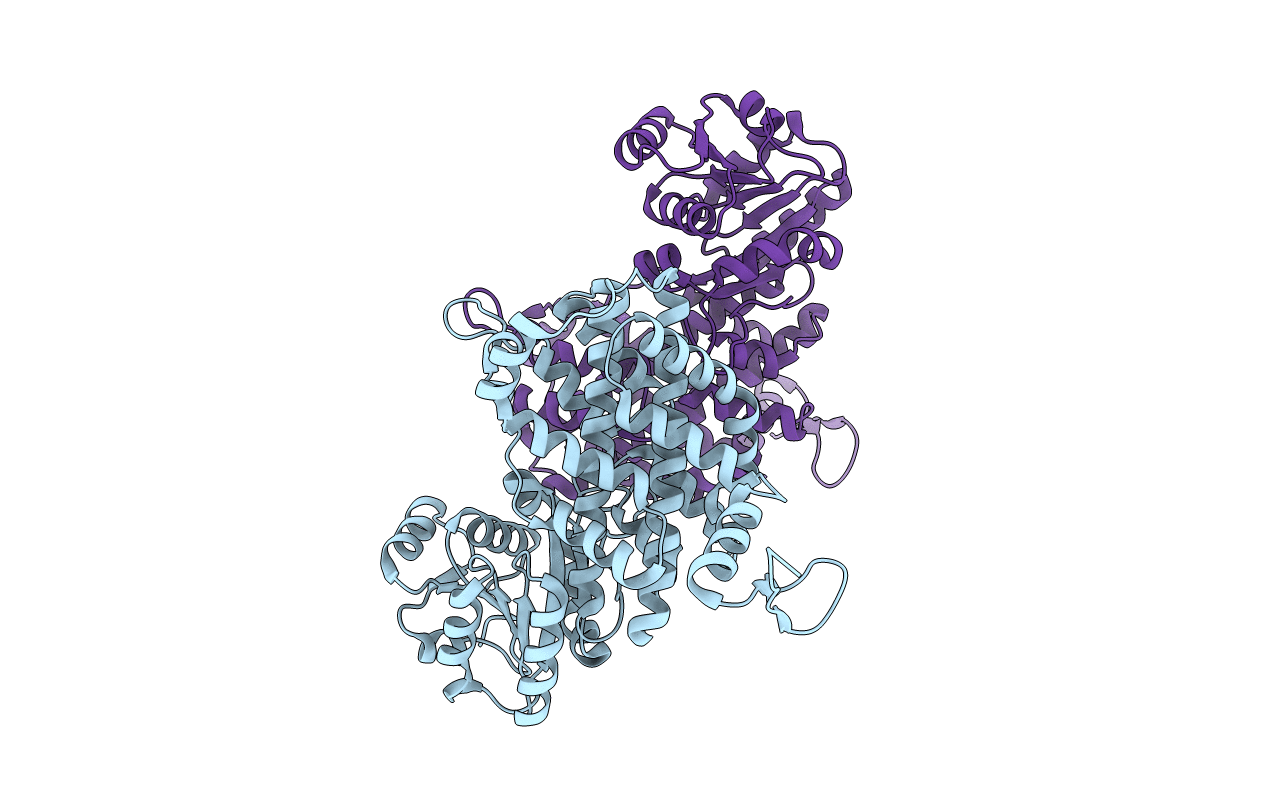
Apo-form of dimeric 6-phosphogluconate dehydrogenase
Biological Source:
Source Organism:
Method Details:
Experimental Method:
Resolution:
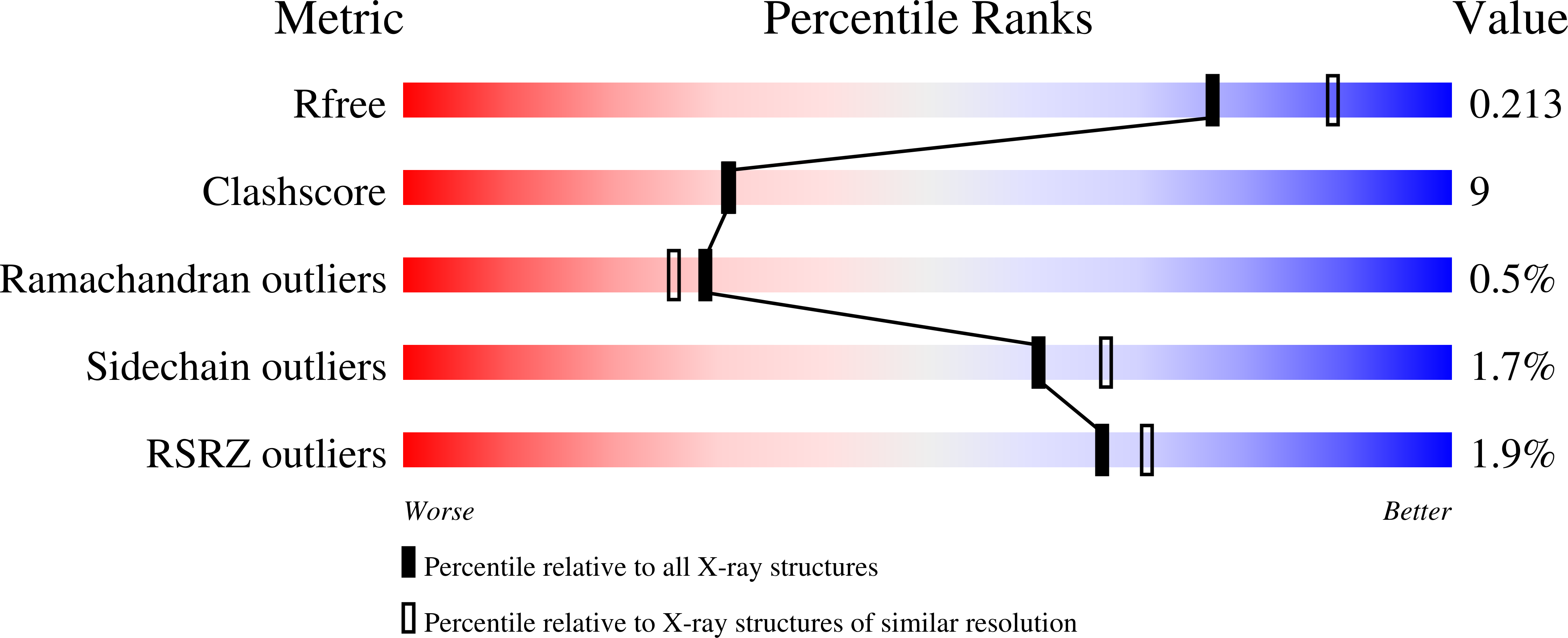
2.10 Å
R-Value Free:
0.21
R-Value Work:
0.15
R-Value Observed:
0.15
Space Group:
P 31 2 1
Macromolecular Entities
Structures with similar UniProt ID
Protein Blast
Polymer Type:polypeptide(L)
Molecule:6-phosphogluconate dehydrogenase, decarboxylating
Mutagens:A134T
Chain IDs:A, B
Chain Length:480
Number of Molecules:2
Biological Source:Klebsiella pneumoniae
Primary Citation
Conformational changes associated with cofactor/substrate binding of 6-phosphogluconate dehydrogenase from Escherichia coli and Klebsiella pneumoniae: Implications for enzyme mechanism
J.Struct.Biol. 169 25 35 (2010)
PMID: 19686854 DOI: 10.1016/j.jsb.2009.08.006

Abstact

6-Phosphogluconate dehydrogenase (6PGDH), the third enzyme of the pentose phosphate pathway, catalyzes the oxidative decarboxylation of 6-phosphogluconate, making ribulose 5-phosphate, along with the reduction of NADP(+) to NADPH and the release of CO(2). Here, we report the first apo-form crystal structure of the pathogenic Klebsiella pneumoniae 6PGDH (Kp6PGDH) and the structures of the highly homologous Escherichia coli K12 6PGDH (Ec6PGDH) complexed with substrate, substrate/NADPH and glucose at high resolution. The binding of NADPH to one subunit of the homodimeric structure triggered a 10 degrees rotation and resulting in a 7A movement of the coenzyme-binding domain. The coenzyme was thus trapped in a closed enzyme conformation, in contrast to the open conformation of the neighboring subunit. Comparison of our Ec/Kp6PGDH structures with those of other species illustrated how the domain conformation can be affected upon binding of the coenzyme, which in turn gives rise to concomitant movements of two important NADP(+)-interacting amino acids, M14 and N102. We propose that the catalysis follows an ordered binding mechanism with alternating conformational changes in the corresponding subunits, involving several related amino acid residues.

Legend

Protein

Chemical

Disease

Primary Citation of related structures
Feedback Form
Name
Email
Institute
Feedback