2ZUC image
Deposition Date 2008-10-15
Release Date 2009-04-07
Last Version Date 2023-11-01
Entry Detail
PDB ID:
2ZUC
Keywords:
Title:
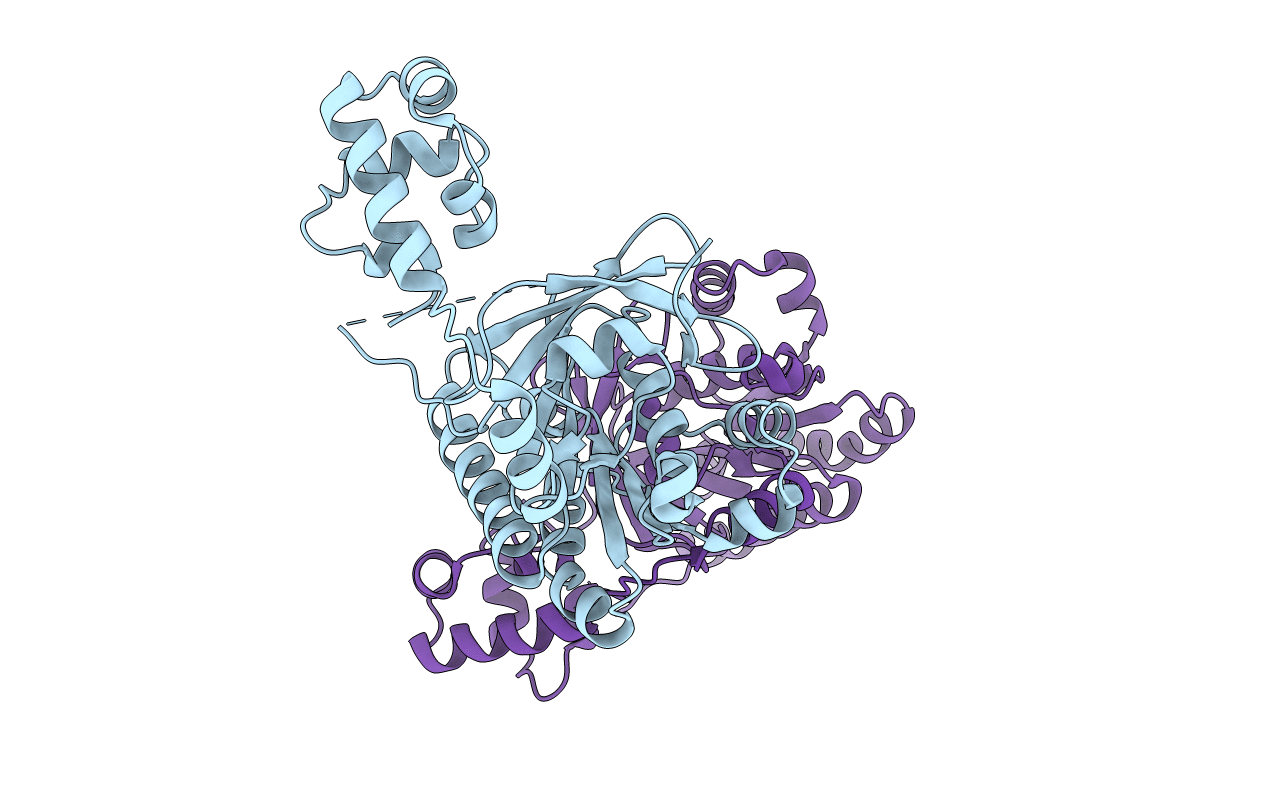
Crystal structure of left-handed RadA filament
Biological Source:
Source Organism:
Host Organism:
Method Details:
Experimental Method:
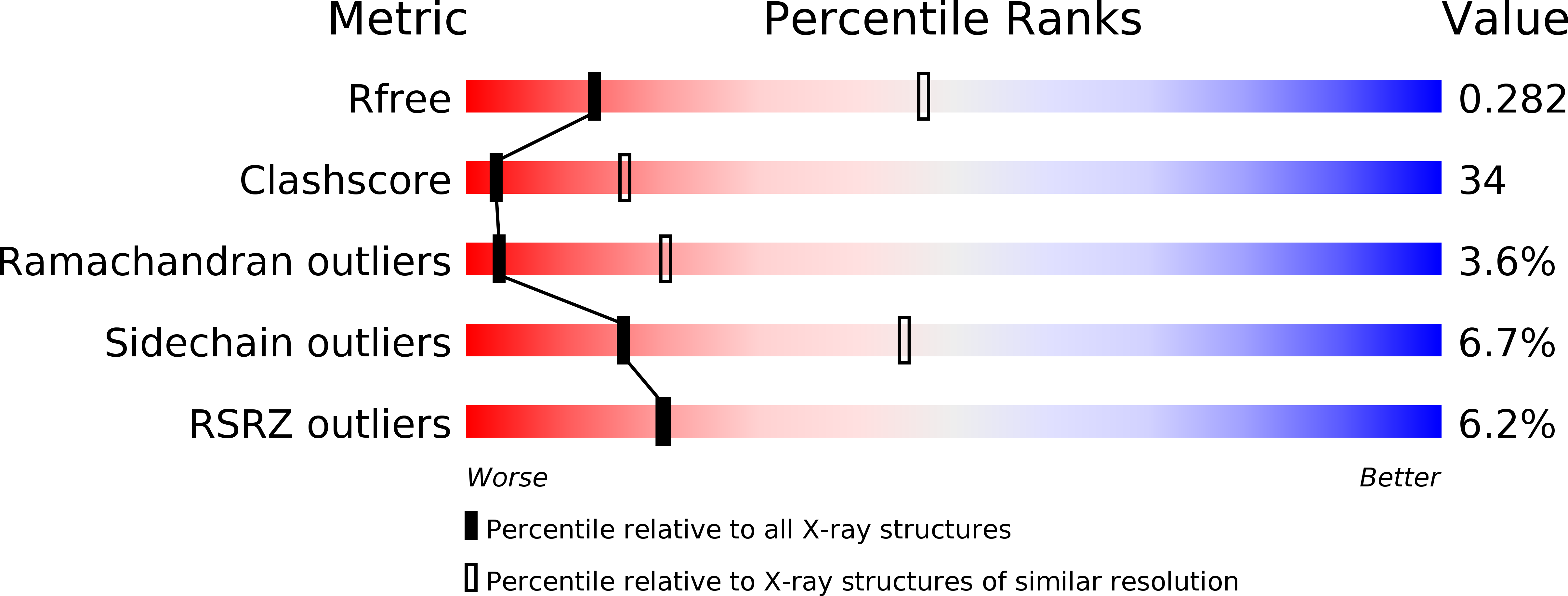
Resolution:
3.30 Å
R-Value Free:
0.28
R-Value Work:
0.22
R-Value Observed:
0.23
Space Group:
P 21 21 21
Macromolecular Entities
Structures with similar UniProt ID
Protein Blast
Polymer Type:polypeptide(L)
Molecule:DNA repair and recombination protein radA
Gene (Uniprot):radA
Chain IDs:A, B
Chain Length:324
Number of Molecules:2
Biological Source:Sulfolobus solfataricus
Primary Citation
Three new structures of left-handed RADA helical filaments: structural flexibility of N-terminal domain is critical for recombinase activity
Plos One 4 e4890 e4890 (2009)
PMID: 19295907 DOI: 10.1371/journal.pone.0004890

Abstact

RecA family proteins, including bacterial RecA, archaeal RadA, and eukaryotic Dmc1 and Rad51, mediate homologous recombination, a reaction essential for maintaining genome integrity. In the presence of ATP, these proteins bind a single-strand DNA to form a right-handed nucleoprotein filament, which catalyzes pairing and strand exchange with a homologous double-stranded DNA (dsDNA), by as-yet unknown mechanisms. We recently reported a structure of RadA left-handed helical filament, and here present three new structures of RadA left-handed helical filaments. Comparative structural analysis between different RadA/Rad51 helical filaments reveals that the N-terminal domain (NTD) of RadA/Rad51, implicated in dsDNA binding, is highly flexible. We identify a hinge region between NTD and polymerization motif as responsible for rigid body movement of NTD. Mutant analysis further confirms that structural flexibility of NTD is essential for RadA's recombinase activity. These results support our previous hypothesis that ATP-dependent axial rotation of RadA nucleoprotein helical filament promotes homologous recombination.

Legend

Protein

Chemical

Disease

Primary Citation of related structures
Feedback Form
Name
Email
Institute
Feedback