2ZON image
Deposition Date 2008-05-27
Release Date 2009-06-09
Last Version Date 2023-11-01
Entry Detail
PDB ID:
2ZON
Title:
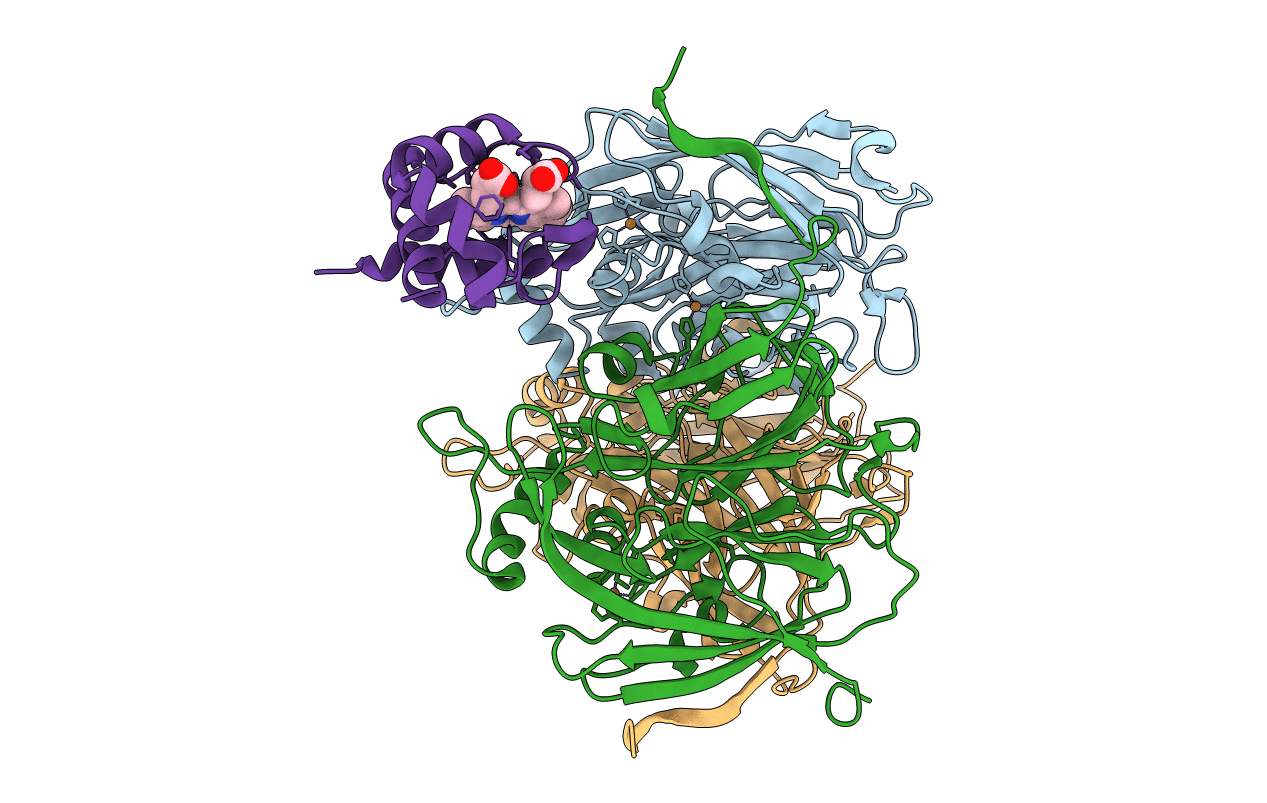
Crystal structure of electron transfer complex of nitrite reductase with cytochrome c
Biological Source:
Source Organism:
Method Details:
Experimental Method:
Resolution:
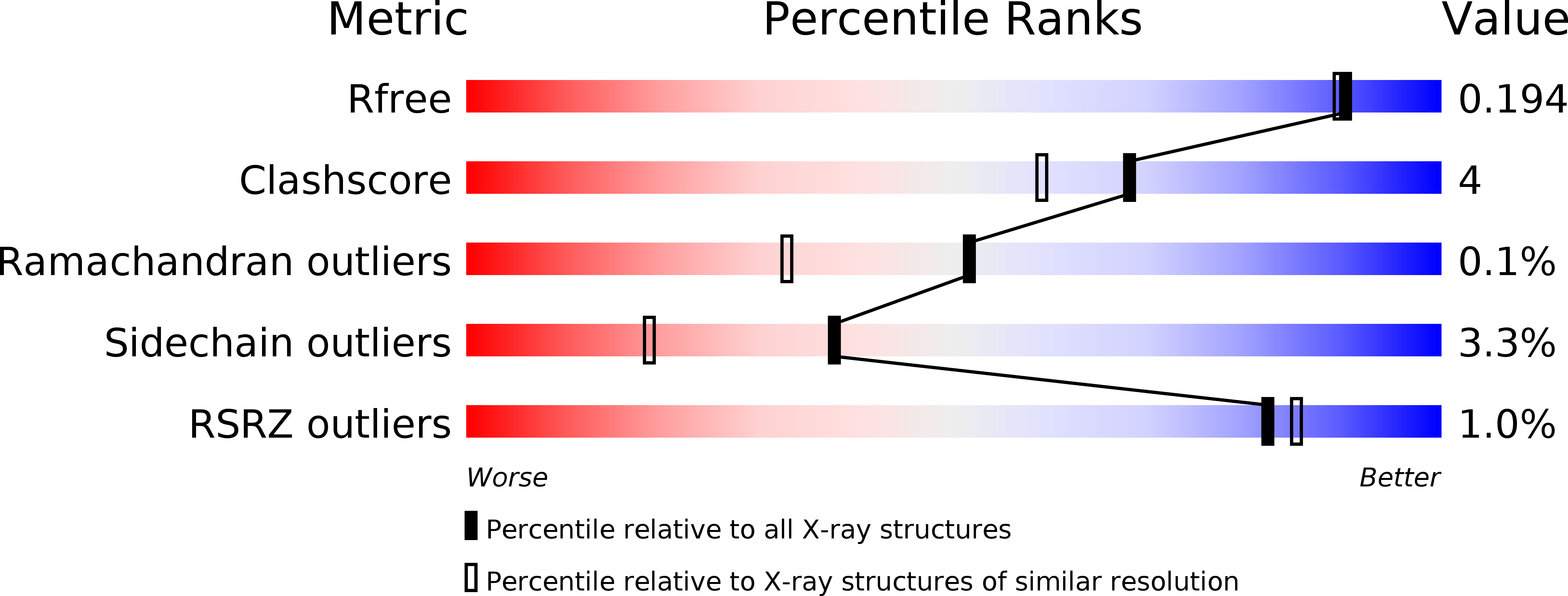
1.70 Å
R-Value Free:
0.19
R-Value Work:
0.16
R-Value Observed:
0.16
Space Group:
P 21 21 21
Macromolecular Entities
Structures with similar UniProt ID
Protein Blast
Polymer Type:polypeptide(L)
Molecule:Dissimilatory copper-containing nitrite reductase
Gene (Uniprot):nir
Chain IDs:A, B, C
Chain Length:336
Number of Molecules:3
Biological Source:Achromobacter xylosoxidans
Structures with similar UniProt ID
Protein Blast
Polymer Type:polypeptide(L)
Molecule:cytochrome c551
Chain IDs:D (auth: G)
Chain Length:87
Number of Molecules:1
Biological Source:Achromobacter xylosoxidans
Primary Citation
Structural basis of inter-protein electron transfer for nitrite reduction in denitrification
Nature 462 117 120 (2009)
PMID: 19890332 DOI: 10.1038/nature08507

Abstact

Recent earth science studies have pointed out that massive acceleration of the global nitrogen cycle by anthropogenic addition of bio-available nitrogen has led to a host of environmental problems. Nitrous oxide (N(2)O) is a greenhouse gas that is an intermediate during the biological process known as denitrification. Copper-containing nitrite reductase (CuNIR) is a key enzyme in the process; it produces a precursor for N(2)O by catalysing the one-electron reduction of nitrite (NO2-) to nitric oxide (NO). The reduction step is performed by an efficient electron-transfer reaction with a redox-partner protein. However, details of the mechanism during the electron-transfer reaction are still unknown. Here we show the high-resolution crystal structure of the electron-transfer complex for CuNIR with its cognate cytochrome c as the electron donor. The hydrophobic electron-transfer path is formed at the docking interface by desolvation owing to close contact between the two proteins. Structural analysis of the interface highlights an essential role for the loop region with a hydrophobic patch for protein-protein recognition; it also shows how interface construction allows the variation in atomic components to achieve diverse biological electron transfers.

Legend

Protein

Chemical

Disease

Primary Citation of related structures
Feedback Form
Name
Email
Institute
Feedback