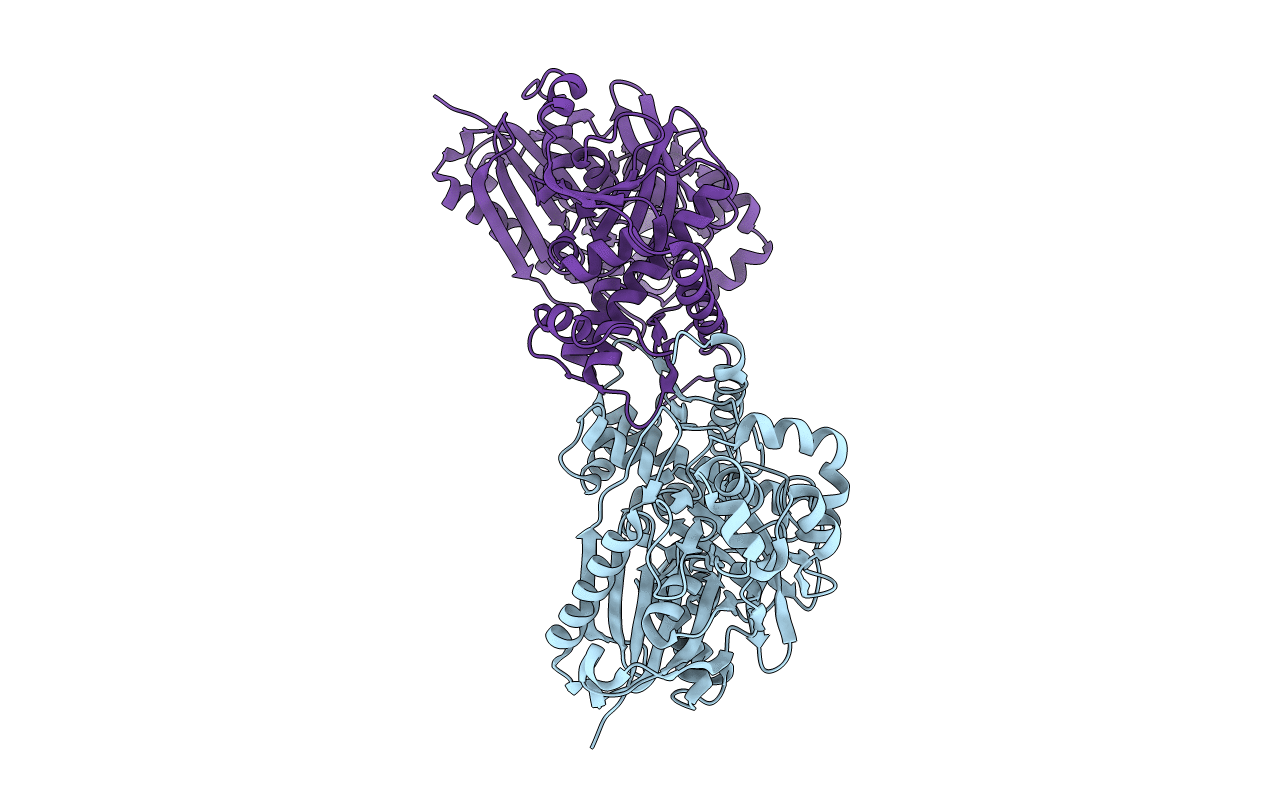
2ZF5 image
Deposition Date 2007-12-20
Release Date 2008-05-06
Last Version Date 2023-11-01
Entry Detail
PDB ID:
2ZF5
Keywords:
Title:
Crystal Structure of highly thermostable glycerol kinase from a hyperthermophilic archaeon
Biological Source:
Source Organism:
Host Organism:
Method Details:
Experimental Method:
Resolution:
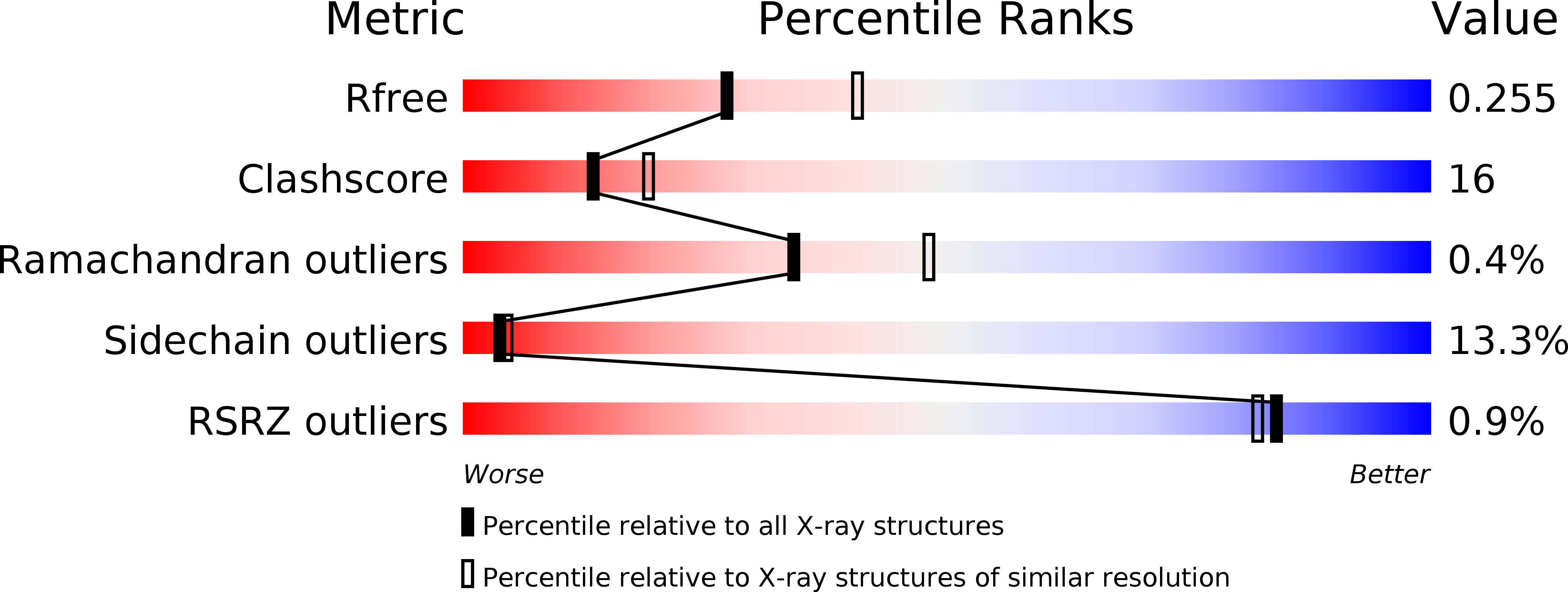
2.40 Å
R-Value Free:
0.25
R-Value Work:
0.17
R-Value Observed:
0.17
Space Group:
H 3
Macromolecular Entities
Structures with similar UniProt ID
Protein Blast
Polymer Type:polypeptide(L)
Molecule:Glycerol kinase
Gene (Uniprot):glpK
Chain IDs:A (auth: O), B (auth: Y)
Chain Length:497
Number of Molecules:2
Biological Source:Thermococcus kodakarensis
Primary Citation
Crystal structure of highly thermostable glycerol kinase from a hyperthermophilic archaeon in a dimeric form
Febs J. 275 2632 2643 (2008)
PMID: 18422647 DOI: 10.1111/j.1742-4658.2008.06410.x

Abstact

The crystal structure of glycerol kinase from the hyperthermophilic archaeon Thermococcus kodakaraensis (Tk-GK) in a dimeric form was determined at a resolution of 2.4 A. This is the first crystal structure of a hyperthermophilic glycerol kinase. The overall structure of the Tk-GK dimer is very similar to that of the Escherichia coli glycerol kinase (Ec-GK) dimer. However, two dimers of Ec-GK can associate into a tetramer with a twofold axis, whereas those of Tk-GK cannot. This may be the reason why Tk-GK is not inhibited by fructose 1,6-bisphosphate, because the fructose 1,6-bisphosphate binding site is produced only when a tetrameric structure is formed. Differential scanning calorimetry analyses indicate that Tk-GK is a highly thermostable protein with a melting temperature (T(m)) of 105.4 degrees C for the major transition. This value is higher than that of Ec-GK by 34.1 degrees C. Comparison of the crystal structures of Tk-GK and Ec-GK indicate that there is a marked difference in the number of ion pairs in the alpha16 helix. Four ion pairs, termed IP1-IP4, are formed in this helix in the Tk-GK structure. To examine whether these ion pairs contribute to the stabilization of Tk-GK, four Tk-GK and four Ec-GK derivatives with reciprocal mutations at the IP1-IP4 sites were constructed. The determination of their stabilities indicates that the removal of each ion pair does not affect the stability of Tk-GK significantly, whereas the mutations designed to introduce one of these ion pairs stabilize or destabilize Ec-GK considerably. These results suggest that the ion pairs in the alpha16 helix contribute to the stabilization of Tk-GK in a cooperative manner.

Legend

Protein

Chemical

Disease

Primary Citation of related structures
Feedback Form
Name
Email
Institute
Feedback