2Z8L image
Deposition Date 2007-09-06
Release Date 2007-11-27
Last Version Date 2023-11-01
Entry Detail
PDB ID:
2Z8L
Title:
Crystal Structure of the Staphylococcal superantigen-like protein SSL5 at pH 4.6 complexed with sialyl Lewis X
Biological Source:
Source Organism:
Host Organism:
Method Details:
Experimental Method:
Resolution:
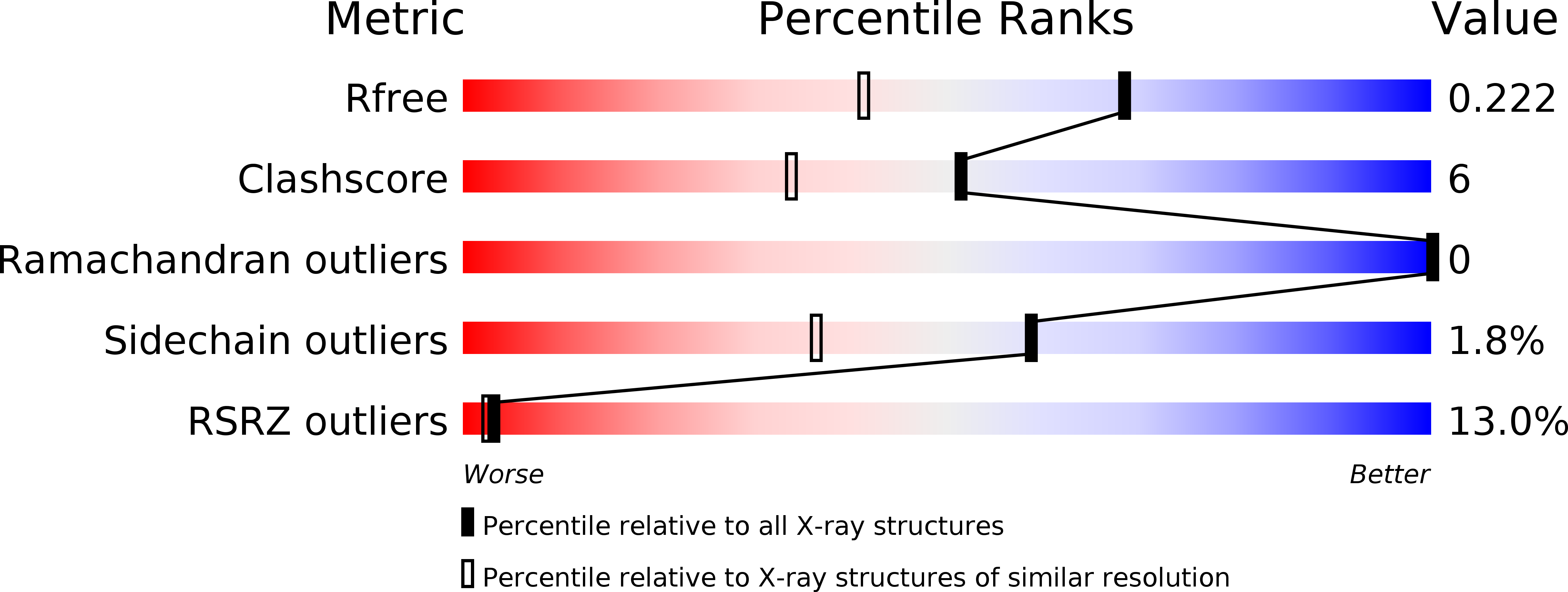
1.65 Å
R-Value Free:
0.21
R-Value Work:
0.18
R-Value Observed:
0.18
Space Group:
P 1 21 1
Macromolecular Entities
Structures with similar UniProt ID
Protein Blast
Polymer Type:polypeptide(L)
Molecule:Exotoxin 3
Gene (Uniprot):set3
Chain IDs:A
Chain Length:208
Number of Molecules:1
Biological Source:Staphylococcus aureus
Peptide-like Molecules
PRD_900121
Primary Citation
Crystal structures of the staphylococcal toxin SSL5 in complex with sialyl Lewis X reveal a conserved binding site that shares common features with viral and bacterial sialic acid binding proteins
J.Mol.Biol. 374 1298 1308 (2007)
PMID: 17996251 DOI: 10.1016/j.jmb.2007.09.091

Abstact

Staphylococcus aureus is a significant human pathogen. Among its large repertoire of secreted toxins is a group of staphylococcal superantigen-like proteins (SSLs). These are homologous to superantigens but do not have the same activity. SSL5 is shown here to bind to human granulocytes and to the cell surface receptors for human IgA (Fc alphaRI) and P-selectin [P-selectin glycoprotein ligand-1 (PSGL-1)] in a sialic acid (Sia)-dependent manner. Co-crystallization of SSL5 with the tetrasaccharide sialyl Lewis X (sLe(X)), a key determinant of PSGL-1 binding to P-selectin, led to crystal structures of the SSL5-sLe(X) complex at resolutions of 1.65 and 2.75 A for crystals at two pH values. In both structures, sLe(X) bound to a specific site on the surface of the C-terminal domain of SSL5 in a conformation identical with that bound by P-selectin. Conservation of the key carbohydrate binding residues indicates that this ability to bind human glycans is shared by a substantial subgroup of the SSLs, including SSL2, SSL3, SSL4, SSL5, SSL6, and SSL11. This indicates that the ability to target human glycans is an important property of this group of toxins. Structural comparisons also showed that the Sia binding site in SSL5 contains a substructure that is shared by other Sia binding proteins from bacteria as well as viruses and represents a common binding motif.

Legend

Protein

Chemical

Disease

Primary Citation of related structures
Feedback Form
Name
Email
Institute
Feedback