2Z6R image
Deposition Date 2007-08-08
Release Date 2007-08-28
Last Version Date 2025-08-06
Entry Detail
PDB ID:
2Z6R
Keywords:
Title:
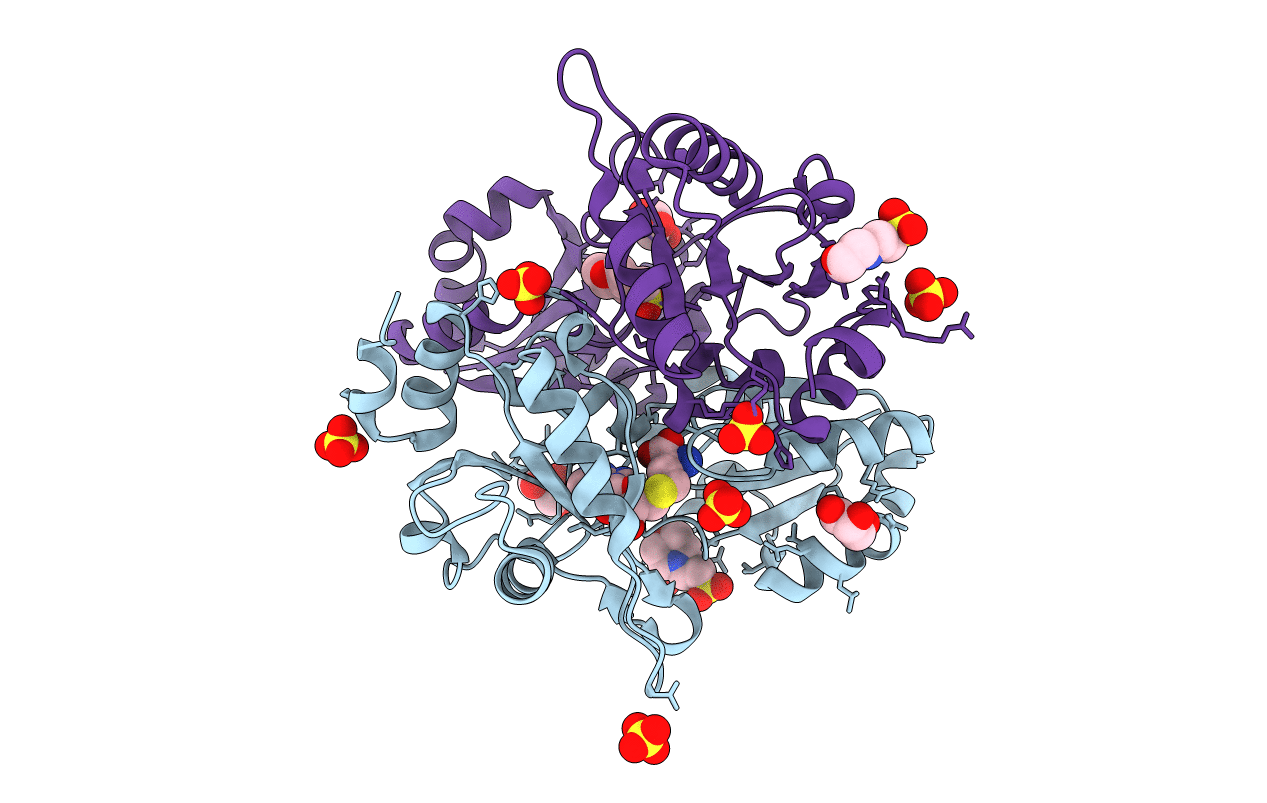
Crystal structure of Lys49 to Arg mutant of Diphthine synthase
Biological Source:
Source Organism:
Host Organism:
Method Details:
Experimental Method:
Resolution:
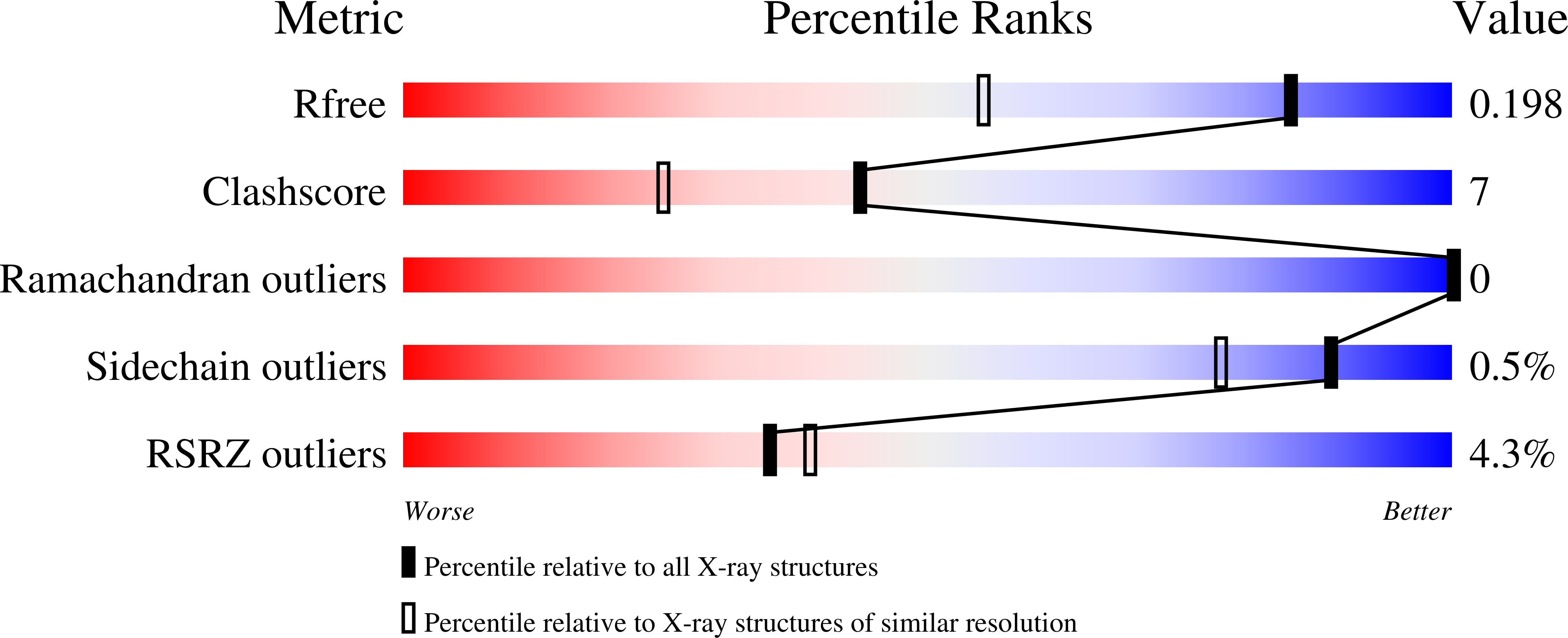
1.50 Å
R-Value Free:
0.20
R-Value Work:
0.19
R-Value Observed:
0.19
Space Group:
P 41 21 2
Macromolecular Entities
Structures with similar UniProt ID
Protein Blast
Polymer Type:polypeptide(L)
Molecule:diphthine synthase
Gene (Uniprot):dphB
Mutagens:K49R
Chain IDs:A, B
Chain Length:265
Number of Molecules:2
Biological Source:Pyrococcus horikoshii
Primary Citation
Systematic study on crystal-contact engineering of diphthine synthase: influence of mutations at crystal-packing regions on X-ray diffraction quality.
Acta Crystallogr.,Sect.D 64 1020 1033 (2008)
PMID: 18931409 DOI: 10.1107/S0907444908023019

Abstact

It is well known that protein crystallizability can be influenced by site-directed mutagenesis of residues on the molecular surface of proteins, indicating that the intermolecular interactions in crystal-packing regions may play a crucial role in the structural regularity at atomic resolution of protein crystals. Here, a systematic examination was made of the improvement in the diffraction resolution of protein crystals on introducing a single mutation of a crystal-packing residue in order to provide more favourable packing interactions, using diphthine synthase from Pyrococcus horikoshii OT3 as a model system. All of a total of 21 designed mutants at 13 different crystal-packing residues yielded almost isomorphous crystals from the same crystallization conditions as those used for the wild-type crystals, which diffracted X-rays to 2.1 A resolution. Of the 21 mutants, eight provided crystals with an improved resolution of 1.8 A or better. Thus, it has been clarified that crystal quality can be improved by introducing a suitable single mutation of a crystal-packing residue. In the improved crystals, more intimate crystal-packing interactions than those in the wild-type crystal are observed. Notably, the mutants K49R and T146R yielded crystals with outstandingly improved resolutions of 1.5 and 1.6 A, respectively, in which a large-scale rearrangement of packing interactions was unexpectedly observed despite the retention of the same isomorphous crystal form. In contrast, the mutants that provided results that were in good agreement with the designed putative structures tended to achieve only moderate improvements in resolution of up to 1.75 A. These results suggest a difficulty in the rational prediction of highly effective mutations in crystal engineering.

Legend

Protein

Chemical

Disease

Primary Citation of related structures
Feedback Form
Name
Email
Institute
Feedback