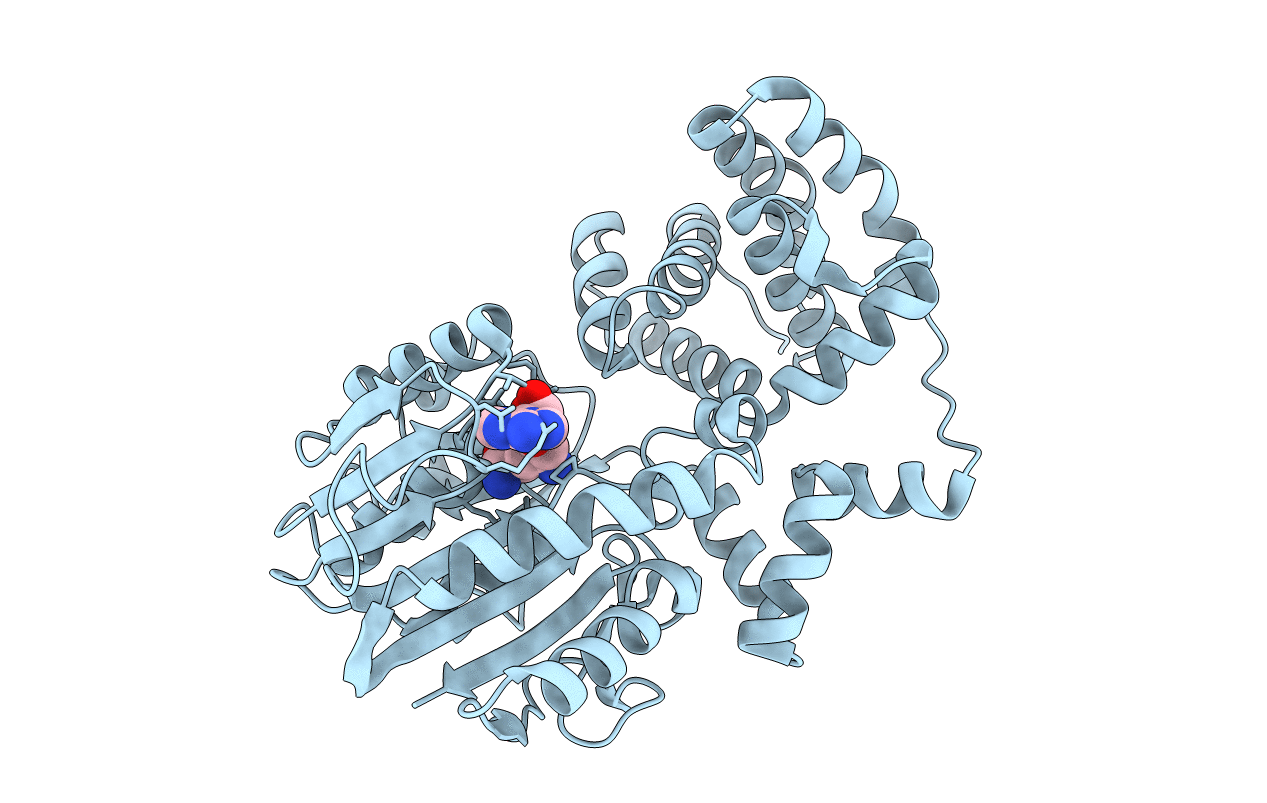
2YXL image
Deposition Date 2007-04-26
Release Date 2008-04-29
Last Version Date 2023-10-25
Entry Detail
PDB ID:
2YXL
Keywords:
Title:
Crystal Structure of PH0851
Biological Source:
Source Organism:
Host Organism:
Method Details:
Experimental Method:
Resolution:
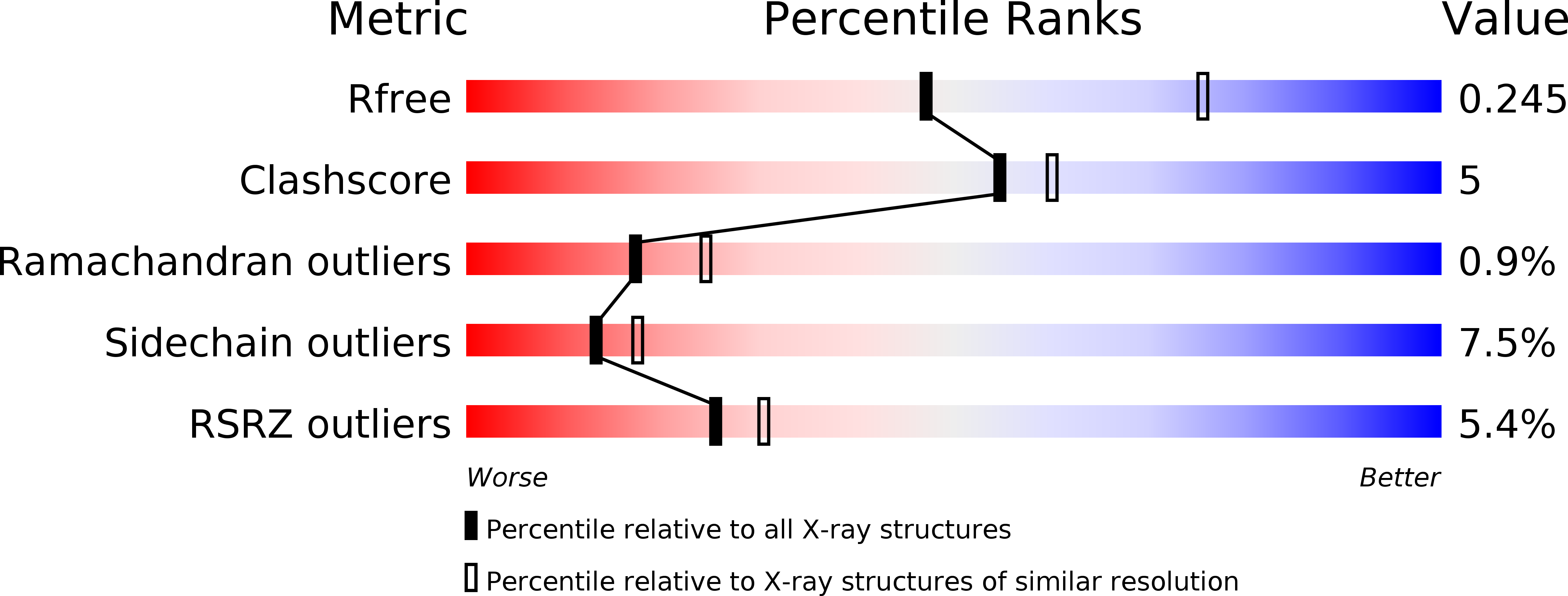
2.55 Å
R-Value Free:
0.24
R-Value Work:
0.21
R-Value Observed:
0.21
Space Group:
P 32 2 1
Macromolecular Entities
Structures with similar UniProt ID
Protein Blast
Polymer Type:polypeptide(L)
Molecule:450aa long hypothetical fmu protein
Gene (Uniprot):PH0851
Chain IDs:A
Chain Length:450
Number of Molecules:1
Biological Source:Pyrococcus horikoshii
Ligand Molecules
Primary Citation
Structure of an archaeal homologue of the bacterial Fmu/RsmB/RrmB rRNA cytosine 5-methyltransferase
Acta Crystallogr.,Sect.D 66 1301 1307 (2010)
PMID: 21123870 DOI: 10.1107/S0907444910037558

Abstact

One of the modified nucleosides that frequently occurs in rRNAs and tRNAs is 5-methylcytidine (m⁵C). Escherichia coli Fmu/RsmB/RrmB is an S-adenosyl-L-methionine (AdoMet)-dependent methyltransferase that forms m⁵C967 in 16S rRNA. Fmu/RsmB/RrmB homologues exist not only in bacteria but also in archaea and eukarya and constitute a large orthologous group in the RNA:m⁵C methyltransferase family. In the present study, the crystal structure of a homologue of E. coli Fmu/RsmB/RrmB from the archaeon Pyrococcus horikoshii (PH0851) complexed with an AdoMet analogue was determined at 2.55 Å resolution. The structure and sequence of the C-terminal catalytic domain are highly conserved compared with those of E. coli Fmu/RsmB/RrmB. In contrast, the sequence of the N-terminal domain is negligibly conserved between the bacterial and archaeal subfamilies. Nevertheless, the N-terminal domains of PH0851 and E. coli Fmu/RsmB/RrmB are both α-helical and adopt a similar topology. Next to the AdoMet-binding site, a positively charged cleft is formed between the N- and C-terminal domains. This cleft is conserved in the archaeal PH0851 homologues and seems to be suitable for binding the RNA substrate.

Legend

Protein

Chemical

Disease

Primary Citation of related structures
Feedback Form
Name
Email
Institute
Feedback