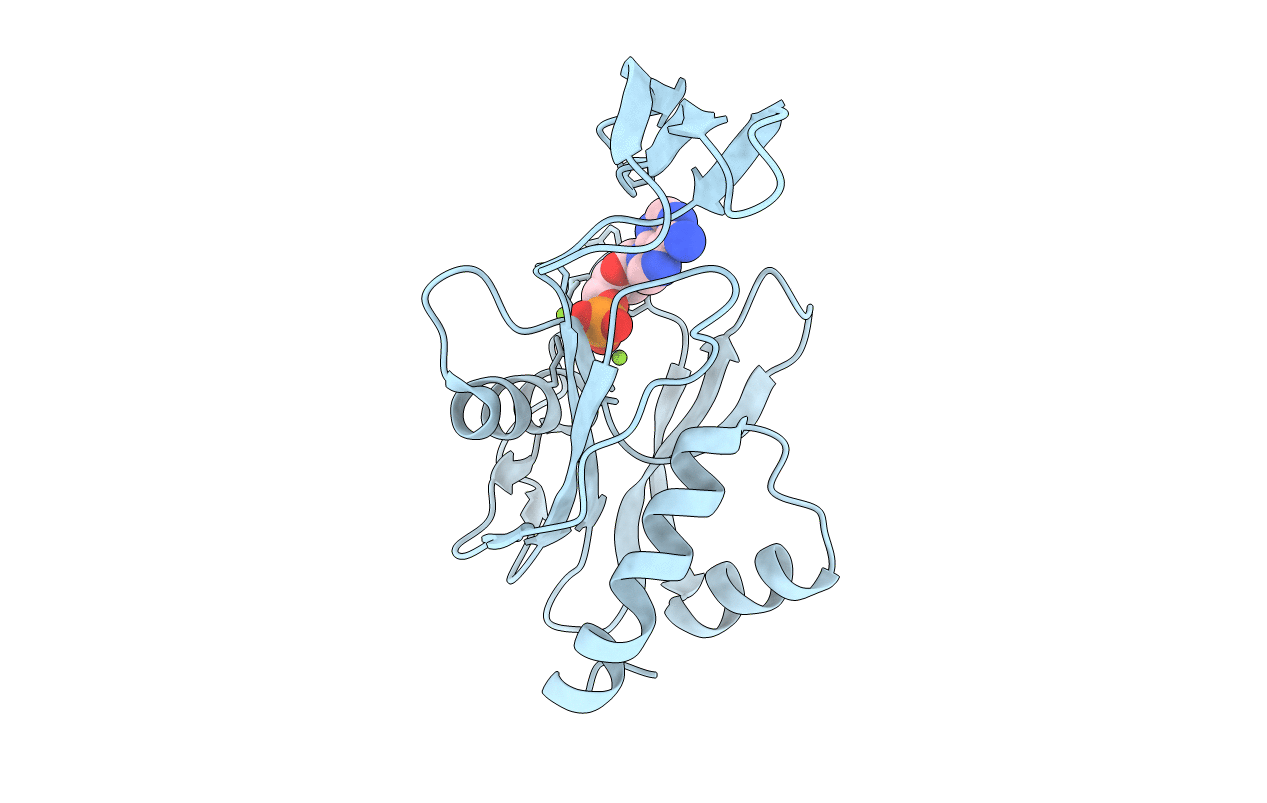
2YVO image
Deposition Date 2007-04-13
Release Date 2008-02-26
Last Version Date 2023-10-25
Entry Detail
PDB ID:
2YVO
Keywords:
Title:
Crystal structure of NDX2 in complex with MG2+ and AMP from thermus thermophilus HB8
Biological Source:
Source Organism:
Method Details:
Experimental Method:
Resolution:
1.67 Å
R-Value Free:
0.20
R-Value Work:
0.18
Space Group:
C 2 2 21

Macromolecular Entities
Structures with similar UniProt ID
Protein Blast
Polymer Type:polypeptide(L)
Molecule:MutT/nudix family protein
Gene (Uniprot):TTHA0863
Chain IDs:A
Chain Length:182
Number of Molecules:1
Biological Source:Thermus thermophilus
Primary Citation
Structural basis for different substrate specificities of two ADP-ribose pyrophosphatases from Thermus thermophilus HB8
J.Bacteriol. 190 1108 1117 (2008)
PMID: 18039767 DOI: 10.1128/JB.01522-07

Abstact

ADP-ribose (ADPR) is one of the main substrates of Nudix proteins. Among the eight Nudix proteins of Thermus thermophilus HB8, we previously determined the crystal structure of Ndx4, an ADPR pyrophosphatase (ADPRase). In this study we show that Ndx2 of T. thermophilus also preferentially hydrolyzes ADPR and flavin adenine dinucleotide and have determined its crystal structure. We have determined the structures of Ndx2 alone and in complex with Mg2+, with Mg2+ and AMP, and with Mg2+ and a nonhydrolyzable ADPR analogue. Although Ndx2 recognizes the AMP moiety in a manner similar to those for other ADPRases, it recognizes the terminal ribose in a distinct manner. The residues responsible for the recognition of the substrate in Ndx2 are not conserved among ADPRases. This may reflect the diversity in substrate specificity among ADPRases. Based on these results, we propose the classification of ADPRases into two types: ADPRase-I enzymes, which exhibit high specificity for ADPR; and ADPRase-II enzymes, which exhibit low specificity for ADPR. In the active site of the ternary complexes, three Mg2+ ions are coordinated to the side chains of conserved glutamate residues and water molecules. Substitution of Glu90 and Glu94 with glutamine suggests that these residues are essential for catalysis. These results suggest that ADPRase-I and ADPRase-II enzymes have nearly identical catalytic mechanisms but different mechanisms of substrate recognition.

Legend

Protein

Chemical

Disease

Primary Citation of related structures
Feedback Form
Name
Email
Institute
Feedback