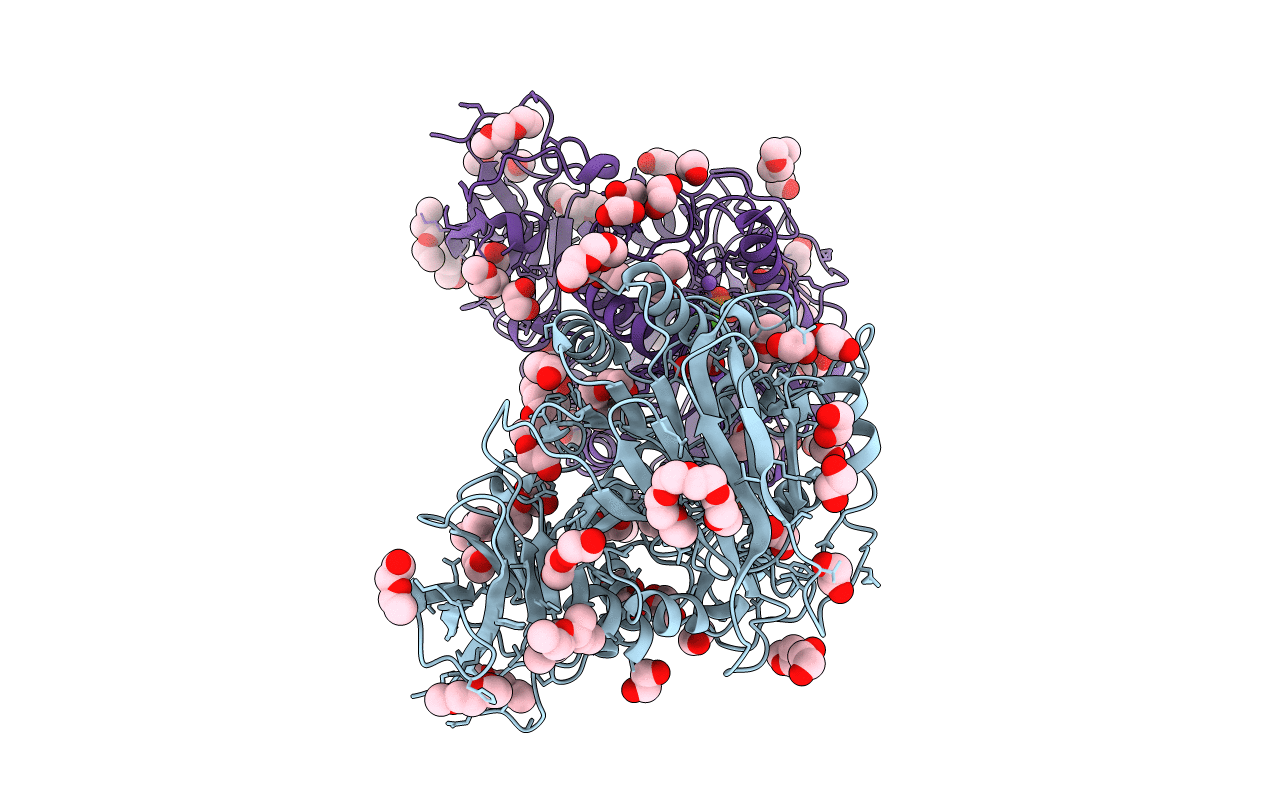
2YEQ image
Deposition Date 2011-03-30
Release Date 2012-04-18
Last Version Date 2024-05-08
Entry Detail
PDB ID:
2YEQ
Keywords:
Title:
Structure of PhoD
Biological Source:
Source Organism(s):
Expression System(s):
Method Details:
Experimental Method:
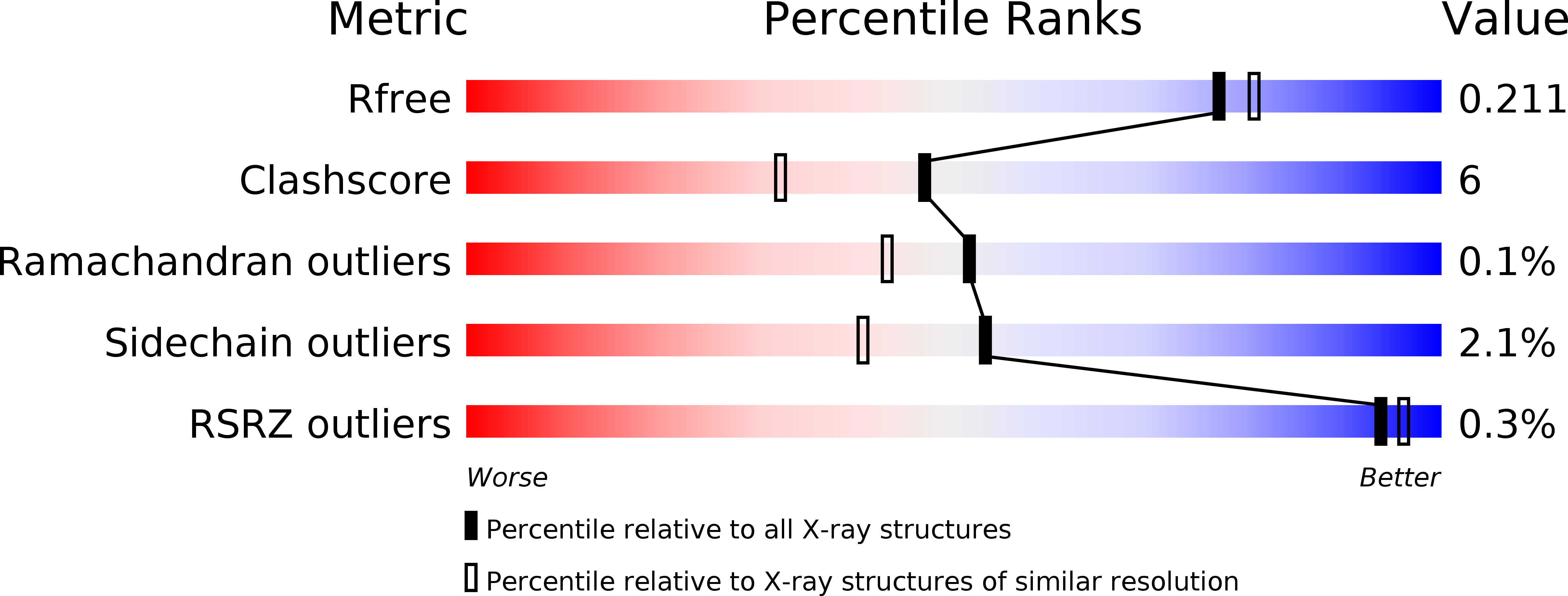
Resolution:
1.93 Å
R-Value Free:
0.20
R-Value Work:
0.17
R-Value Observed:
0.17
Space Group:
I 41 2 2
Macromolecular Entities
Structures with similar UniProt ID
Protein Blast
Polymer Type:polypeptide(L)
Molecule:ALKALINE PHOSPHATASE D
Gene (Uniprot):phoD
Chain IDs:A, B
Chain Length:527
Number of Molecules:2
Biological Source:BACILLUS SUBTILIS
Primary Citation
Crystal Structure of the Bacillus Subtilis Phosphodiesterase Phod Reveals an Iron and Calcium-Containing Active Site.
J.Biol.Chem. 289 30889 ? (2014)
PMID: 25217636 DOI: 10.1074/JBC.M114.604892

Abstact

The PhoD family of extra-cytoplasmic phosphodiesterases are among the most commonly occurring bacterial phosphatases. The exemplars for this family are the PhoD protein of Bacillus subtilis and the phospholipase D of Streptomyces chromofuscus. We present the crystal structure of B. subtilis PhoD. PhoD is most closely related to purple acid phosphatases (PAPs) with both types of enzyme containing a tyrosinate-ligated Fe(3+) ion. However, the PhoD active site diverges from that found in PAPs and uses two Ca(2+) ions instead of the single extra Fe(2+), Mn(2+), or Zn(2+) ion present in PAPs. The PhoD crystals contain a phosphate molecule that coordinates all three active site metal ions and that is proposed to represent a product complex. A C-terminal helix lies over the active site and controls access to the catalytic center. The structure of PhoD defines a new phosphatase active site architecture based on Fe(3+) and Ca(2+) ions.

Legend

Protein

Chemical

Disease

Primary Citation of related structures
Feedback Form
Name
Email
Institute
Feedback