2Y8K image
Deposition Date 2011-02-07
Release Date 2011-02-16
Last Version Date 2024-05-08
Entry Detail
PDB ID:
2Y8K
Keywords:
Title:
Structure of CtGH5-CBM6, an arabinoxylan-specific xylanase.
Biological Source:
Source Organism:
Host Organism:
Method Details:
Experimental Method:
Resolution:
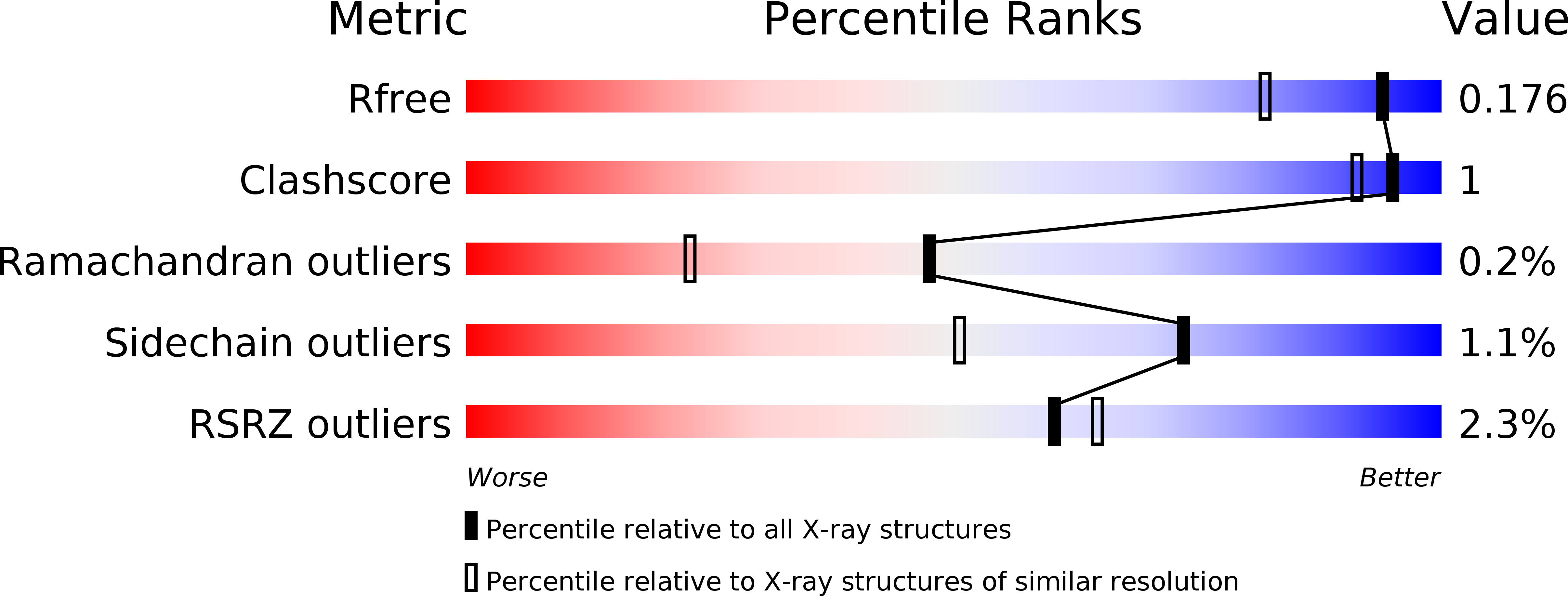
1.47 Å
R-Value Free:
0.16
R-Value Work:
0.14
R-Value Observed:
0.14
Space Group:
P 21 21 21
Macromolecular Entities
Structures with similar UniProt ID
Protein Blast
Polymer Type:polypeptide(L)
Molecule:CARBOHYDRATE BINDING FAMILY 6
Gene (Uniprot):Cthe_2193
Chain IDs:A
Chain Length:491
Number of Molecules:1
Biological Source:CLOSTRIDIUM THERMOCELLUM
Primary Citation
Structure and Function of an Arabinoxylan-Specific Xylanase.
J.Biol.Chem. 286 22510 ? (2011)
PMID: 21378160 DOI: 10.1074/JBC.M110.217315

Abstact

The enzymatic degradation of plant cell walls plays a central role in the carbon cycle and is of increasing environmental and industrial significance. The enzymes that catalyze this process include xylanases that degrade xylan, a β-1,4-xylose polymer that is decorated with various sugars. Although xylanases efficiently hydrolyze unsubstituted xylans, these enzymes are unable to access highly decorated forms of the polysaccharide, such as arabinoxylans that contain arabinofuranose decorations. Here, we show that a Clostridium thermocellum enzyme, designated CtXyl5A, hydrolyzes arabinoxylans but does not attack unsubstituted xylans. Analysis of the reaction products generated by CtXyl5A showed that all the oligosaccharides contain an O3 arabinose linked to the reducing end xylose. The crystal structure of the catalytic module (CtGH5) of CtXyl5A, appended to a family 6 noncatalytic carbohydrate-binding module (CtCBM6), showed that CtGH5 displays a canonical (α/β)(8)-barrel fold with the substrate binding cleft running along the surface of the protein. The catalytic apparatus is housed in the center of the cleft. Adjacent to the -1 subsite is a pocket that could accommodate an l-arabinofuranose-linked α-1,3 to the active site xylose, which is likely to function as a key specificity determinant. CtCBM6, which adopts a β-sandwich fold, recognizes the termini of xylo- and gluco-configured oligosaccharides, consistent with the pocket topology displayed by the ligand-binding site. In contrast to typical modular glycoside hydrolases, there is an extensive hydrophobic interface between CtGH5 and CtCBM6, and thus the two modules cannot function as independent entities.

Legend

Protein

Chemical

Disease

Primary Citation of related structures
Feedback Form
Name
Email
Institute
Feedback