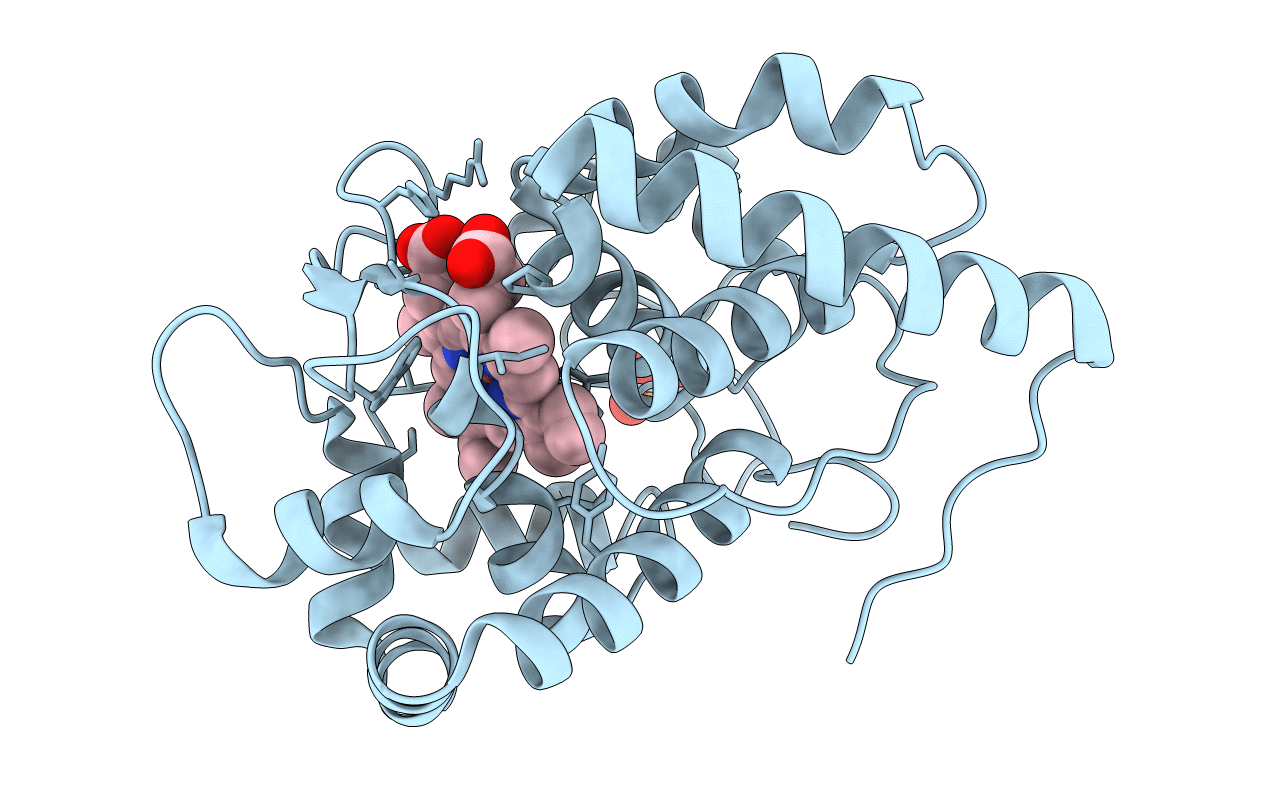
2Y6B image
Deposition Date 2011-01-20
Release Date 2011-10-12
Last Version Date 2023-12-20
Entry Detail
PDB ID:
2Y6B
Keywords:
Title:
Ascorbate Peroxidase R38K mutant
Biological Source:
Source Organism:
GLYCINE MAX (Taxon ID: 3847)
Host Organism:
Method Details:
Experimental Method:
Resolution:
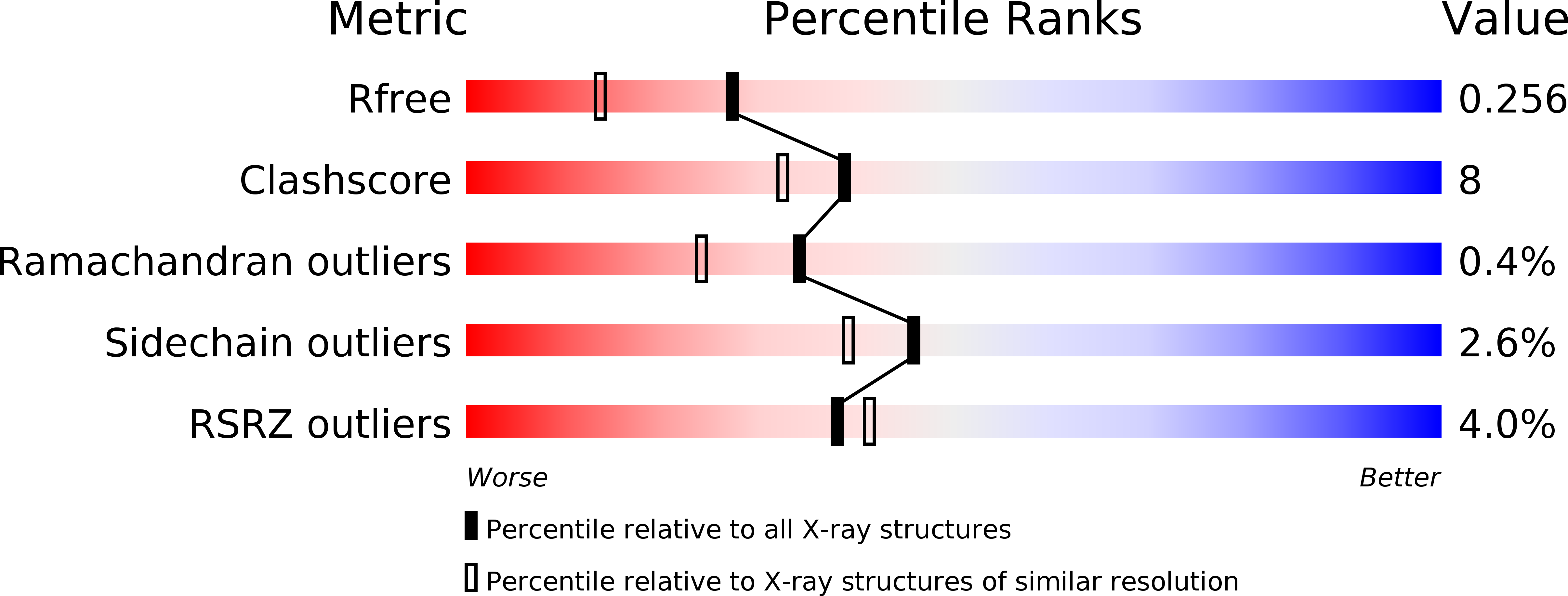
1.90 Å
R-Value Free:
0.24
R-Value Work:
0.17
R-Value Observed:
0.17
Space Group:
P 42 21 2
Macromolecular Entities
Structures with similar UniProt ID
Protein Blast
Polymer Type:polypeptide(L)
Molecule:ASCORBATE PEROXIDASE
Gene (Uniprot):apx1
Mutagens:YES
Chain IDs:A
Chain Length:249
Number of Molecules:1
Biological Source:GLYCINE MAX
Primary Citation
Proton Delivery to Ferryl Heme in a Heme Peroxidase: Enzymatic Use of the Grotthuss Mechanism.
J.Am.Chem.Soc. 133 15376 ? (2011)
PMID: 21819069 DOI: 10.1021/JA2007017

Abstact

We test the hypothesized pathway by which protons are passed from the substrate, ascorbate, to the ferryl oxygen in the heme enzyme ascorbate peroxidase (APX). The role of amino acid side chains and bound solvent is demonstrated. We investigated solvent kinetic isotope effects (SKIE) for the wild-type enzyme and several site-directed replacements of the key residues which form the proposed proton path. Kinetic constants for H(2)O(2)-dependent enzyme oxidation to Compound I, k(1), and subsequent reduction of Compound II, k(3), were determined in steady-state assays by variation of both H(2)O(2) and ascorbate concentrations. A high value of the SKIE for wild type APX ((D)k(3) = 4.9) as well as a clear nonlinear dependence on the deuterium composition of the solvent in proton inventory experiments suggest the simultaneous participation of several protons in the transition state for proton transfer. The full SKIE and the proton inventory data were modeled by applying Gross-Butler-Swain-Kresge theory to a proton path inferred from the known structure of APX. The model has been tested by constructing and determining the X-ray structures of the R38K and R38A variants and accounts for their observed SKIEs. This work confirms APX uses two arginine residues in the proton path. Thus, Arg38 and Arg172 have dual roles, both in the formation of the ferryl species and binding of ascorbate respectively and to facilitate proton transfer between the two.

Legend

Protein

Chemical

Disease

Primary Citation of related structures
Feedback Form
Name
Email
Institute
Feedback