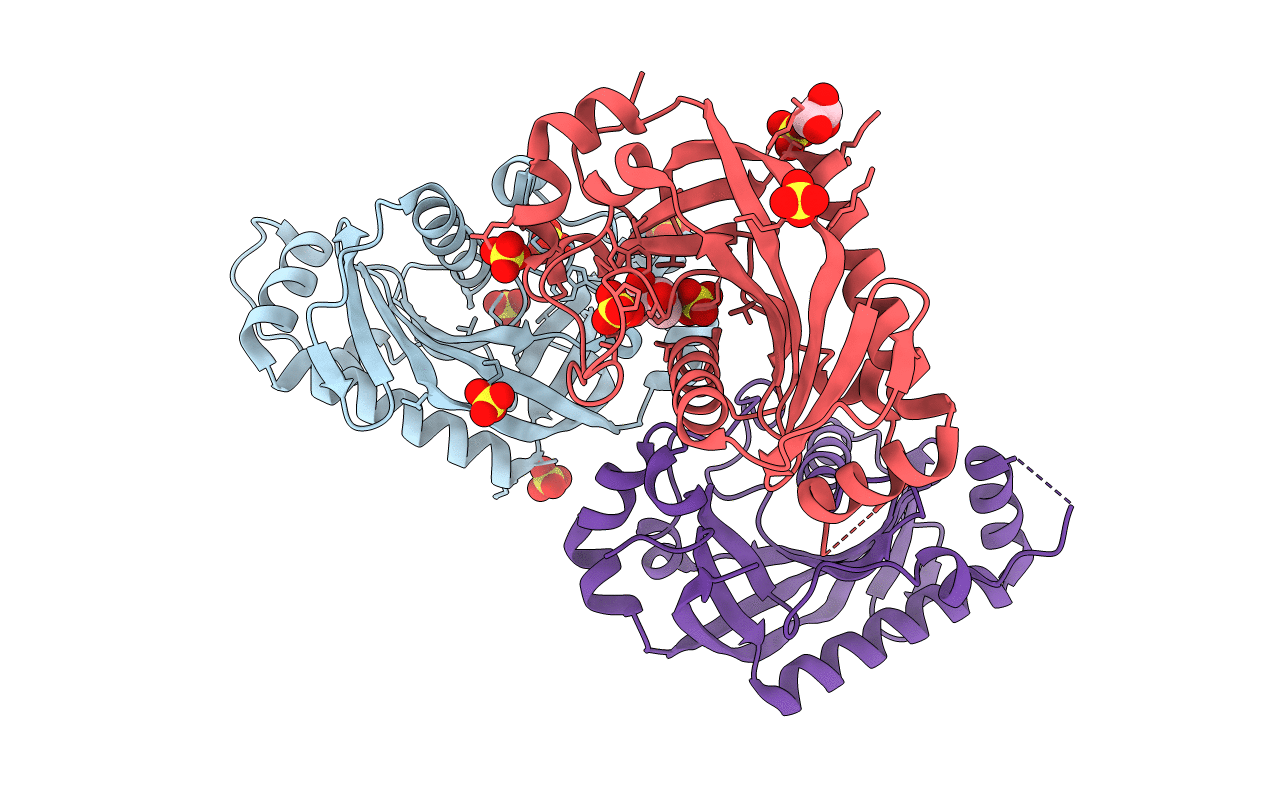
2Y3X image
Deposition Date 2011-01-04
Release Date 2012-01-25
Last Version Date 2023-12-20
Entry Detail
PDB ID:
2Y3X
Keywords:
Title:
Catalytic domain of mouse 2',3'-cyclic nucleotide 3'- phosphodiesterase, complexed with sulfate
Biological Source:
Source Organism:
MUS MUSCULUS (Taxon ID: 10090)
Host Organism:
Method Details:
Experimental Method:
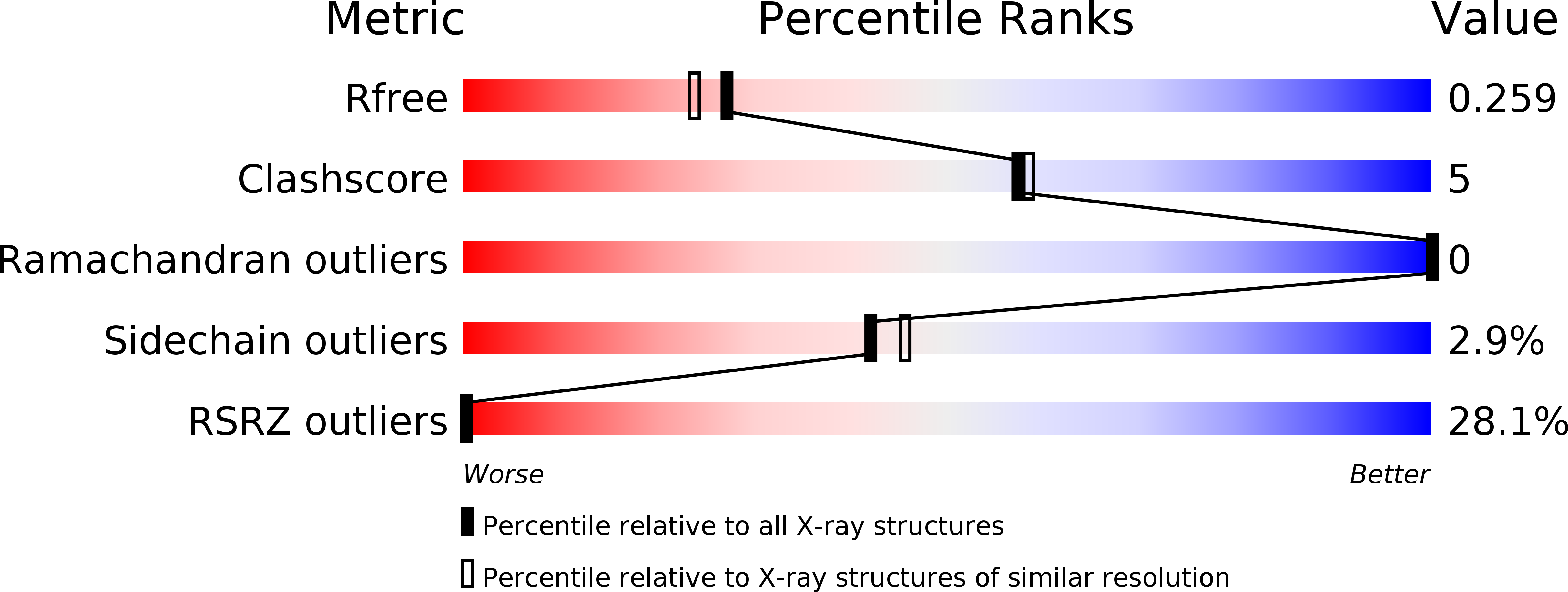
Resolution:
2.10 Å
R-Value Free:
0.22
R-Value Work:
0.18
R-Value Observed:
0.19
Space Group:
P 31
Macromolecular Entities
Structures with similar UniProt ID
Protein Blast
Polymer Type:polypeptide(L)
Molecule:2', 3'-CYCLIC-NUCLEOTIDE 3'-PHOSPHODIESTERASE
Gene (Uniprot):Cnp
Chain IDs:A, B, C (auth: E)
Chain Length:221
Number of Molecules:3
Biological Source:MUS MUSCULUS
Primary Citation
Myelin 2',3'-Cyclic Nucleotide 3'-Phosphodiesterase: Active-Site Ligand Binding and Molecular Conformation.
Plos One 7 32336 ? (2012)
PMID: 22393399 DOI: 10.1371/JOURNAL.PONE.0032336

Abstact

The 2',3'-cyclic nucleotide 3'-phosphodiesterase (CNPase) is a highly abundant membrane-associated enzyme in the myelin sheath of the vertebrate nervous system. CNPase is a member of the 2H phosphoesterase family and catalyzes the formation of 2'-nucleotide products from 2',3'-cyclic substrates; however, its physiological substrate and function remain unknown. It is likely that CNPase participates in RNA metabolism in the myelinating cell. We solved crystal structures of the phosphodiesterase domain of mouse CNPase, showing the binding mode of nucleotide ligands in the active site. The binding mode of the product 2'-AMP provides a detailed view of the reaction mechanism. Comparisons of CNPase crystal structures highlight flexible loops, which could play roles in substrate recognition; large differences in the active-site vicinity are observed when comparing more distant members of the 2H family. We also studied the full-length CNPase, showing its N-terminal domain is involved in RNA binding and dimerization. Our results provide a detailed picture of the CNPase active site during its catalytic cycle, and suggest a specific function for the previously uncharacterized N-terminal domain.

Legend

Protein

Chemical

Disease

Primary Citation of related structures
Feedback Form
Name
Email
Institute
Feedback