2Y3M image
Deposition Date 2010-12-21
Release Date 2011-04-27
Last Version Date 2024-05-08
Entry Detail
PDB ID:
2Y3M
Title:
Structure of the extra-membranous domain of the secretin HofQ from Actinobacillus actinomycetemcomitans
Biological Source:
Source Organism(s):
Expression System(s):
Method Details:
Experimental Method:
Resolution:
2.30 Å
R-Value Free:
0.23
R-Value Work:
0.20
R-Value Observed:
0.20
Space Group:
P 62
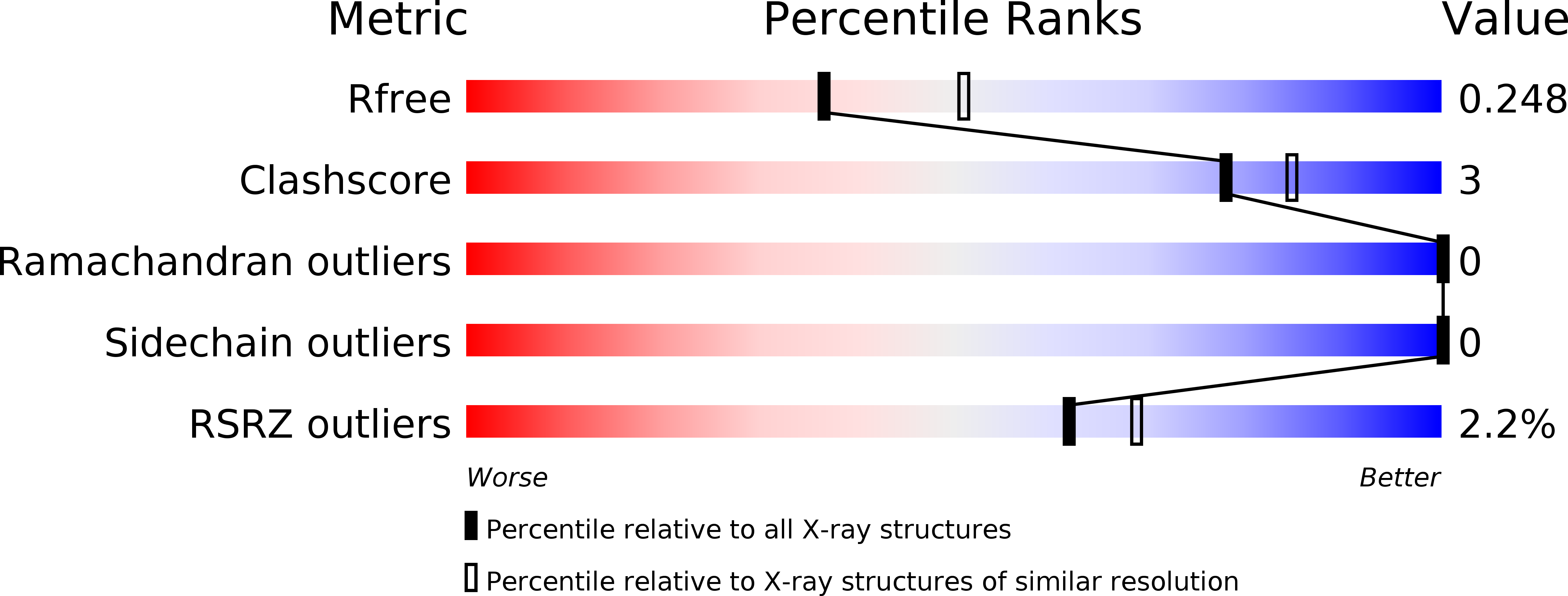
Macromolecular Entities
Polymer Type:polypeptide(L)
Molecule:PROTEIN TRANSPORT PROTEIN HOFQ
Chain IDs:A, B
Chain Length:175
Number of Molecules:2
Biological Source:AGGREGATIBACTER ACTINOMYCETEMCOMITANS
Primary Citation
The Extra-Membranous Domains of the Competence Protein Hofq Show DNA Binding, Flexibility and a Shared Fold with Type I Kh Domains.
J.Mol.Biol. 409 642 ? (2011)
PMID: 21530539 DOI: 10.1016/J.JMB.2011.04.034

Abstact

Secretins form large oligomeric assemblies in the membrane that control both macromolecular secretion and uptake. Several Pasteurellaceae are naturally competent for transformation, but the mechanism for DNA assimilation is largely unknown. In Haemophilus influenzae, the secretin ComE has been demonstrated to be essential for DNA uptake. In closely related Aggregatibacter actinomycetemcomitans, an opportunistic pathogen in periodontitis, the ComE homolog HofQ is believed to be the outer membrane DNA translocase. Here, we report the structure of the extra-membranous domains of HofQ at 2.3 Å resolution by X-ray crystallography. We also show that the extra-membranous domains of HofQ are capable of DNA binding. The structure reveals two secretin-like folds, the first of which is formed by means of a domain swap. The second domain displays extensive structural similarity to K homology (KH) domains, including the presence of a GxxG motif, which is essential for the nucleotide-binding function of KH domains, suggesting a possible mechanism for DNA binding by HofQ. The data indicate a direct involvement in DNA acquisition and provide insight into the molecular basis for natural competence.

Legend

Protein

Chemical

Disease

Primary Citation of related structures
Feedback Form
Name
Email
Institute
Feedback