2Y08 image
Deposition Date 2010-11-30
Release Date 2011-06-29
Last Version Date 2024-11-06
Entry Detail
PDB ID:
2Y08
Keywords:
Title:
Structure of the substrate-free FAD-dependent tirandamycin oxidase TamL
Biological Source:
Source Organism:
Host Organism:
Method Details:
Experimental Method:
Resolution:
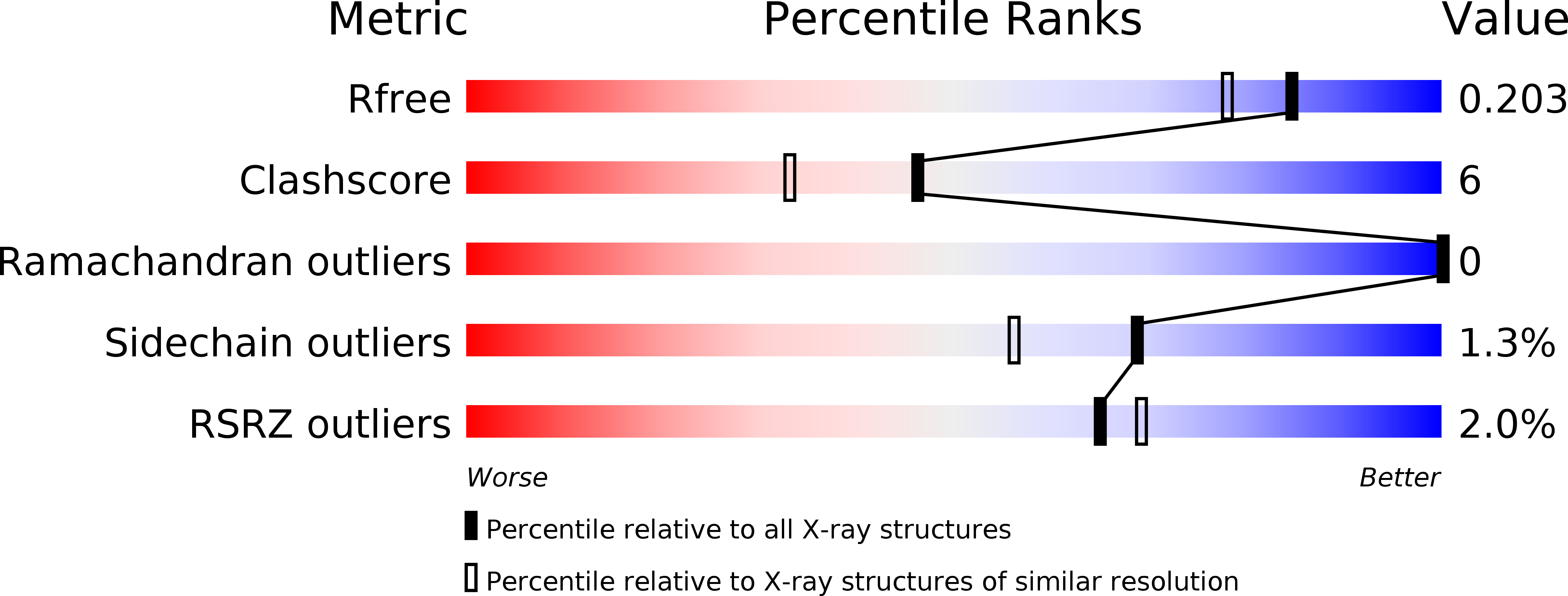
1.70 Å
R-Value Free:
0.20
R-Value Work:
0.14
R-Value Observed:
0.14
Space Group:
P 21 21 21
Macromolecular Entities
Structures with similar UniProt ID
Protein Blast
Polymer Type:polypeptide(L)
Molecule:TAML
Chain IDs:A, B
Chain Length:530
Number of Molecules:2
Biological Source:STREPTOMYCES SP. 307-9
Primary Citation
Tirandamycin Biosynthesis is Mediated by Co-Dependent Oxidative Enzymes
Nat.Chem 3 628 ? (2011)
PMID: 21778983 DOI: 10.1038/NCHEM.1087

Abstact

Elucidation of natural product biosynthetic pathways provides important insights into the assembly of potent bioactive molecules, and expands access to unique enzymes able to selectively modify complex substrates. Here, we show full reconstitution, in vitro, of an unusual multi-step oxidative cascade for post-assembly-line tailoring of tirandamycin antibiotics. This pathway involves a remarkably versatile and iterative cytochrome P450 monooxygenase (TamI) and a flavin adenine dinucleotide-dependent oxidase (TamL), which act co-dependently through the repeated exchange of substrates. TamI hydroxylates tirandamycin C (TirC) to generate tirandamycin E (TirE), a previously unidentified tirandamycin intermediate. TirE is subsequently oxidized by TamL, giving rise to the ketone of tirandamycin D (TirD), after which a unique exchange back to TamI enables successive epoxidation and hydroxylation to afford, respectively, the final products tirandamycin A (TirA) and tirandamycin B (TirB). Ligand-free, substrate- and product-bound crystal structures of bicovalently flavinylated TamL oxidase reveal a likely mechanism for the C10 oxidation of TirE.

Legend

Protein

Chemical

Disease

Primary Citation of related structures
Feedback Form
Name
Email
Institute
Feedback