2XX0 image
Deposition Date 2010-11-07
Release Date 2011-05-18
Last Version Date 2023-12-20
Entry Detail
PDB ID:
2XX0
Keywords:
Title:
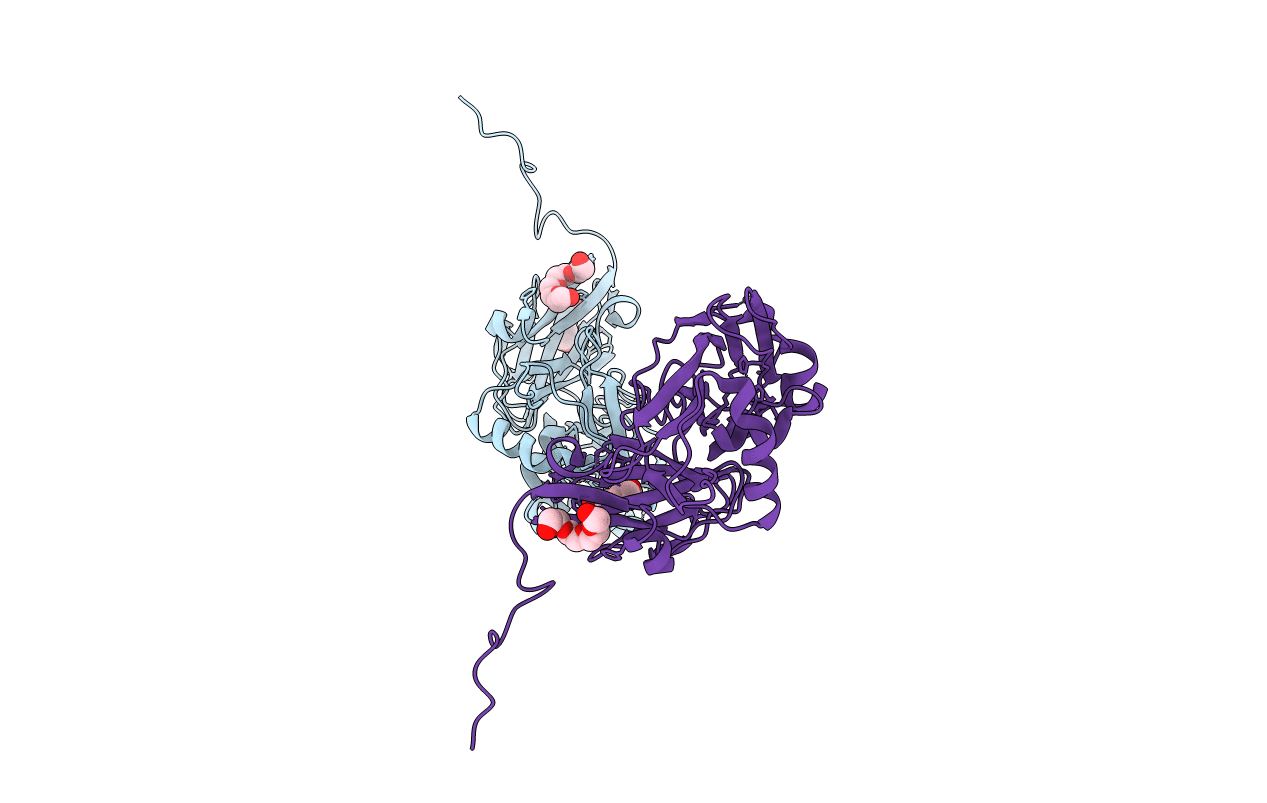
STRUCTURE OF THE N90S-H254F MUTANT OF NITRITE REDUCTASE FROM ALCALIGENES XYLOSOXIDANS
Biological Source:
Source Organism:
Host Organism:
Method Details:
Experimental Method:
Resolution:
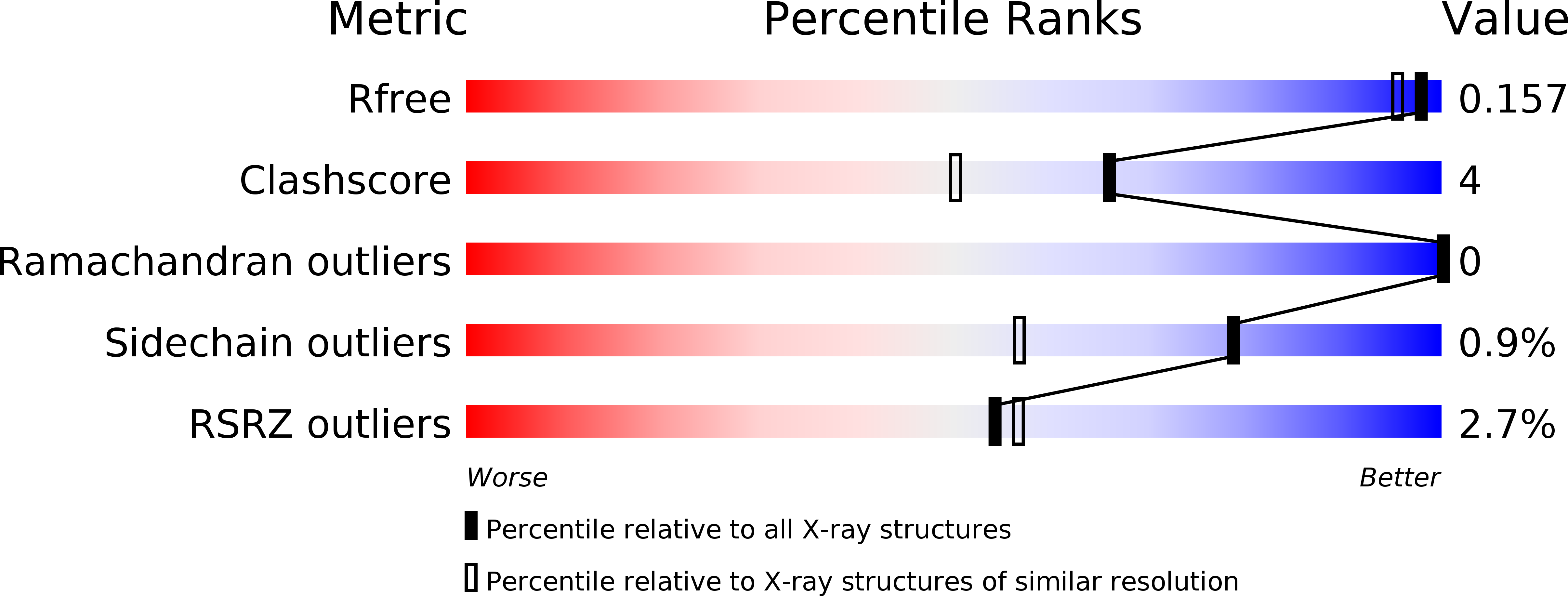
1.46 Å
R-Value Free:
0.15
R-Value Work:
0.12
R-Value Observed:
0.12
Space Group:
H 3
Macromolecular Entities
Structures with similar UniProt ID
Protein Blast
Polymer Type:polypeptide(L)
Molecule:DISSIMILATORY COPPER-CONTAINING NITRITE REDUCTASE
Gene (Uniprot):nir
Mutagens:YES
Chain IDs:A, B
Chain Length:336
Number of Molecules:2
Biological Source:ACHROMOBACTER XYLOSOXIDANS
Primary Citation
Proton-Coupled Electron Transfer in the Catalytic Cycle of Alcaligenes Xylosoxidans Copper-Dependent Nitrite Reductase.
Biochemistry 50 4121 ? (2011)
PMID: 21469743 DOI: 10.1021/BI200246F

Abstact

We demonstrated recently that two protons are involved in reduction of nitrite to nitric oxide through a proton-coupled electron transfer (ET) reaction catalyzed by the blue Cu-dependent nitrite reductase (Cu NiR) of Alcaligenes xylosoxidans (AxNiR). Here, the functionality of two putative proton channels, one involving Asn90 and the other His254, is studied using single (N90S, H254F) and double (N90S--H254F) mutants. All mutants studied are active, indicating that protons are still able to reach the active site. The H254F mutation has no effect on the catalytic activity, while the N90S mutation results in ~70% decrease in activity. Laser flash-photolysis experiments show that in H254F and wild-type enzyme electrons enter at the level of the T1Cu and then redistribute between the two Cu sites. Complete ET from T1Cu to T2Cu occurs only when nitrite binds at the T2Cu site. This indicates that substrate binding to T2Cu promotes ET from T1Cu, suggesting that the enzyme operates an ordered mechanism. In fact, in the N90S and N90S--H254F variants, where the T1Cu site redox potential is elevated by ∼60 mV, inter-Cu ET is only observed in the presence of nitrite. From these results it is evident that the Asn90 channel is the main proton channel in AxNiR, though protons can still reach the active site if this channel is disrupted. Crystallographic structures provide a clear structural rationale for these observations, including restoration of the proton delivery via a significant movement of the loop connecting the T1Cu ligands Cys130 and His139 that occurs on binding of nitrite. Notably, a role for this loop in facilitating interaction of cytochrome c(551) with Cu NiR has been suggested previously based on a crystal structure of the binary complex.

Legend

Protein

Chemical

Disease

Feedback Form
Name
Email
Institute
Feedback