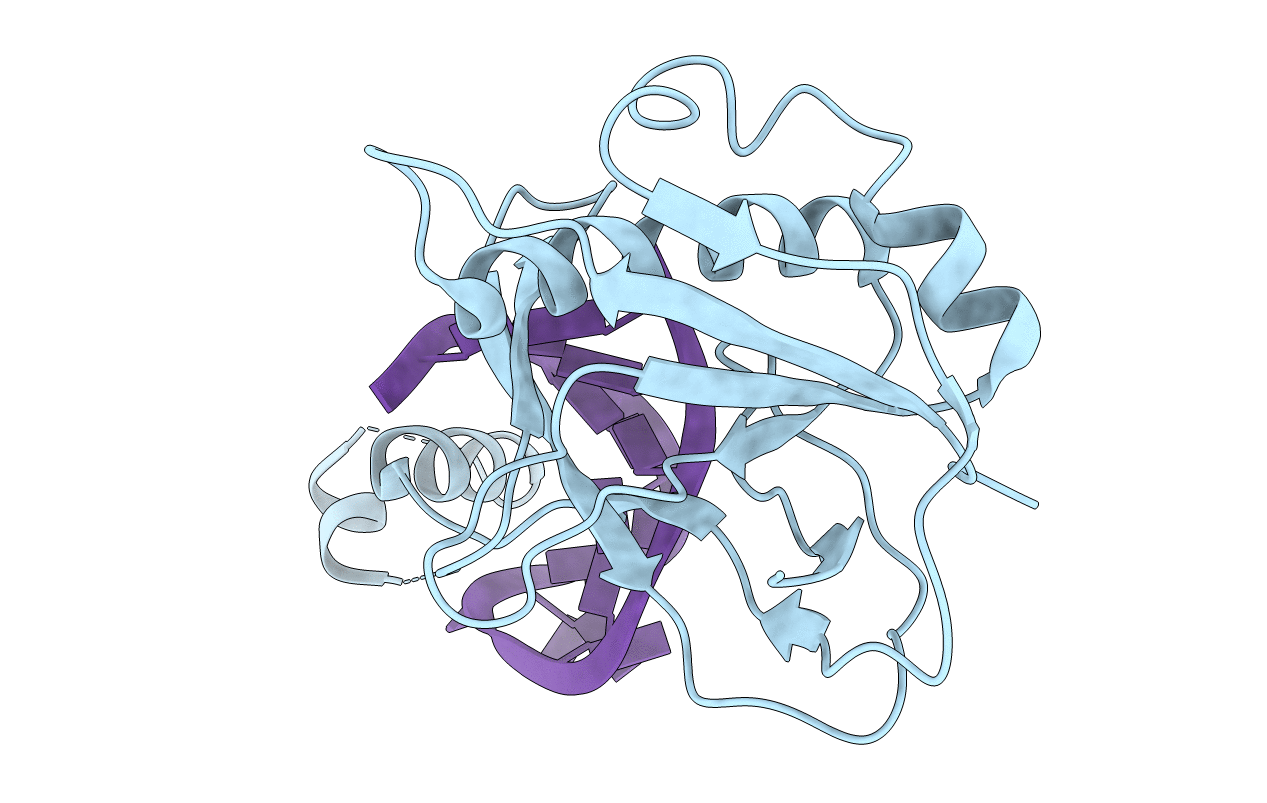
2XLJ image
Deposition Date 2010-07-20
Release Date 2010-09-22
Last Version Date 2023-12-20
Entry Detail
PDB ID:
2XLJ
Keywords:
Title:
Crystal structure of the Csy4-crRNA complex, hexagonal form
Biological Source:
Source Organism:
Host Organism:
Method Details:
Experimental Method:
Resolution:
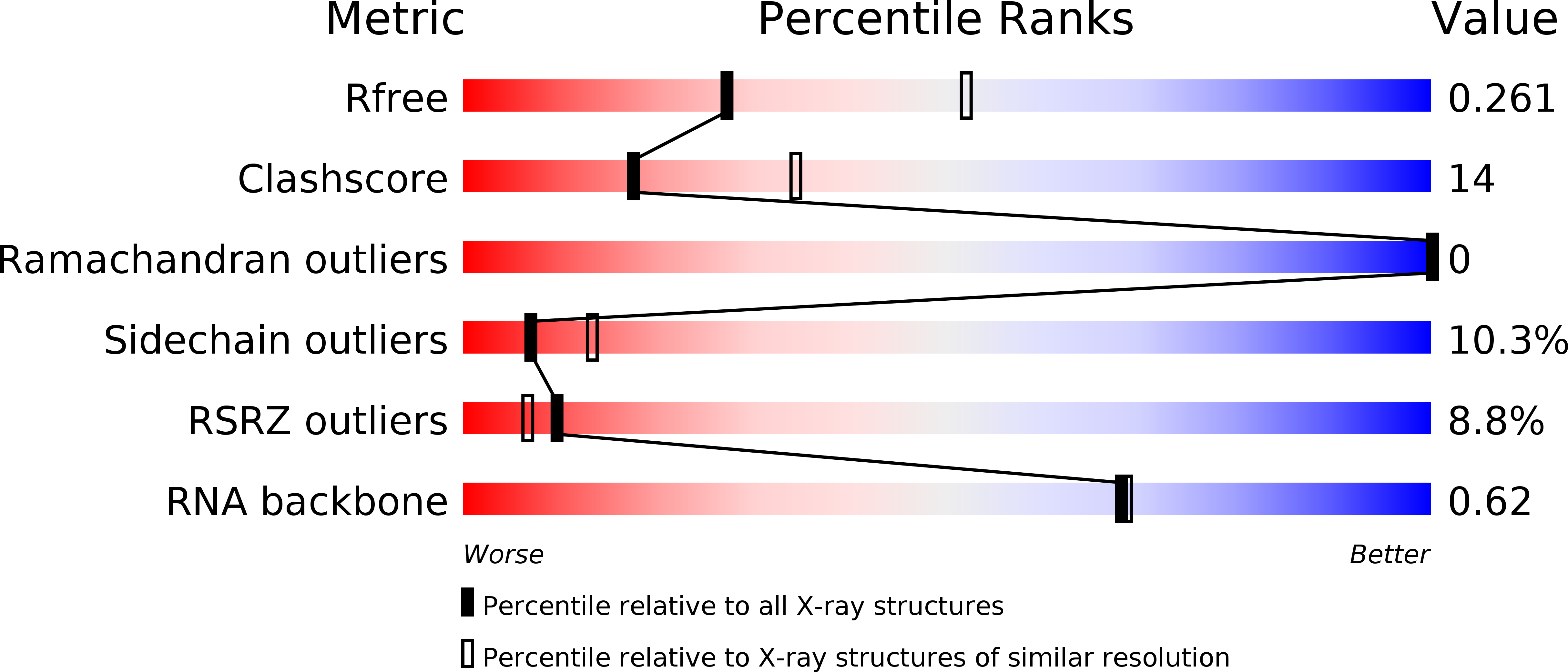
2.60 Å
R-Value Free:
0.27
R-Value Work:
0.24
R-Value Observed:
0.24
Space Group:
P 61
Macromolecular Entities
Structures with similar UniProt ID
Protein Blast
Polymer Type:polypeptide(L)
Molecule:CSY4 ENDORIBONUCLEASE
Mutagens:YES
Chain IDs:A
Chain Length:191
Number of Molecules:1
Biological Source:PSEUDOMONAS AERUGINOSA
Polymer Type:polyribonucleotide
Molecule:5'-R(*CP*UP*GP*CP*CP*GP*UP*AP*UP*AP*GP*GP*CP*A*DG*C)-3'
Chain IDs:B
Chain Length:16
Number of Molecules:1
Biological Source:PSEUDOMONAS AERUGINOSA
Primary Citation
Sequence- and Structure-Specific RNA Processing by a Crispr Endonuclease.
Science 329 1355 ? (2010)
PMID: 20829488 DOI: 10.1126/SCIENCE.1192272

Abstact

Many bacteria and archaea contain clustered regularly interspaced short palindromic repeats (CRISPRs) that confer resistance to invasive genetic elements. Central to this immune system is the production of CRISPR-derived RNAs (crRNAs) after transcription of the CRISPR locus. Here, we identify the endoribonuclease (Csy4) responsible for CRISPR transcript (pre-crRNA) processing in Pseudomonas aeruginosa. A 1.8 angstrom crystal structure of Csy4 bound to its cognate RNA reveals that Csy4 makes sequence-specific interactions in the major groove of the crRNA repeat stem-loop. Together with electrostatic contacts to the phosphate backbone, these enable Csy4 to bind selectively and cleave pre-crRNAs using phylogenetically conserved serine and histidine residues in the active site. The RNA recognition mechanism identified here explains sequence- and structure-specific processing by a large family of CRISPR-specific endoribonucleases.

Legend

Protein

Chemical

Disease

Primary Citation of related structures
Feedback Form
Name
Email
Institute
Feedback