2X7Z image
Deposition Date 2010-03-04
Release Date 2010-03-31
Last Version Date 2023-12-20
Entry Detail
PDB ID:
2X7Z
Title:
Crystal Structure of the SAP97 PDZ2 I342W C378A mutant protein domain
Biological Source:
Source Organism:
HOMO SAPIENS (Taxon ID: 9606)
Host Organism:
Method Details:
Experimental Method:
Resolution:
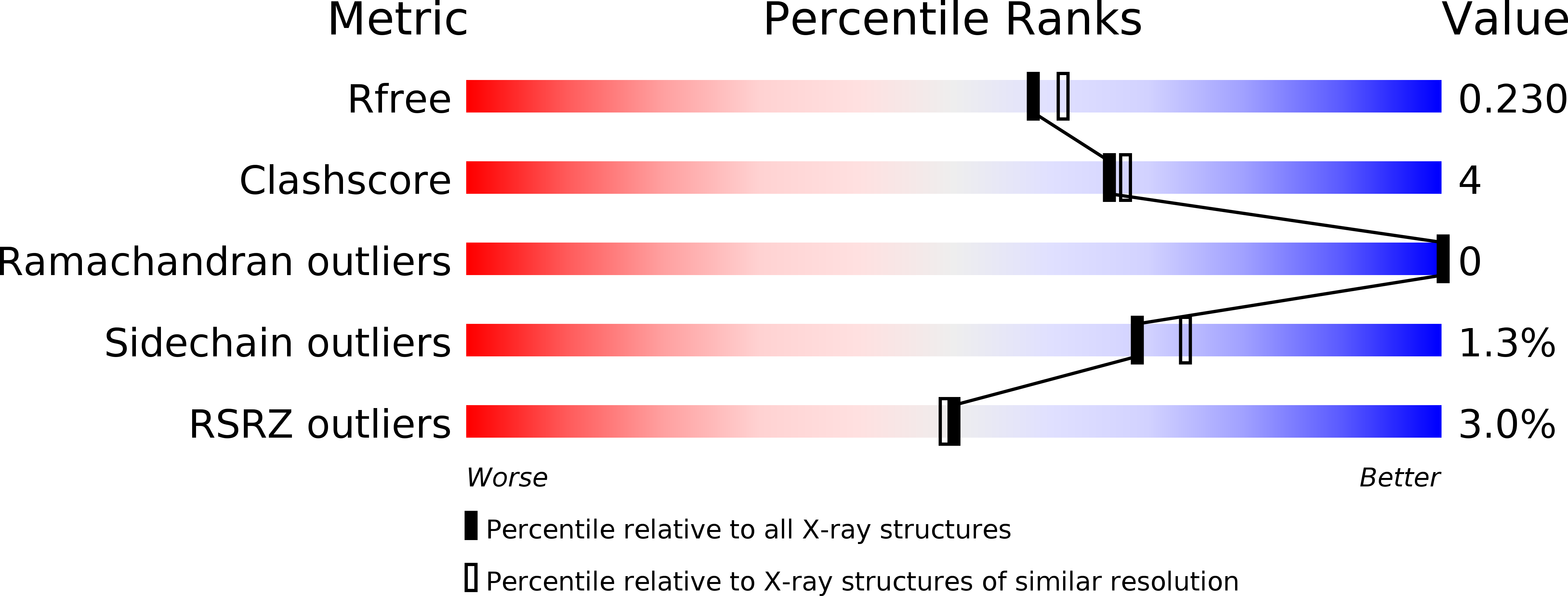
2.00 Å
R-Value Free:
0.23
R-Value Work:
0.19
R-Value Observed:
0.19
Space Group:
P 43 2 2
Macromolecular Entities
Structures with similar UniProt ID
Protein Blast
Polymer Type:polypeptide(L)
Molecule:DISKS LARGE HOMOLOG 1
Gene (Uniprot):DLG1
Mutagens:YES
Chain IDs:A
Chain Length:99
Number of Molecules:1
Biological Source:HOMO SAPIENS
Primary Citation
The Plastic Energy Landscape of Protein Folding: A Triangular Folding Mechanism with an Equilibrium Intermediate for a Small Protein Domain.
J.Biol.Chem. 285 18051 ? (2010)
PMID: 20356847 DOI: 10.1074/JBC.M110.110833

Abstact

Protein domains usually fold without or with only transiently populated intermediates, possibly to avoid misfolding, which could result in amyloidogenic disease. Whether observed intermediates are productive and obligatory species on the folding reaction pathway or dispensable by-products is a matter of debate. Here, we solved the crystal structure of a small protein domain, SAP97 PDZ2 I342W C378A, and determined its folding pathway. The presence of a folding intermediate was demonstrated both by single and double-mixing kinetic experiments using urea-induced (un)folding as well as ligand-induced folding. This protein domain was found to fold via a triangular scheme, where the folding intermediate could be either on- or off-pathway, depending on the experimental conditions. Furthermore, we found that the intermediate was present at equilibrium, which is rarely seen in folding reactions of small protein domains. The folding mechanism observed here illustrates the roughness and plasticity of the protein folding energy landscape, where several routes may be employed to reach the native state. The results also reconcile the folding mechanisms of topological variants within the PDZ domain family.

Legend

Protein

Chemical

Disease

Primary Citation of related structures
Feedback Form
Name
Email
Institute
Feedback