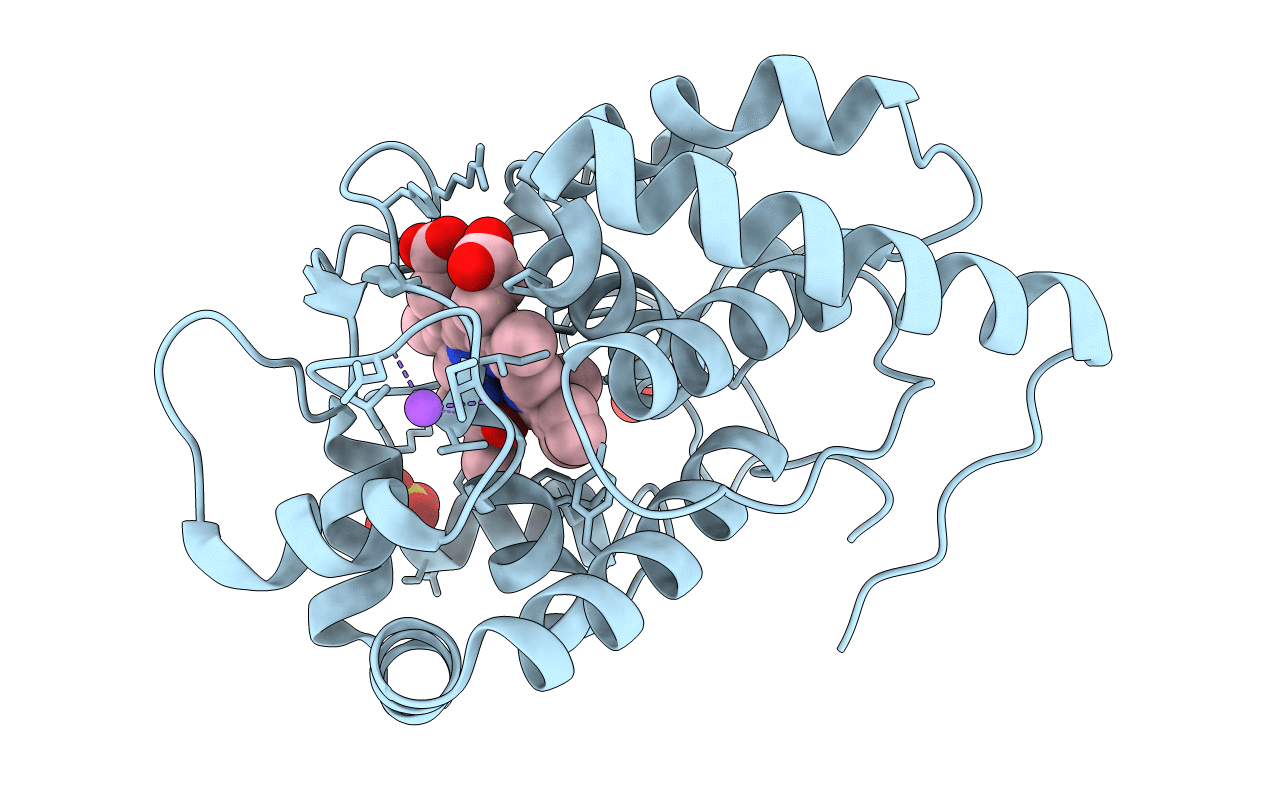
2WD4 image
Deposition Date 2009-03-19
Release Date 2009-04-07
Last Version Date 2023-12-13
Entry Detail
PDB ID:
2WD4
Keywords:
Title:
Ascorbate Peroxidase as a heme oxygenase: w41A variant product with t-butyl peroxide
Biological Source:
Source Organism(s):
GLYCINE MAX (Taxon ID: 3847)
Expression System(s):
Method Details:
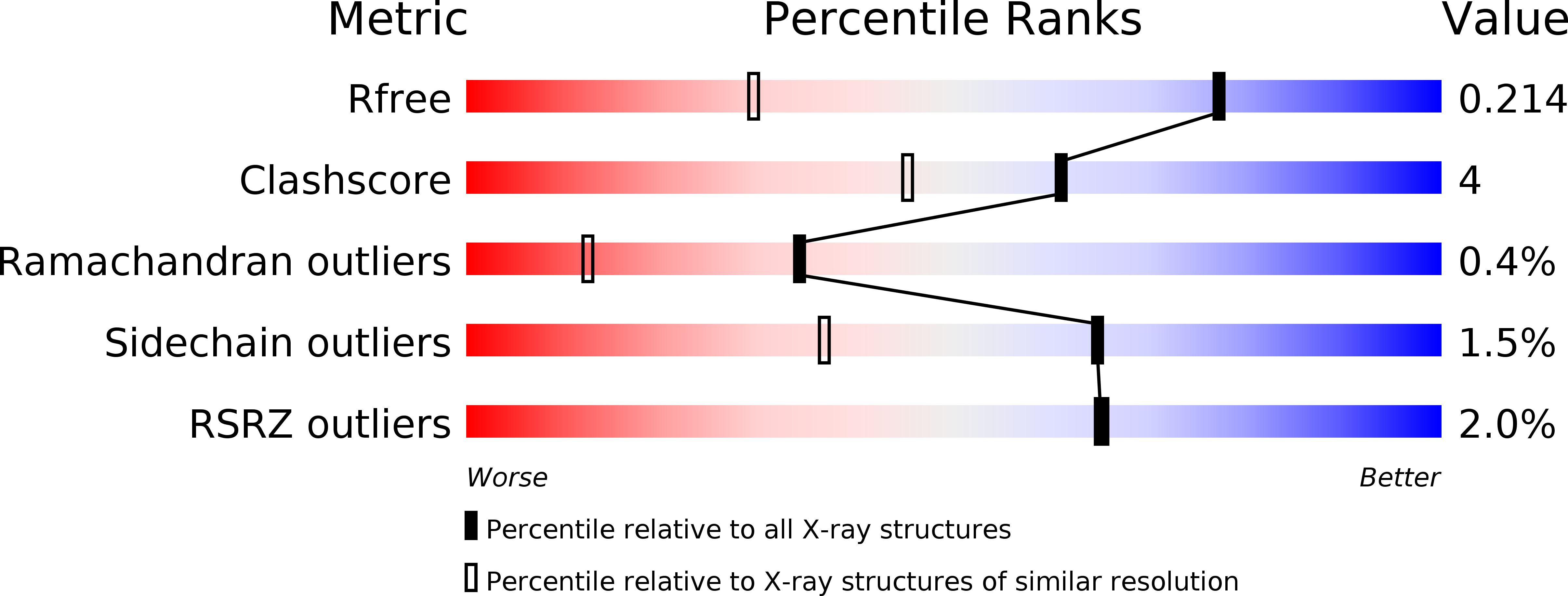
Experimental Method:
Resolution:
1.40 Å
R-Value Free:
0.21
R-Value Work:
0.18
R-Value Observed:
0.19
Space Group:
P 42 21 2
Macromolecular Entities
Structures with similar UniProt ID
Protein Blast
Polymer Type:polypeptide(L)
Molecule:ASCORBATE PEROXIDASE
Gene (Uniprot):apx1
Mutagens:YES
Chain IDs:A
Chain Length:261
Number of Molecules:1
Biological Source:GLYCINE MAX
Primary Citation
Evidence for Heme Oxygenase Activity in a Heme Peroxidase.
Biochemistry 48 4738 ? (2009)
PMID: 19309109 DOI: 10.1021/BI900118J

Abstact

The heme peroxidase and heme oxygenase enzymes share a common heme prosthetic group but catalyze fundamentally different reactions, the first being H(2)O(2)-dependent oxidation of substrate using an oxidized Compound I intermediate, and the second O(2)-dependent degradation of heme. It has been proposed that these enzymes utilize a common reaction intermediate, a ferric hydroperoxide species, that sits at a crossroads in the mechanism and beyond which there are two mutually exclusive mechanistic pathways. Here, we present evidence to support this proposal in a heme peroxidase. Hence, we describe kinetic data for a variant of ascorbate peroxidase (W41A) which reacts slowly with tert-butyl hydroperoxide and does not form the usual peroxidase Compound I intermediate; instead, structural data show that a product is formed in which the heme has been cleaved at the alpha-meso position, analogous to the heme oxygenase mechanism. We interpret this to mean that the Compound I (peroxidase) pathway is shut down, so that instead the reaction intermediate diverts through the alternative (heme oxygenase) route. A mechanism for formation of the product is proposed and discussed in the light of what is known about the heme oxygenase reaction mechanism.

Legend

Protein

Chemical

Disease

Primary Citation of related structures
Feedback Form
Name
Email
Institute
Feedback