2VYO image
Deposition Date 2008-07-25
Release Date 2008-08-12
Last Version Date 2024-11-20
Entry Detail
PDB ID:
2VYO
Keywords:
Title:
Chitin deacetylase family member from Encephalitozoon cuniculi
Biological Source:
Source Organism:
Host Organism:
Method Details:
Experimental Method:
Resolution:
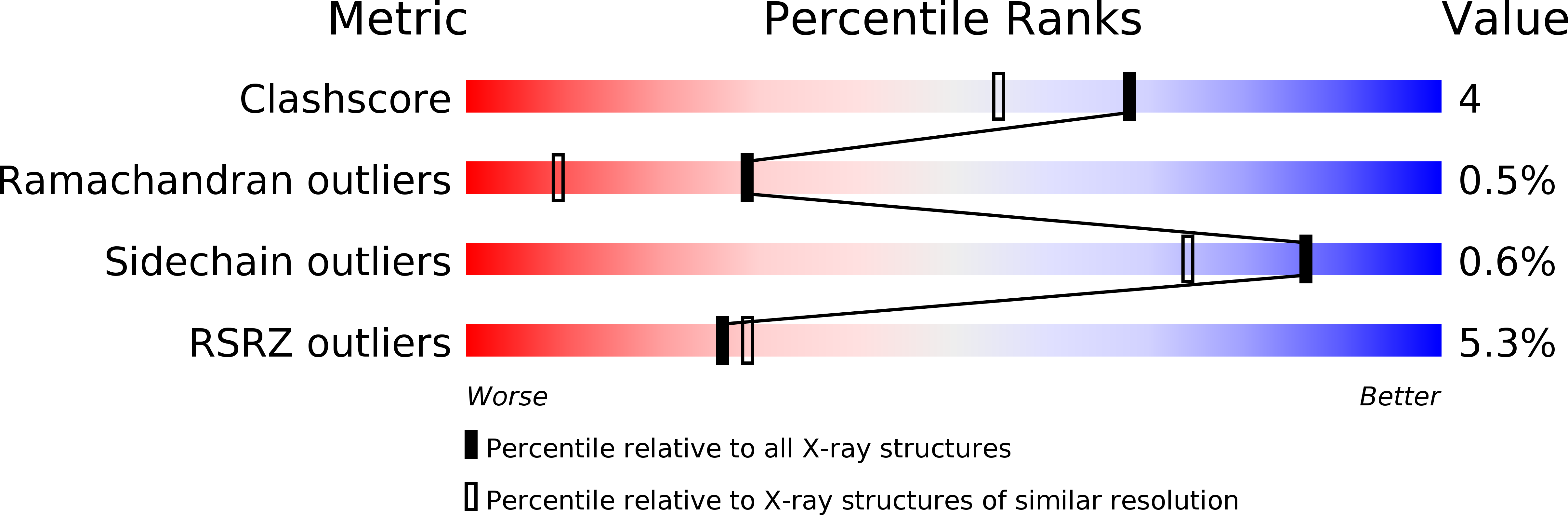
1.50 Å
R-Value Free:
0.21
R-Value Work:
0.19
R-Value Observed:
0.19
Space Group:
P 21 21 2
Macromolecular Entities
Structures with similar UniProt ID
Protein Blast
Polymer Type:polypeptide(L)
Molecule:POLYSACCHARIDE DEACETYLASE DOMAIN-CONTAINING PROTEIN ECU11_0510
Gene (Uniprot):ECU11_0510
Chain IDs:A
Chain Length:254
Number of Molecules:1
Biological Source:ENCEPHALITOZOON CUNICULI
Primary Citation
Structural and Functional Characterization of a Putative Polysaccharide Deacetylase of the Human Parasite Encephalitozoon Cuniculi.
Protein Sci. 18 1197 ? (2009)
PMID: 19472335 DOI: 10.1002/PRO.128

Abstact

The microsporidian Encephalitozoon cuniculi is an intracellular eukaryotic parasite considered to be an emerging opportunistic human pathogen. The infectious stage of this parasite is a unicellular spore that is surrounded by a chitin containing endospore layer and an external proteinaceous exospore. A putative chitin deacetylase (ECU11_0510) localizes to the interface between the plasma membrane and the endospore. Chitin deacetylases are family 4 carbohydrate esterases in the CAZY classification, and several bacterial members of this family are involved in evading lysis by host glycosidases, through partial de-N-acetylation of cell wall peptidoglycan. Similarly, ECU11_0510 could be important for E. cuniculi survival in the host, by protecting the chitin layer from hydrolysis by human chitinases. Here, we describe the biochemical, structural, and glycan binding properties of the protein. Enzymatic analyses showed that the putative deacetylase is unable to deacetylate chitooligosaccharides or crystalline beta-chitin. Furthermore, carbohydrate microarray analysis revealed that the protein bound neither chitooligosaccharides nor any of a wide range of other glycans or chitin. The high resolution crystal structure revealed dramatic rearrangements in the positions of catalytic and substrate binding residues, which explain the loss of deacetylase activity, adding to the unusual structural plasticity observed in other members of this esterase family. Thus, it appears that the ECU11_0510 protein is not a carbohydrate deacetylase and may fulfill an as yet undiscovered role in the E. cuniculi parasite.

Legend

Protein

Chemical

Disease

Primary Citation of related structures
Feedback Form
Name
Email
Institute
Feedback