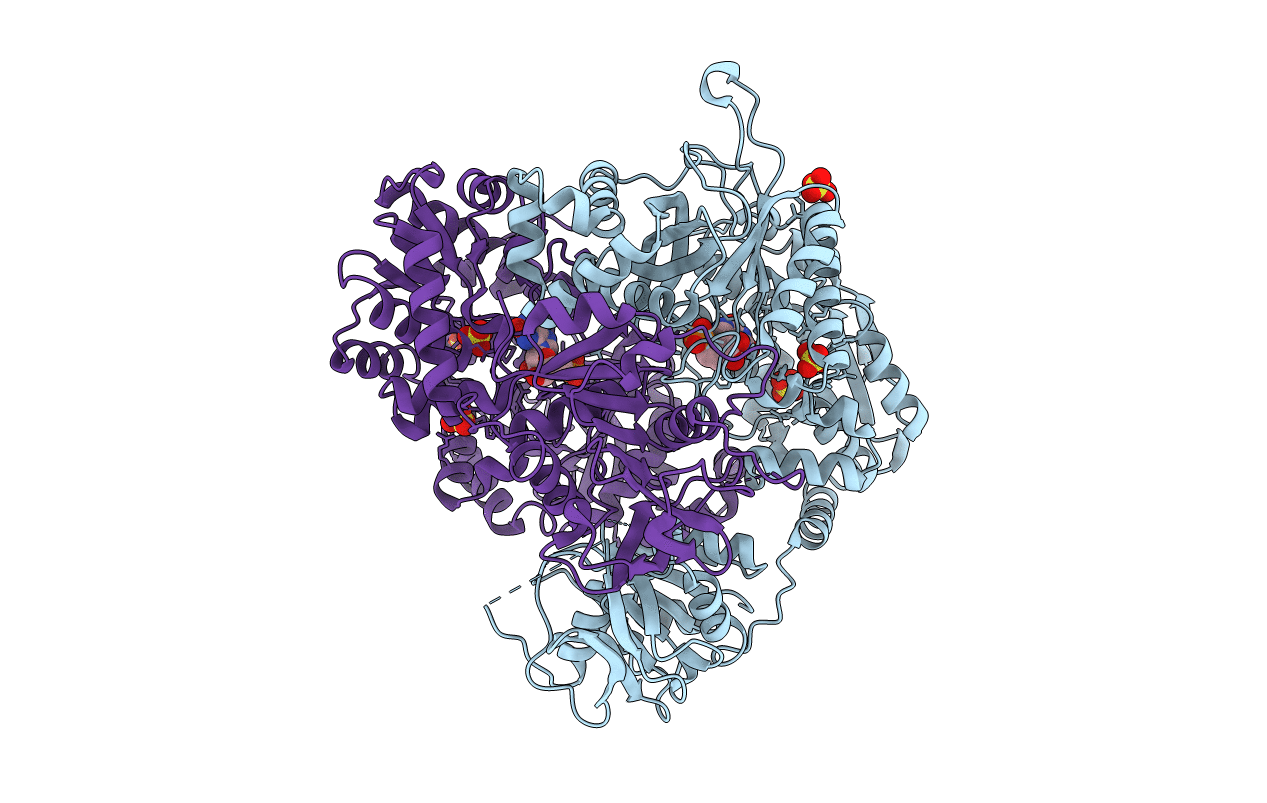
2VXO image
Deposition Date 2008-07-08
Release Date 2008-08-12
Last Version Date 2023-12-13
Entry Detail
PDB ID:
2VXO
Keywords:
Title:
Human GMP synthetase in complex with XMP
Biological Source:
Source Organism:
HOMO SAPIENS (Taxon ID: 9606)
Host Organism:
Method Details:
Experimental Method:
Resolution:
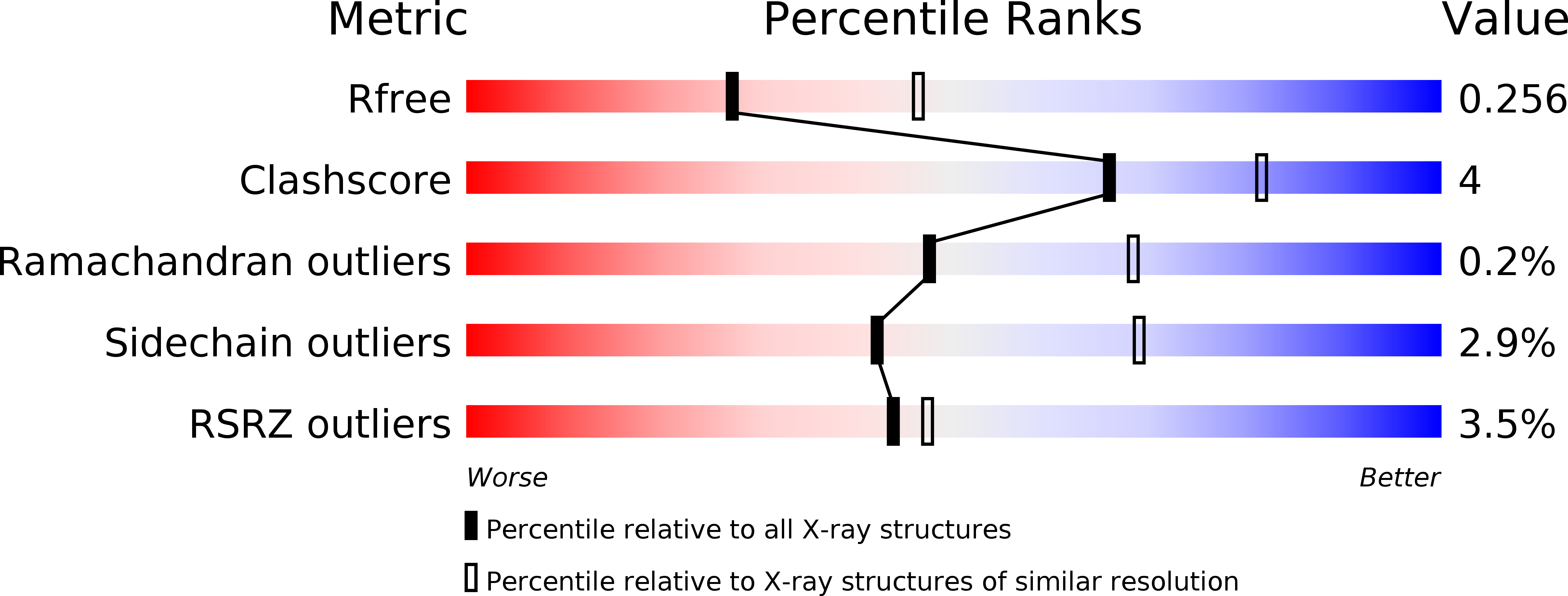
2.50 Å
R-Value Free:
0.25
R-Value Work:
0.20
R-Value Observed:
0.20
Space Group:
P 21 21 21
Macromolecular Entities
Structures with similar UniProt ID
Protein Blast
Polymer Type:polypeptide(L)
Molecule:GMP SYNTHASE [GLUTAMINE-HYDROLYZING]
Gene (Uniprot):GMPS
Chain IDs:A, B
Chain Length:697
Number of Molecules:2
Biological Source:HOMO SAPIENS
Primary Citation
Substrate Specificity and Oligomerization of Human Gmp Synthetase
J.Mol.Biol. 425 4323 ? (2013)
PMID: 23816837 DOI: 10.1016/J.JMB.2013.06.032

Abstact

Guanine monophosphate (GMP) synthetase is a bifunctional two-domain enzyme. The N-terminal glutaminase domain generates ammonia from glutamine and the C-terminal synthetase domain aminates xanthine monophosphate (XMP) to form GMP. Mammalian GMP synthetases (GMPSs) contain a 130-residue-long insert in the synthetase domain in comparison to bacterial proteins. We report here the structure of a eukaryotic GMPS. Substrate XMP was bound in the crystal structure of the human GMPS enzyme. XMP is bound to the synthetase domain and covered by a LID motif. The enzyme forms a dimer in the crystal structure with subunit orientations entirely different from the bacterial counterparts. The inserted sub-domain is shown to be involved in substrate binding and dimerization. Furthermore, the structural basis for XMP recognition is revealed as well as a potential allosteric site. Enzymes in the nucleotide metabolism typically display an increased activity in proliferating cells due to the increased need for nucleotides. Many drugs used as immunosuppressants and for treatment of cancer and viral diseases are indeed nucleobase- and nucleoside-based compounds, which are acting on or are activated by enzymes in this pathway. The information obtained from the crystal structure of human GMPS might therefore aid in understanding interactions of nucleoside-based drugs with GMPS and in structure-based design of GMPS-specific inhibitors.

Legend

Protein

Chemical

Disease

Primary Citation of related structures
Feedback Form
Name
Email
Institute
Feedback