2VSY image
Deposition Date 2008-05-01
Release Date 2008-11-18
Last Version Date 2024-05-08
Entry Detail
PDB ID:
2VSY
Keywords:
Title:
Xanthomonas campestris putative OGT (XCC0866), apostructure
Biological Source:
Source Organism:
Host Organism:
Method Details:
Experimental Method:
Resolution:
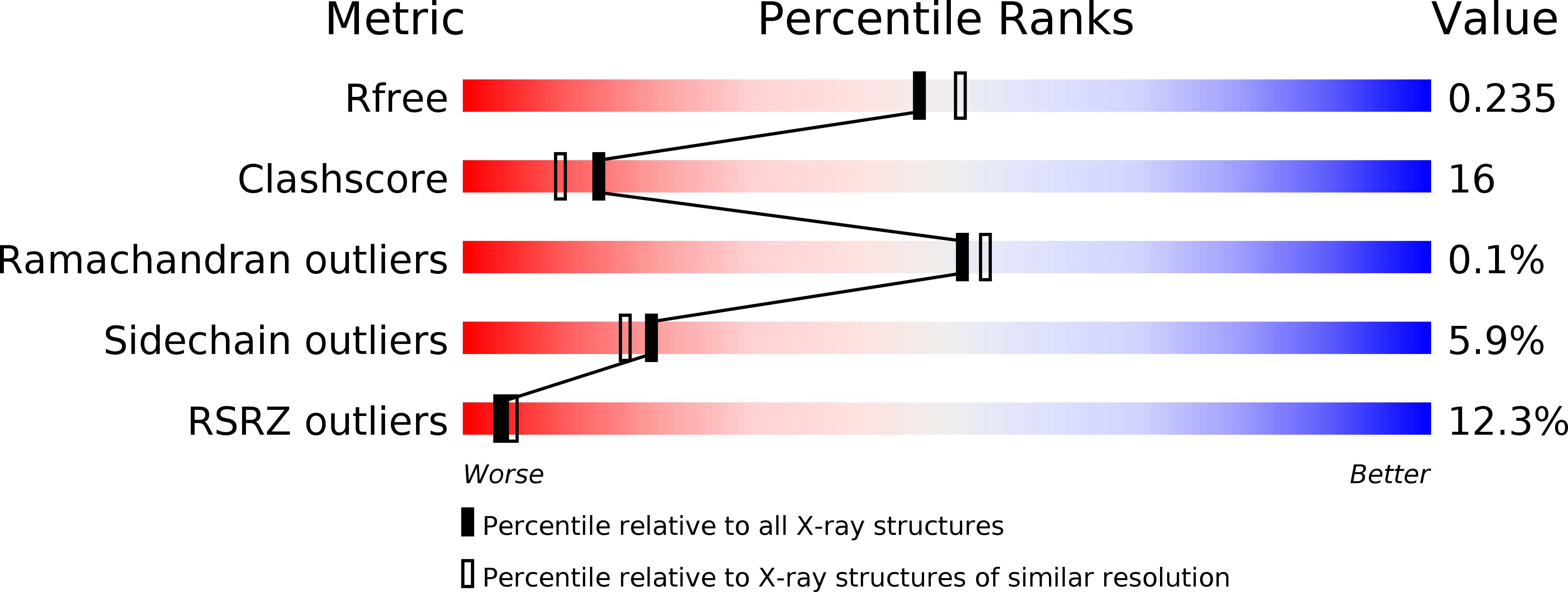
2.10 Å
R-Value Free:
0.23
R-Value Work:
0.19
R-Value Observed:
0.19
Space Group:
P 21 21 21
Macromolecular Entities
Structures with similar UniProt ID
Protein Blast
Polymer Type:polypeptide(L)
Molecule:XCC0866
Gene (Uniprot):XCC0866
Chain IDs:A, B
Chain Length:568
Number of Molecules:2
Biological Source:XANTHOMONAS CAMPESTRIS PV. CAMPESTRIS
Primary Citation
Structural Insights Into Mechanism and Specificity of O-Glcnac Transferase.
Embo J. 27 2780 ? (2008)
PMID: 18818698 DOI: 10.1038/EMBOJ.2008.186

Abstact

Post-translational modification of protein serines/threonines with N-acetylglucosamine (O-GlcNAc) is dynamic, inducible and abundant, regulating many cellular processes by interfering with protein phosphorylation. O-GlcNAcylation is regulated by O-GlcNAc transferase (OGT) and O-GlcNAcase, both encoded by single, essential, genes in metazoan genomes. It is not understood how OGT recognises its sugar nucleotide donor and performs O-GlcNAc transfer onto proteins/peptides, and how the enzyme recognises specific cellular protein substrates. Here, we show, by X-ray crystallography and mutagenesis, that OGT adopts the (metal-independent) GT-B fold and binds a UDP-GlcNAc analogue at the bottom of a highly conserved putative peptide-binding groove, covered by a mobile loop. Strikingly, the tetratricopeptide repeats (TPRs) tightly interact with the active site to form a continuous 120 A putative interaction surface, whereas the previously predicted phosphatidylinositide-binding site locates to the opposite end of the catalytic domain. On the basis of the structure, we identify truncation/point mutants of the TPRs that have differential effects on activity towards proteins/peptides, giving first insights into how OGT may recognise its substrates.

Legend

Protein

Chemical

Disease

Primary Citation of related structures
Feedback Form
Name
Email
Institute
Feedback