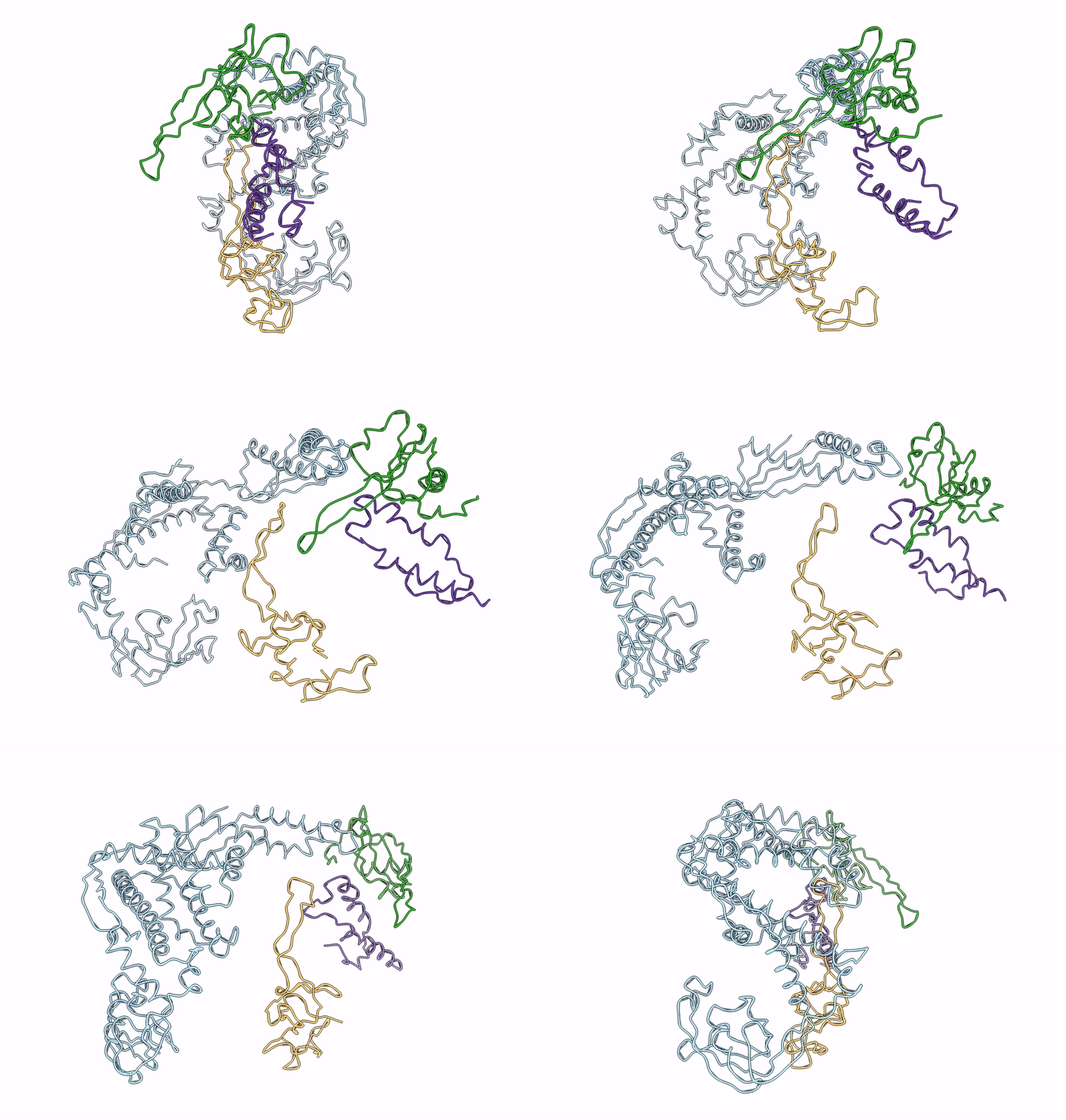
2VRH image
Deposition Date 2008-04-07
Release Date 2008-06-17
Last Version Date 2024-11-06
Entry Detail
PDB ID:
2VRH
Keywords:
Title:
Structure of the E. coli trigger factor bound to a translating ribosome
Biological Source:
Source Organism:
ESCHERICHIA COLI (Taxon ID: 562)
Host Organism:
Method Details:
Experimental Method:
Resolution:
19.00 Å
Aggregation State:
PARTICLE
Reconstruction Method:
SINGLE PARTICLE
Macromolecular Entities
Structures with similar UniProt ID
Protein Blast
Polymer Type:polypeptide(L)
Molecule:TRIGGER FACTOR
Gene (Uniprot):tig
Chain IDs:A
Chain Length:432
Number of Molecules:1
Biological Source:ESCHERICHIA COLI
Structures with similar UniProt ID
Protein Blast
Polymer Type:polypeptide(L)
Molecule:50S RIBOSOMAL PROTEIN L23
Chain IDs:B
Chain Length:100
Number of Molecules:1
Biological Source:ESCHERICHIA COLI
Structures with similar UniProt ID
Protein Blast
Polymer Type:polypeptide(L)
Molecule:50S RIBOSOMAL PROTEIN L24
Gene (Uniprot):rplX
Chain IDs:C
Chain Length:103
Number of Molecules:1
Biological Source:ESCHERICHIA COLI
Structures with similar UniProt ID
Protein Blast
Polymer Type:polypeptide(L)
Molecule:50S RIBOSOMAL PROTEIN L29
Gene (Uniprot):rpmC
Chain IDs:D
Chain Length:63
Number of Molecules:1
Biological Source:ESCHERICHIA COLI
Modified Residue
Compound ID Chain ID Parent Comp ID Details 2D Image
MSE A MET SELENOMETHIONINE
Ligand Molecules
Primary Citation
Molecular Mechanism and Structure of Trigger Factor Bound to the Translating Ribosome.
Embo J. 27 1622 ? (2008)
PMID: 18497744 DOI: 10.1038/EMBOJ.2008.89

Abstact

Ribosome-associated chaperone Trigger Factor (TF) initiates folding of newly synthesized proteins in bacteria. Here, we pinpoint by site-specific crosslinking the sequence of molecular interactions of Escherichia coli TF and nascent chains during translation. Furthermore, we provide the first full-length structure of TF associated with ribosome-nascent chain complexes by using cryo-electron microscopy. In its active state, TF arches over the ribosomal exit tunnel accepting nascent chains in a protective void. The growing nascent chain initially follows a predefined path through the entire interior of TF in an unfolded conformation, and even after folding into a domain it remains accommodated inside the protective cavity of ribosome-bound TF. The adaptability to accept nascent chains of different length and folding states may explain how TF is able to assist co-translational folding of all kinds of nascent polypeptides during ongoing synthesis. Moreover, we suggest a model of how TF's chaperoning function can be coordinated with the co-translational processing and membrane targeting of nascent polypeptides by other ribosome-associated factors.

Legend

Protein

Chemical

Disease

Primary Citation of related structures
Feedback Form
Name
Email
Institute
Feedback