2VLM image
Deposition Date 2008-01-15
Release Date 2008-01-22
Last Version Date 2024-10-23
Entry Detail
PDB ID:
2VLM
Keywords:
Title:
The Structural Dynamics and Energetics of an Immunodominant T-cell Receptor are Programmed by its Vbeta Domain
Biological Source:
Source Organism:
HOMO SAPIENS (Taxon ID: 9606)
Host Organism:
Method Details:
Experimental Method:
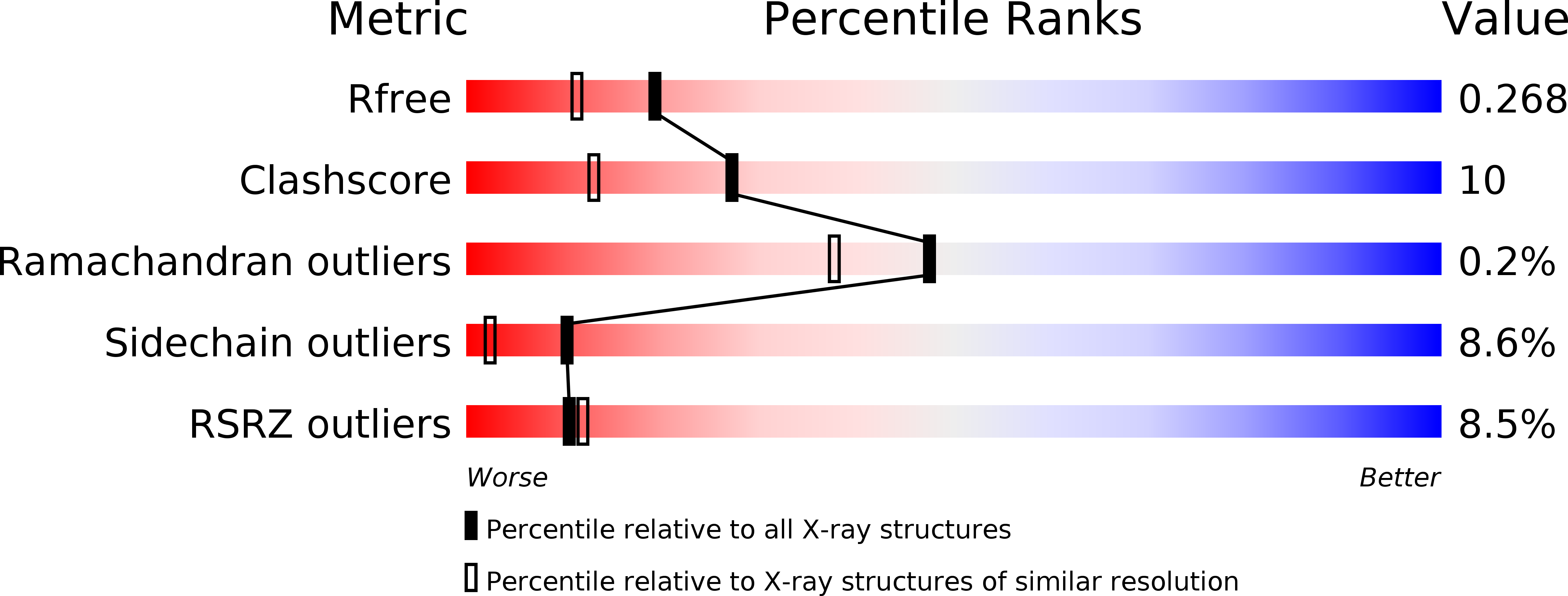
Resolution:
1.98 Å
R-Value Free:
0.27
R-Value Work:
0.20
R-Value Observed:
0.20
Space Group:
P 61
Macromolecular Entities
Structures with similar UniProt ID
Protein Blast
Polymer Type:polypeptide(L)
Molecule:JM22 TCR ALPHA CHAIN
Chain IDs:A (auth: D)
Chain Length:201
Number of Molecules:1
Biological Source:HOMO SAPIENS
Structures with similar UniProt ID
Protein Blast
Polymer Type:polypeptide(L)
Molecule:JM22 TCR BETA CHAIN
Chain IDs:B (auth: E)
Chain Length:244
Number of Molecules:1
Biological Source:HOMO SAPIENS
Primary Citation
The Structural Dynamics and Energetics of an Immunodominant T-Cell Receptor are Programmed by its Vbeta Domain
Immunity 28 171 ? (2008)
PMID: 18275829 DOI: 10.1016/J.IMMUNI.2007.12.018

Abstact

Immunodominant and public T cell receptor (TCR) usage is relatively common in many viral diseases yet surprising in the context of the large naive TCR repertoire. We examined the highly conserved Vbeta17:Valpha10.2 JM22 T cell response to the influenza matrix peptide (58-66)-HLA-A*0201 (HLA-A2-flu) through extensive kinetic, thermodynamic, and structural analyses. We found several conformational adjustments that accompany JM22-HLA-A2-flu binding and identified a binding "hotspot" within the Vbeta domain of the TCR. Within this hotspot, key germline-encoded CDR1 and CDR2 loop residues and a crucial but commonly coded residue in the hypervariable region of CDR3 provide the basis for the substantial bias in the selection of the germline-encoded Vbeta17 domain. The chances of having a substantial number of T cells in the naive repertoire that have HLA-A2-flu-specific Vbeta17 receptors may consequently be relatively high, thus explaining the immunodominant usage of this clonotype.

Legend

Protein

Chemical

Disease

Primary Citation of related structures
Feedback Form
Name
Email
Institute
Feedback