2RKN image
Deposition Date 2007-10-17
Release Date 2008-09-02
Last Version Date 2024-10-30
Entry Detail
PDB ID:
2RKN
Title:
X-ray structure of the self-defense and signaling protein DIR1 from Arabidopsis taliana
Biological Source:
Source Organism:
Host Organism:
Method Details:
Experimental Method:
Resolution:
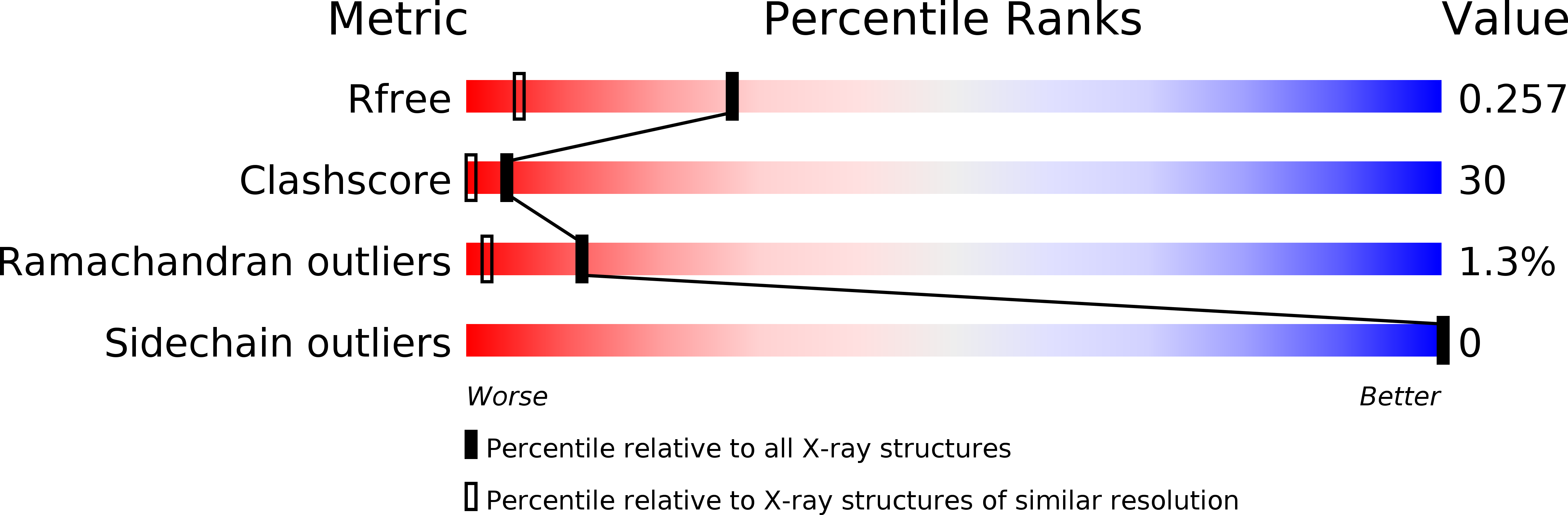
1.60 Å
R-Value Free:
0.25
R-Value Work:
0.18
R-Value Observed:
0.19
Space Group:
P 21 21 21
Macromolecular Entities
Structures with similar UniProt ID
Protein Blast
Polymer Type:polypeptide(L)
Molecule:DIR1 protein
Gene (Uniprot):DIR1
Chain IDs:A
Chain Length:77
Number of Molecules:1
Biological Source:Arabidopsis thaliana
Primary Citation
The structure of "defective in induced resistance" protein of Arabidopsis thaliana, DIR1, reveals a new type of lipid transfer protein.
Protein Sci. 17 1522 1530 (2008)
PMID: 18552128 DOI: 10.1110/ps.035972.108

Abstact

Screening of transfer DNA (tDNA) tagged lines of Arabidopsis thaliana for mutants defective in systemic acquired resistance led to the characterization of dir1-1 (defective in induced resistance [systemic acquired resistance, SAR]) mutant. It has been suggested that the protein encoded by the dir1 gene, i.e., DIR1, is involved in the long distance signaling associated with SAR. DIR1 displays the cysteine signature of lipid transfer proteins, suggesting that the systemic signal could be lipid molecules. However, previous studies have shown that this signature is not sufficient to define a lipid transfer protein, i.e., a protein capable of binding lipids. In this context, the lipid binding properties and the structure of a DIR1-lipid complex were both determined by fluorescence and X-ray diffraction. DIR1 is able to bind with high affinity two monoacylated phospholipids (dissociation constant in the nanomolar range), mainly lysophosphatidyl cholines, side-by-side in a large internal tunnel. Although DIR1 shares some structural and lipid binding properties with plant LTP2, it displays some specific features that define DIR1 as a new type of plant lipid transfer protein. The signaling function associated with DIR1 may be related to a specific lipid transport that needs to be characterized and to an additional mechanism of recognition by a putative receptor, as the structure displays on the surface the characteristic PxxP structural motif reminiscent of SH3 domain signaling pathways.

Legend

Protein

Chemical

Disease

Primary Citation of related structures
Feedback Form
Name
Email
Institute
Feedback