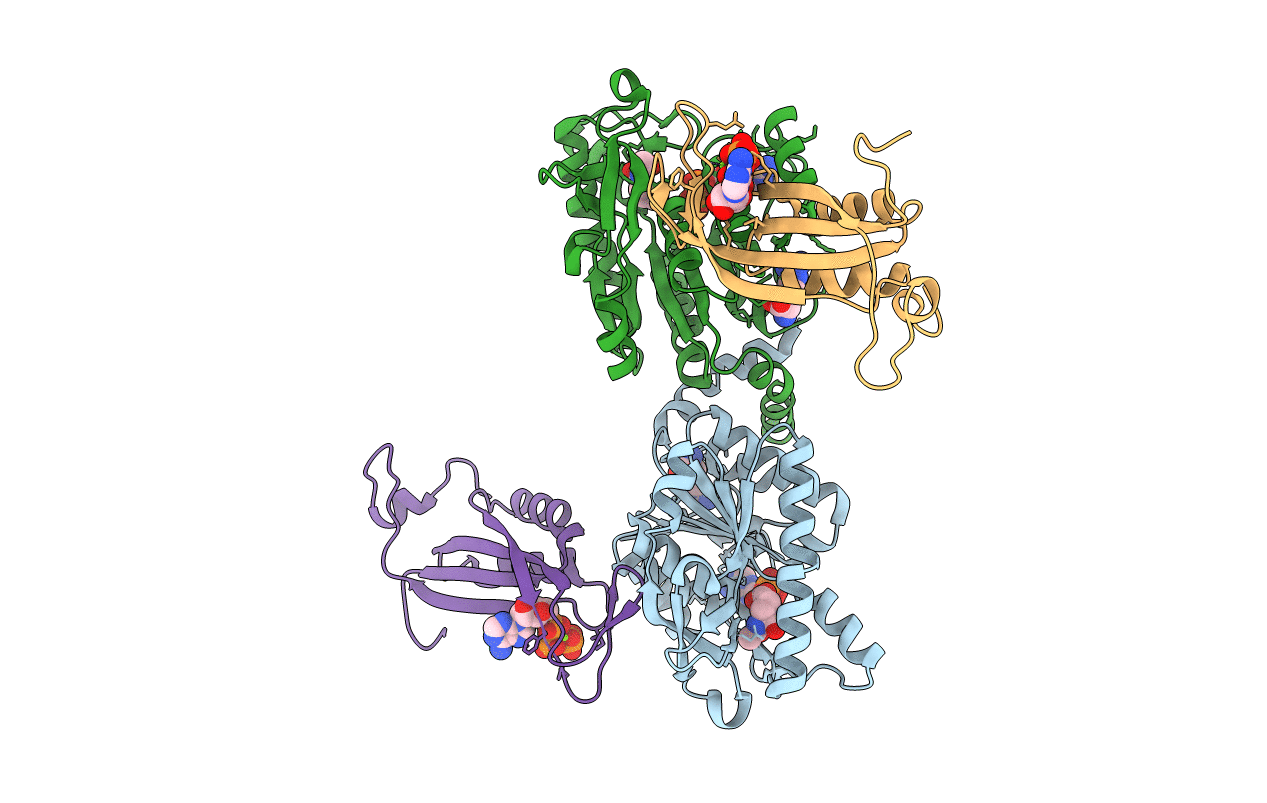
2RD5 image
Deposition Date 2007-09-21
Release Date 2007-10-02
Last Version Date 2023-08-30
Entry Detail
PDB ID:
2RD5
Keywords:
Title:
Structural basis for the regulation of N-acetylglutamate kinase by PII in Arabidopsis thaliana
Biological Source:
Source Organism:
Host Organism:
Method Details:
Experimental Method:
Resolution:
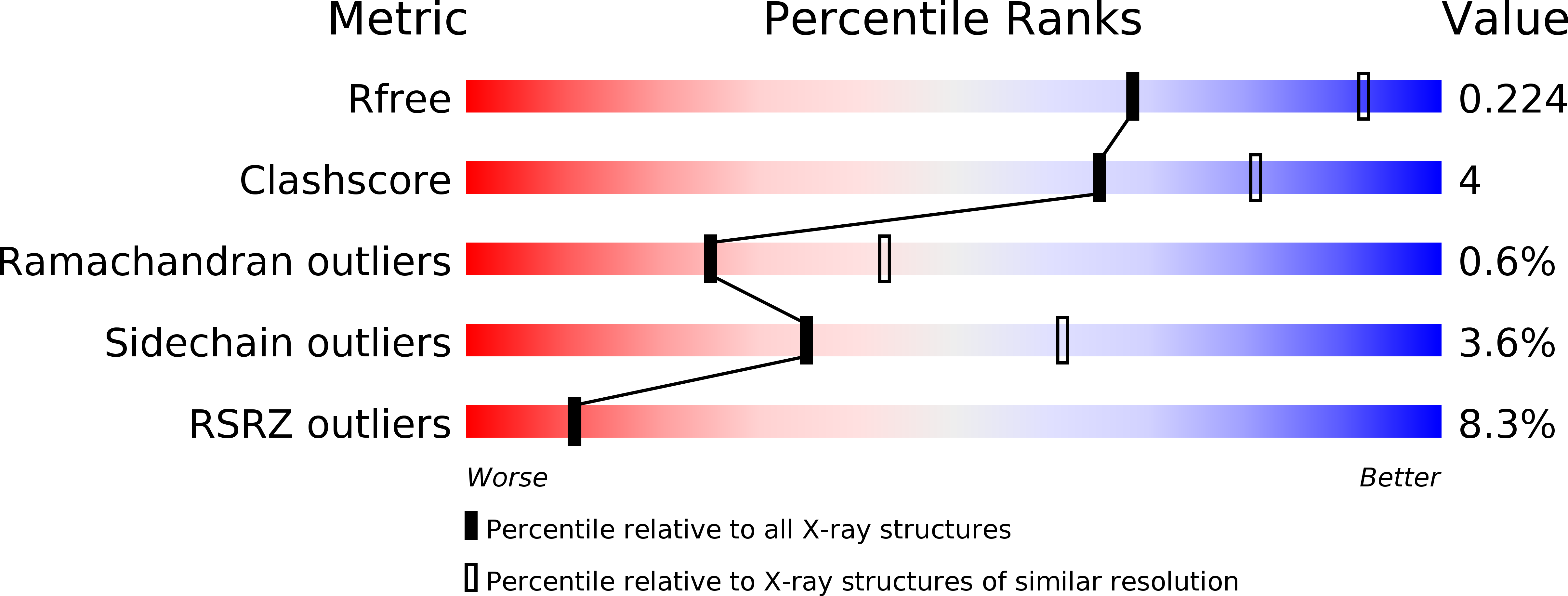
2.51 Å
R-Value Free:
0.22
R-Value Work:
0.20
R-Value Observed:
0.20
Space Group:
P 21 3
Macromolecular Entities
Structures with similar UniProt ID
Protein Blast
Polymer Type:polypeptide(L)
Molecule:Acetylglutamate kinase-like protein
Gene (Uniprot):NAGK
Chain IDs:A, B
Chain Length:298
Number of Molecules:2
Biological Source:Arabidopsis thaliana
Structures with similar UniProt ID
Protein Blast
Polymer Type:polypeptide(L)
Molecule:PII protein
Gene (Uniprot):GLB1
Chain IDs:C, D
Chain Length:135
Number of Molecules:2
Biological Source:Arabidopsis thaliana
Primary Citation
Structural Basis for the Regulation of N-Acetylglutamate Kinase by PII in Arabidopsis thaliana.
J.Biol.Chem. 282 35733 35740 (2007)
PMID: 17913711 DOI: 10.1074/jbc.M707127200

Abstact

PII is a highly conserved regulatory protein found in organisms across the three domains of life. In cyanobacteria and plants, PII relieves the feedback inhibition of the rate-limiting step in arginine biosynthesis catalyzed by N-acetylglutamate kinase (NAGK). To understand the molecular structural basis of enzyme regulation by PII, we have determined a 2.5-A resolution crystal structure of a complex formed between two homotrimers of PII and a single hexamer of NAGK from Arabidopsis thaliana bound to the metabolites N-acetylglutamate, ADP, ATP, and arginine. In PII, the T-loop and Trp(22) at the start of the alpha1-helix, which are both adjacent to the ATP-binding site of PII, contact two beta-strands as well as the ends of two central helices (alphaE and alphaG) in NAGK, the opposing ends of which form major portions of the ATP and N-acetylglutamate substrate-binding sites. The binding of Mg(2+).ATP to PII stabilizes a conformation of the T-loop that favors interactions with both open and closed conformations of NAGK. Interactions between PII and NAGK appear to limit the degree of opening and closing of the active-site cleft in opposition to a domain-separating inhibitory effect exerted by arginine, thus explaining the stimulatory effect of PII on the kinetics of arginine-inhibited NAGK.

Legend

Protein

Chemical

Disease

Primary Citation of related structures
Feedback Form
Name
Email
Institute
Feedback