2R55 image
Deposition Date 2007-09-03
Release Date 2007-09-18
Last Version Date 2023-08-30
Entry Detail
PDB ID:
2R55
Title:
Human StAR-related lipid transfer protein 5
Biological Source:
Source Organism:
Homo sapiens (Taxon ID: 9606)
Method Details:
Experimental Method:
Resolution:
2.50 Å
R-Value Free:
0.27
R-Value Work:
0.23
R-Value Observed:
0.23
Space Group:
P 65
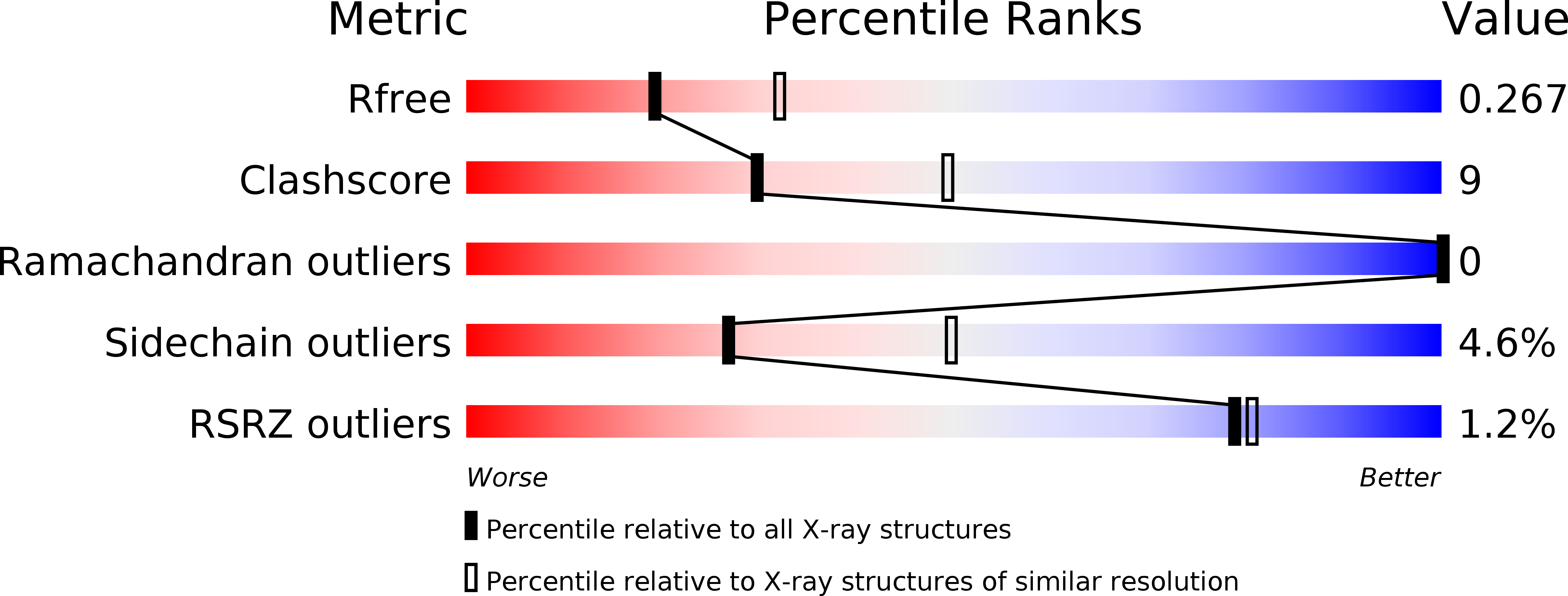
Macromolecular Entities
Structures with similar UniProt ID
Protein Blast
Polymer Type:polypeptide(L)
Molecule:StAR-related lipid transfer protein 5
Gene (Uniprot):STARD5
Chain IDs:A, B
Chain Length:231
Number of Molecules:2
Biological Source:Homo sapiens
Primary Citation
Comparative structural analysis of lipid binding START domains.
Plos One 6 e19521 e19521 (2011)
PMID: 21738568 DOI: 10.1371/journal.pone.0019521

Abstact

BACKGROUND Steroidogenic acute regulatory (StAR) protein related lipid transfer (START) domains are small globular modules that form a cavity where lipids and lipid hormones bind. These domains can transport ligands to facilitate lipid exchange between biological membranes, and they have been postulated to modulate the activity of other domains of the protein in response to ligand binding. More than a dozen human genes encode START domains, and several of them are implicated in a disease. PRINCIPAL FINDINGS We report crystal structures of the human STARD1, STARD5, STARD13 and STARD14 lipid transfer domains. These represent four of the six functional classes of START domains. SIGNIFICANCE Sequence alignments based on these and previously reported crystal structures define the structural determinants of human START domains, both those related to structural framework and those involved in ligand specificity. ENHANCED VERSION This article can also be viewed as an enhanced version in which the text of the article is integrated with interactive 3D representations and animated transitions. Please note that a web plugin is required to access this enhanced functionality. Instructions for the installation and use of the web plugin are available in Text S1.

Legend

Protein

Chemical

Disease

Primary Citation of related structures
Feedback Form
Name
Email
Institute
Feedback