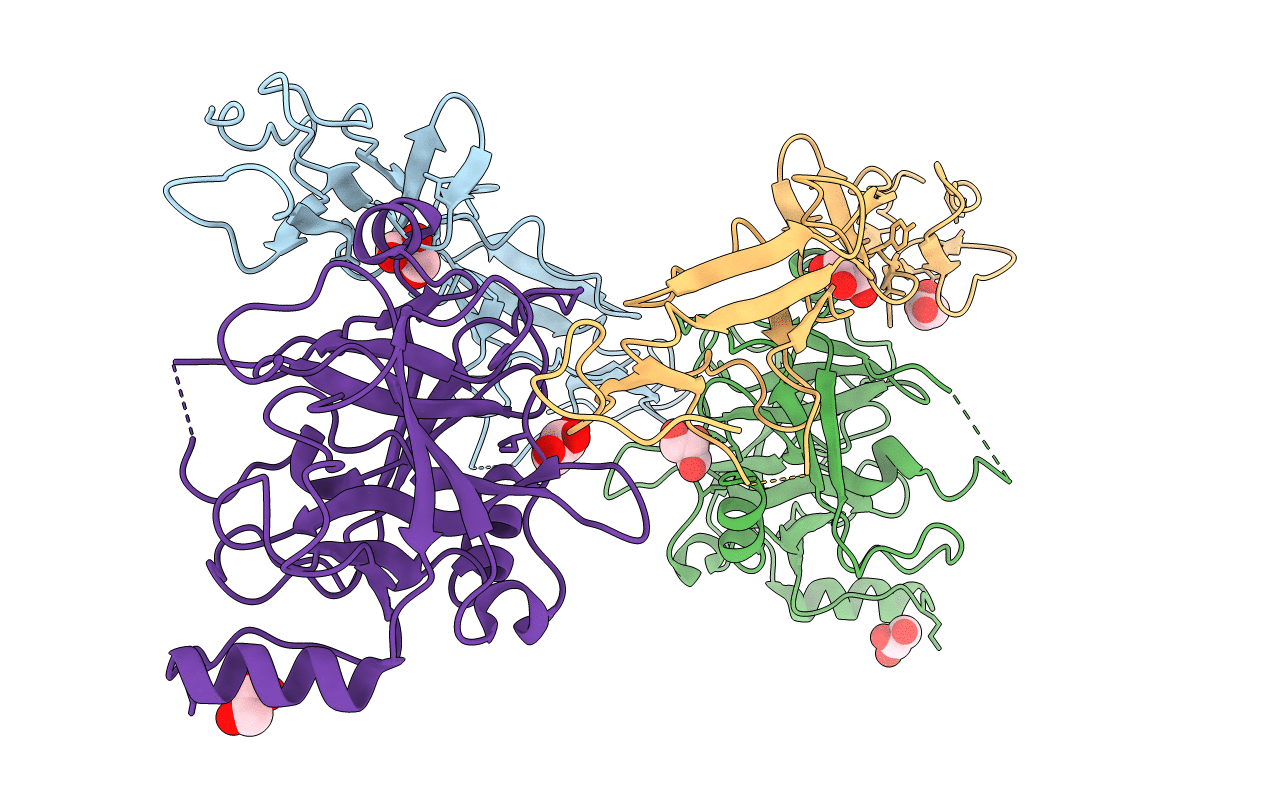
2QY0 image
Deposition Date 2007-08-13
Release Date 2008-02-05
Last Version Date 2024-11-13
Entry Detail
PDB ID:
2QY0
Keywords:
Title:
Active dimeric structure of the catalytic domain of C1r reveals enzyme-product like contacts
Biological Source:
Source Organism:
Homo sapiens (Taxon ID: 9606)
Host Organism:
Method Details:
Experimental Method:
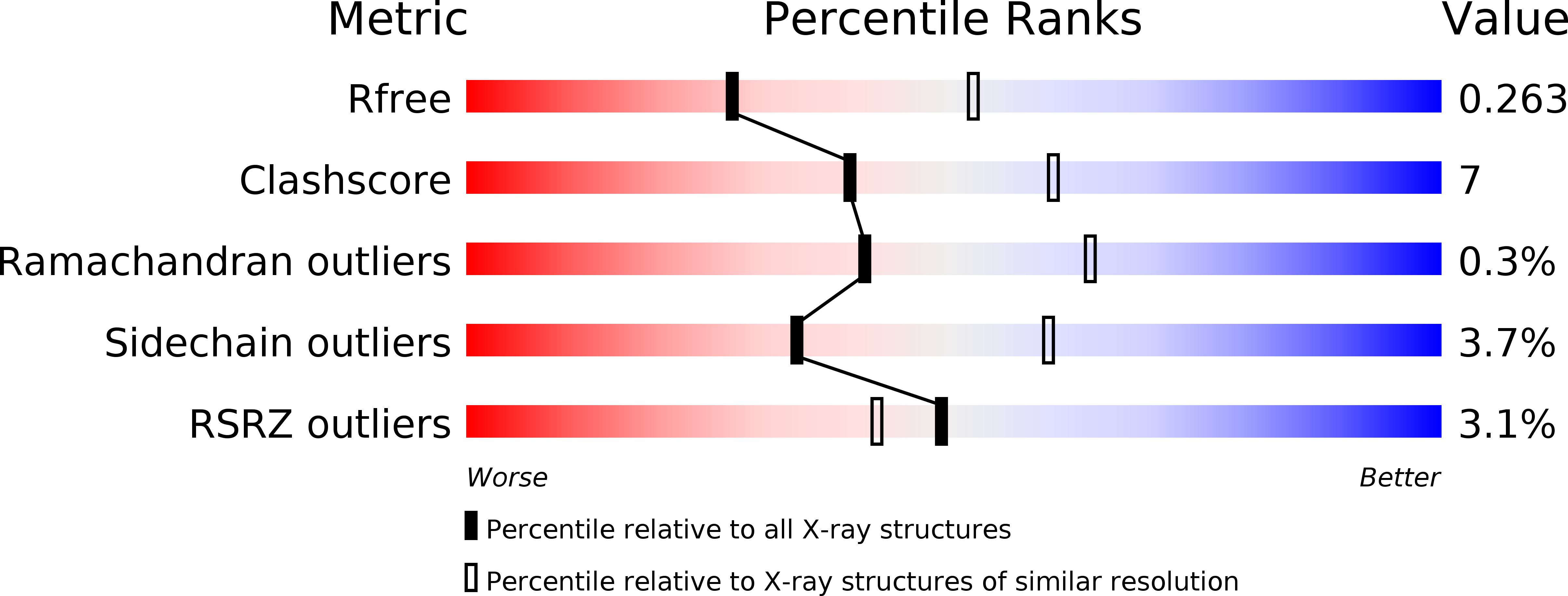
Resolution:
2.60 Å
R-Value Free:
0.25
R-Value Work:
0.21
R-Value Observed:
0.21
Space Group:
P 21 21 21
Macromolecular Entities
Structures with similar UniProt ID
Protein Blast
Polymer Type:polypeptide(L)
Molecule:Complement C1r subcomponent
Gene (Uniprot):C1R
Chain IDs:A, C
Chain Length:159
Number of Molecules:2
Biological Source:Homo sapiens
Structures with similar UniProt ID
Protein Blast
Polymer Type:polypeptide(L)
Molecule:Complement C1r subcomponent
Gene (Uniprot):C1R
Chain IDs:B, D
Chain Length:242
Number of Molecules:2
Biological Source:Homo sapiens
Ligand Molecules
Primary Citation
Revisiting the mechanism of the autoactivation of the complement protease C1r in the C1 complex: Structure of the active catalytic region of C1r.
Mol.Immunol. 45 1752 1760 (2008)
PMID: 17996945 DOI: 10.1016/j.molimm.2007.09.031

Abstact

C1r is a modular serine protease which is the autoactivating component of the C1 complex of the classical pathway of the complement system. We have determined the first crystal structure of the entire active catalytic region of human C1r. This fragment contains the C-terminal serine protease (SP) domain and the preceding two complement control protein (CCP) modules. The activated CCP1-CCP2-SP fragment makes up a dimer in a head-to-tail fashion similarly to the previously characterized zymogen. The present structure shows an increased number of stabilizing interactions. Moreover, in the crystal lattice there is an enzyme-product relationship between the C1r molecules of neighboring dimers. This enzyme-product complex exhibits the crucial S1-P1 salt bridge between Asp631 and Arg446 residues, and intermolecular interaction between the CCP2 module and the SP domain. Based on these novel structural information we propose a new split-and-reassembly model for the autoactivation of the C1r. This model is consistent with experimental results that have not been explained adequately by previous models. It allows autoactivation of C1r without large-scale, directed movement of C1q arms. The model is concordant with the stability of the C1 complex during activation of the next complement components.

Legend

Protein

Chemical

Disease

Primary Citation of related structures
Feedback Form
Name
Email
Institute
Feedback