2QKX image
Deposition Date 2007-07-11
Release Date 2008-07-15
Last Version Date 2023-08-30
Entry Detail
PDB ID:
2QKX
Keywords:
Title:
N-acetyl glucosamine 1-phosphate uridyltransferase from Mycobacterium tuberculosis complex with N-acetyl glucosamine 1-phosphate
Biological Source:
Source Organism:
Host Organism:
Method Details:
Experimental Method:
Resolution:
2.75 Å
R-Value Free:
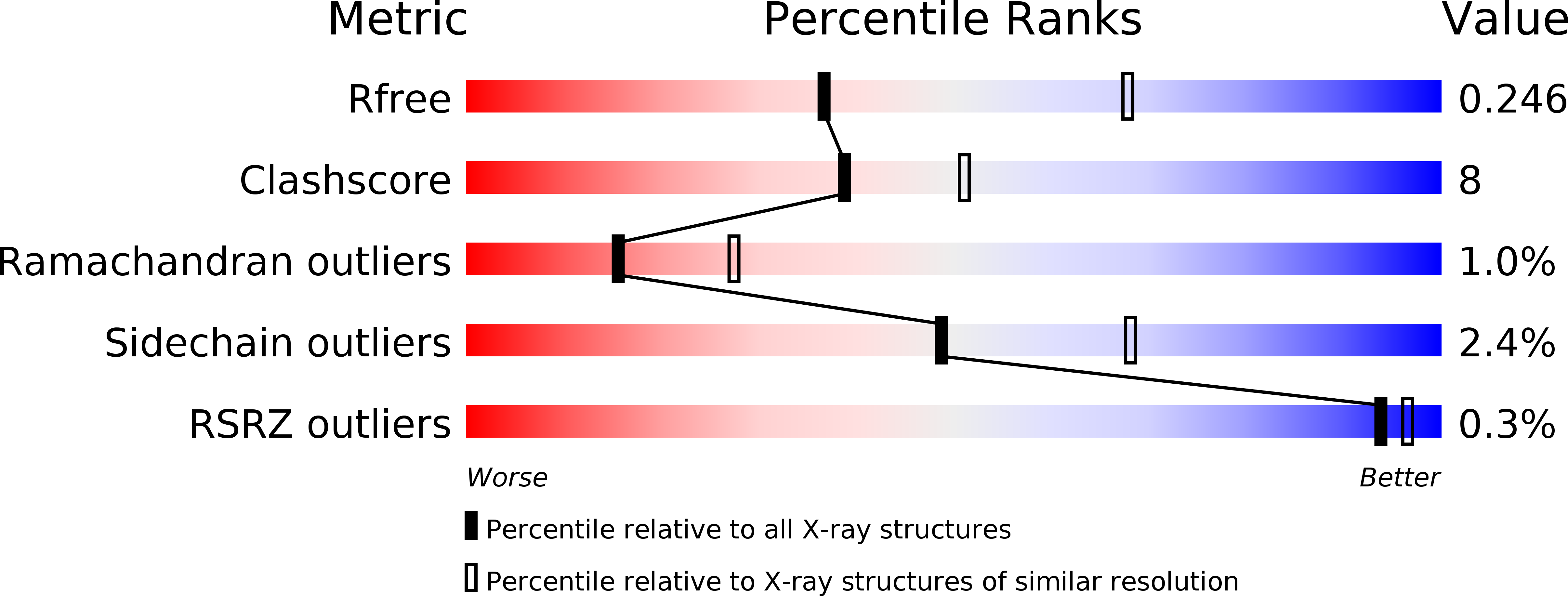
0.25
R-Value Work:
0.19
R-Value Observed:
0.19
Space Group:
H 3 2
Macromolecular Entities
Structures with similar UniProt ID
Protein Blast
Polymer Type:polypeptide(L)
Molecule:Bifunctional protein glmU
Chain IDs:A
Chain Length:391
Number of Molecules:1
Biological Source:Mycobacterium tuberculosis
Ligand Molecules
Primary Citation
Structure and function of GlmU from Mycobacterium tuberculosis.
Acta Crystallogr.,Sect.D 65 275 283 (2009)
PMID: 19237750 DOI: 10.1107/S0907444909001036

Abstact

Antibiotic resistance is a major issue in the treatment of infectious diseases such as tuberculosis. Existing antibiotics target only a few cellular pathways and there is an urgent need for antibiotics that have novel molecular mechanisms. The glmU gene is essential in Mycobacterium tuberculosis, being required for optimal bacterial growth, and has been selected as a possible drug target for structural and functional investigation. GlmU is a bifunctional acetyltransferase/uridyltransferase that catalyses the formation of UDP-GlcNAc from GlcN-1-P. UDP-GlcNAc is a substrate for two important biosynthetic pathways: lipopolysaccharide and peptidoglycan synthesis. The crystal structure of M. tuberculosis GlmU has been determined in an unliganded form and in complex with GlcNAc-1-P or UDP-GlcNAc. The structures reveal the residues that are responsible for substrate binding. Enzyme activities were characterized by (1)H NMR and suggest that the presence of acetyl-coenzyme A has an inhibitory effect on uridyltransferase activity.

Legend

Protein

Chemical

Disease

Primary Citation of related structures
Feedback Form
Name
Email
Institute
Feedback