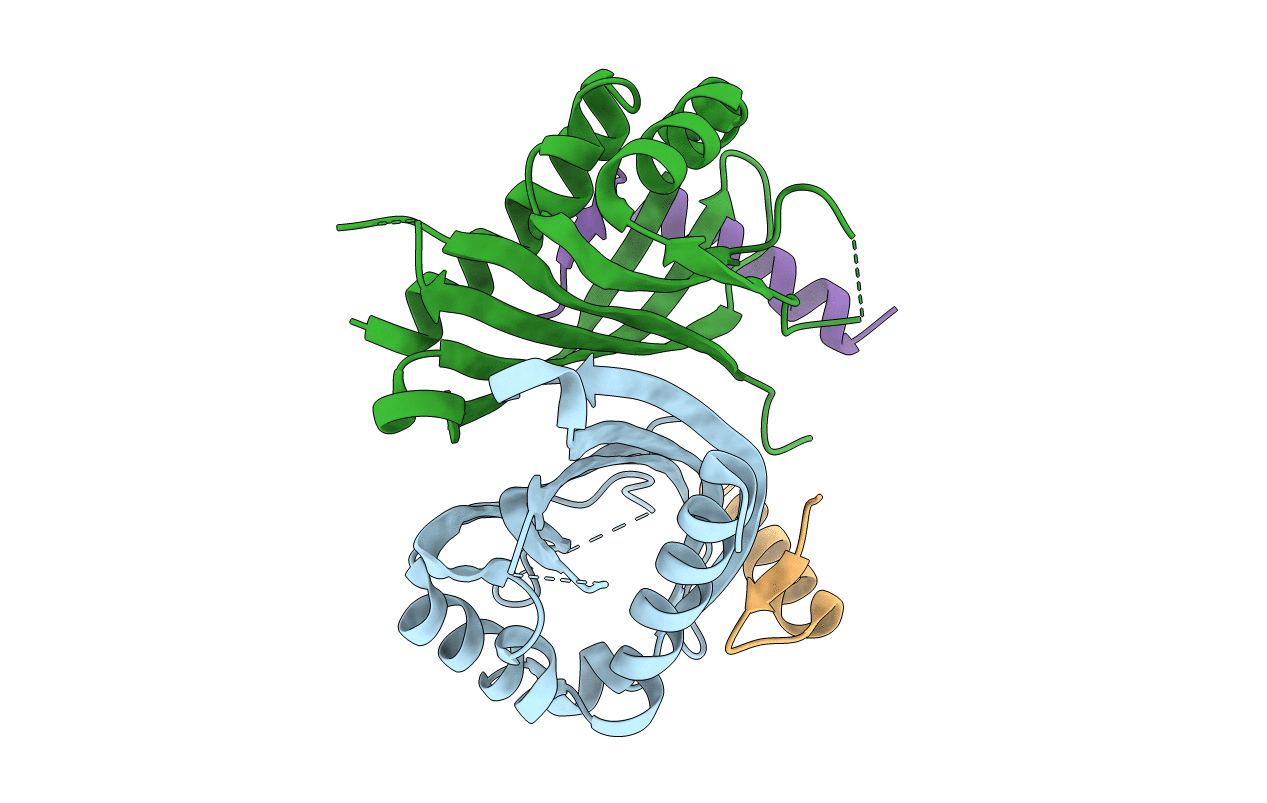
2QIY image
Deposition Date 2007-07-05
Release Date 2007-10-30
Last Version Date 2023-08-30
Entry Detail
PDB ID:
2QIY
Title:
yeast Deubiquitinase Ubp3 and Bre5 cofactor complex
Biological Source:
Source Organism:
Method Details:
Experimental Method:
Resolution:
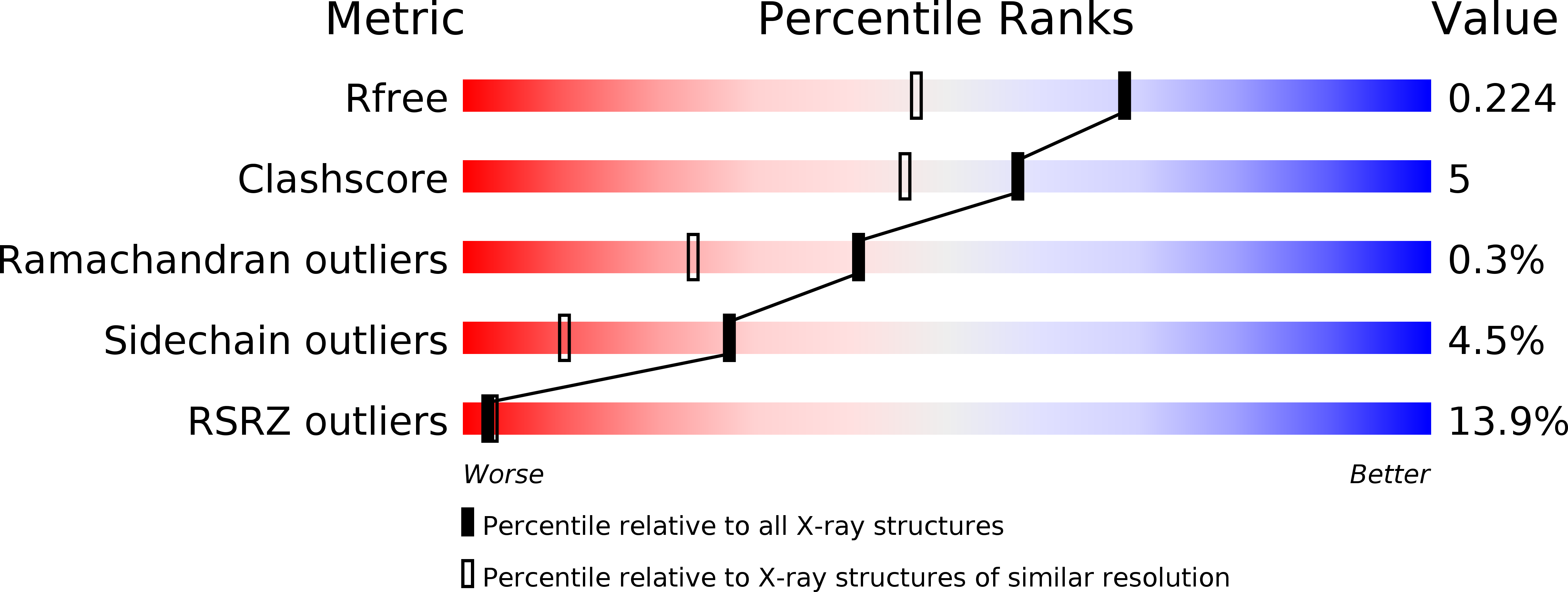
1.69 Å
R-Value Free:
0.22
R-Value Work:
0.20
R-Value Observed:
0.20
Space Group:
P 21 21 21
Macromolecular Entities
Structures with similar UniProt ID
Protein Blast
Polymer Type:polypeptide(L)
Molecule:UBP3-associated protein BRE5
Gene (Uniprot):BRE5
Chain IDs:A, C (auth: B)
Chain Length:154
Number of Molecules:2
Biological Source:Saccharomyces cerevisiae
Structures with similar UniProt ID
Protein Blast
Polymer Type:polypeptide(L)
Molecule:Ubiquitin carboxyl-terminal hydrolase 3
Gene (Uniprot):UBP3
Chain IDs:B (auth: C), D
Chain Length:48
Number of Molecules:2
Biological Source:Saccharomyces cerevisiae
Primary Citation
Molecular basis for bre5 cofactor recognition by the ubp3 deubiquitylating enzyme.
J.Mol.Biol. 372 194 204 (2007)
PMID: 17632125 DOI: 10.1016/j.jmb.2007.06.052

Abstact

Yeast Ubp3 and its co-factor Bre5 form a deubiquitylation complex to regulate protein transport between the endoplasmic reticulum and Golgi compartments of the cell. A novel N-terminal domain of the Ubp3 catalytic subunit forms a complex with the NTF2-like domain of the Bre5 regulatory subunit. Here, we report the X-ray crystal structure of an Ubp3-Bre5 complex and show that it forms a symmetric hetero-tetrameric complex in which the Bre5 NTF2-like domain dimer interacts with two L-shaped beta-strand-turn-alpha-helix motifs of Ubp3. The Ubp3 N-terminal domain binds within a hydrophobic cavity on the surface of the Bre5 NTF2-like domain subunit with conserved residues within both proteins interacting predominantly through antiparallel beta-sheet hydrogen bonds and van der Waals contacts. Structure-based mutagenesis and functional studies confirm the significance of the observed interactions for Ubp3-Bre5 association in vitro and Ubp3 function in vivo. Comparison of the structure to other protein complexes with NTF2-like domains shows that the Ubp3-Bre5 interface is novel. Together, these studies provide new insights into Ubp3 recognition by Bre5 and into protein recognition by NTF2-like domains.

Legend

Protein

Chemical

Disease

Primary Citation of related structures
Feedback Form
Name
Email
Institute
Feedback