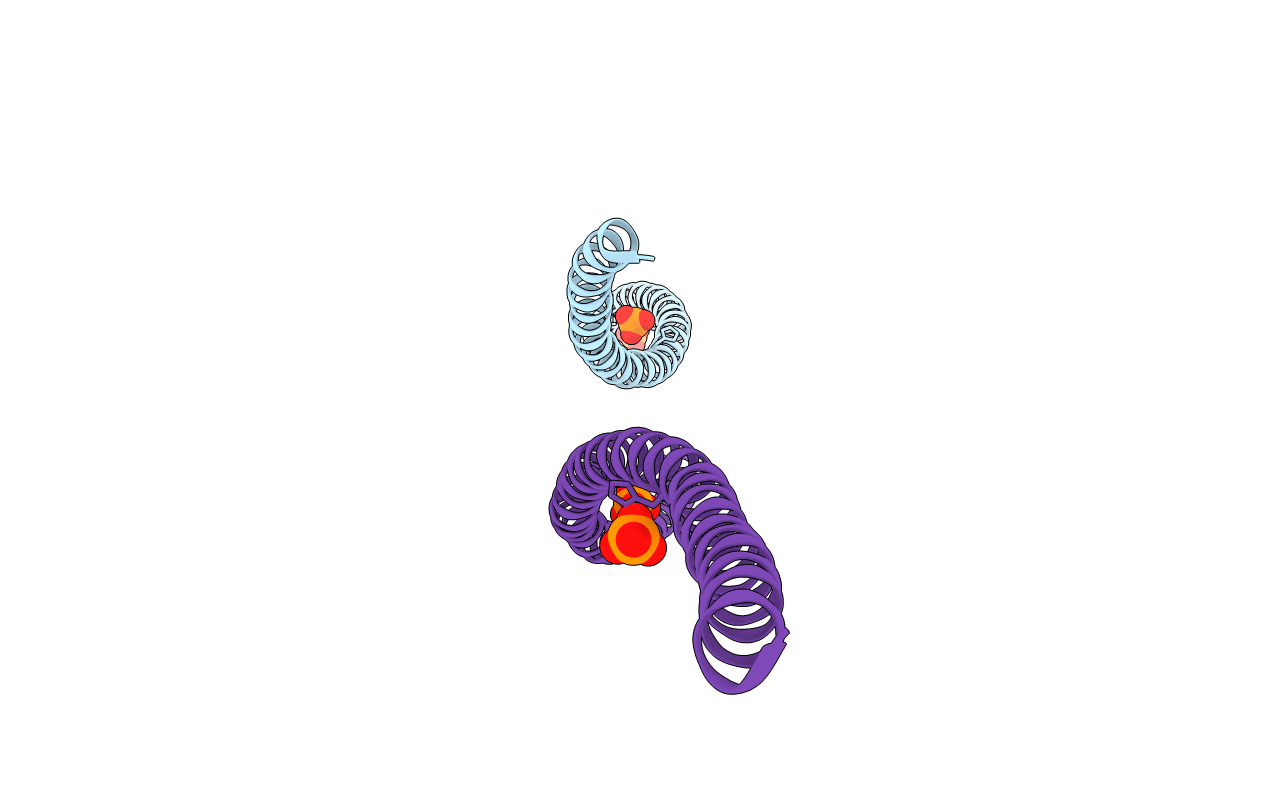
2QIH image
Deposition Date 2007-07-04
Release Date 2008-05-20
Last Version Date 2023-08-30
Entry Detail
PDB ID:
2QIH
Keywords:
Title:
Crystal structure of 527-665 fragment of UspA1 protein from Moraxella catarrhalis
Biological Source:
Source Organism:
Host Organism:
Method Details:
Experimental Method:
Resolution:
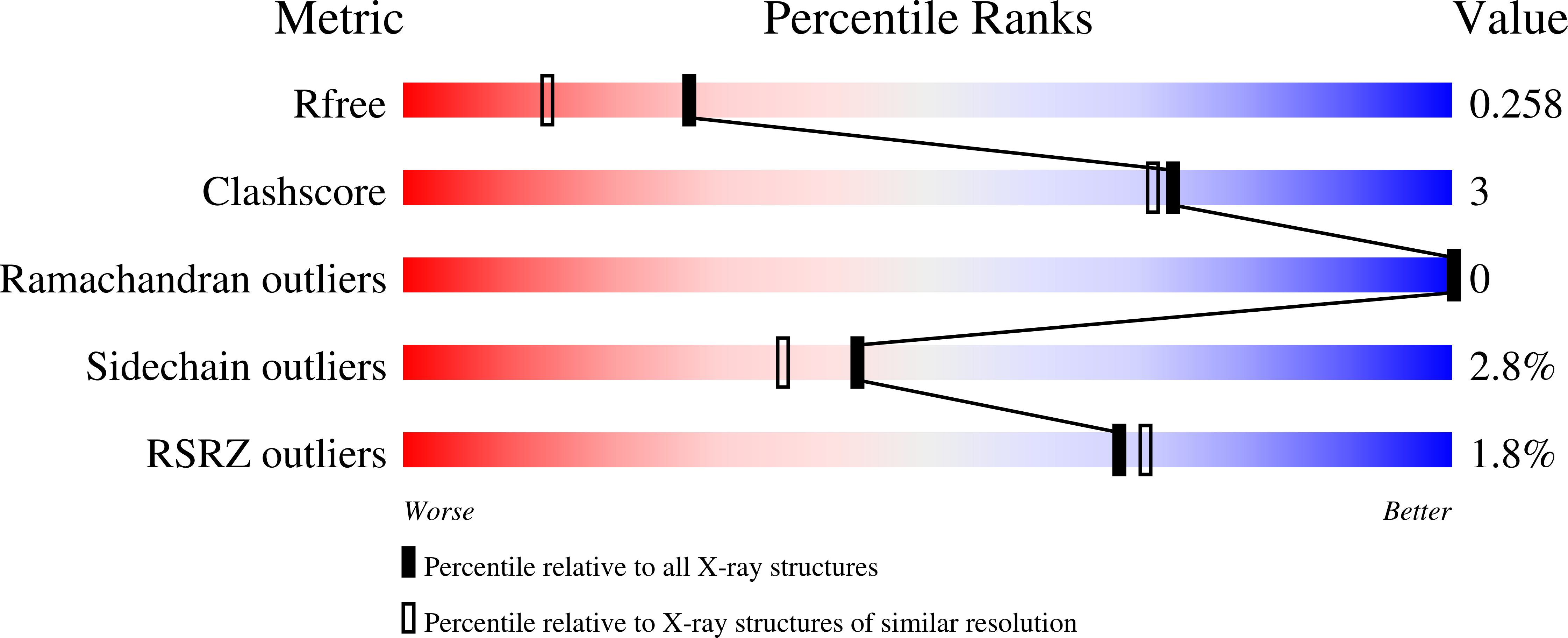
1.90 Å
R-Value Free:
0.25
R-Value Work:
0.19
R-Value Observed:
0.19
Space Group:
P 3
Macromolecular Entities
Structures with similar UniProt ID
Protein Blast
Polymer Type:polypeptide(L)
Molecule:protein UspA1
Mutagens:S528T
Chain IDs:A, B
Chain Length:157
Number of Molecules:2
Biological Source:Moraxella catarrhalis
Primary Citation
The Moraxella adhesin UspA1 binds to its human CEACAM1 receptor by a deformable trimeric coiled-coil.
Embo J. 27 1779 1789 (2008)
PMID: 18497748 DOI: 10.1038/emboj.2008.101

Abstact

Moraxella catarrhalis is a ubiquitous human-specific bacterium commonly associated with upper and lower respiratory tract infections, including otitis media, sinusitis and chronic obstructive pulmonary disease. The bacterium uses an autotransporter protein UspA1 to target an important human cellular receptor carcinoembryonic antigen-related cell adhesion molecule 1 (CEACAM1). Using X-ray crystallography, we show that the CEACAM1 receptor-binding region of UspA1 unusually consists of an extended, rod-like left-handed trimeric coiled-coil. Mutagenesis and binding studies of UspA1 and the N-domain of CEACAM1 have been used to delineate the interacting surfaces between ligand and receptor and guide assembly of the complex. However, solution scattering, molecular modelling and electron microscopy analyses all indicate that significant bending of the UspA1 coiled-coil stalk also occurs. This explains how UspA1 can engage CEACAM1 at a site far distant from its head group, permitting closer proximity of the respective cell surfaces during infection.

Legend

Protein

Chemical

Disease

Primary Citation of related structures
Feedback Form
Name
Email
Institute
Feedback