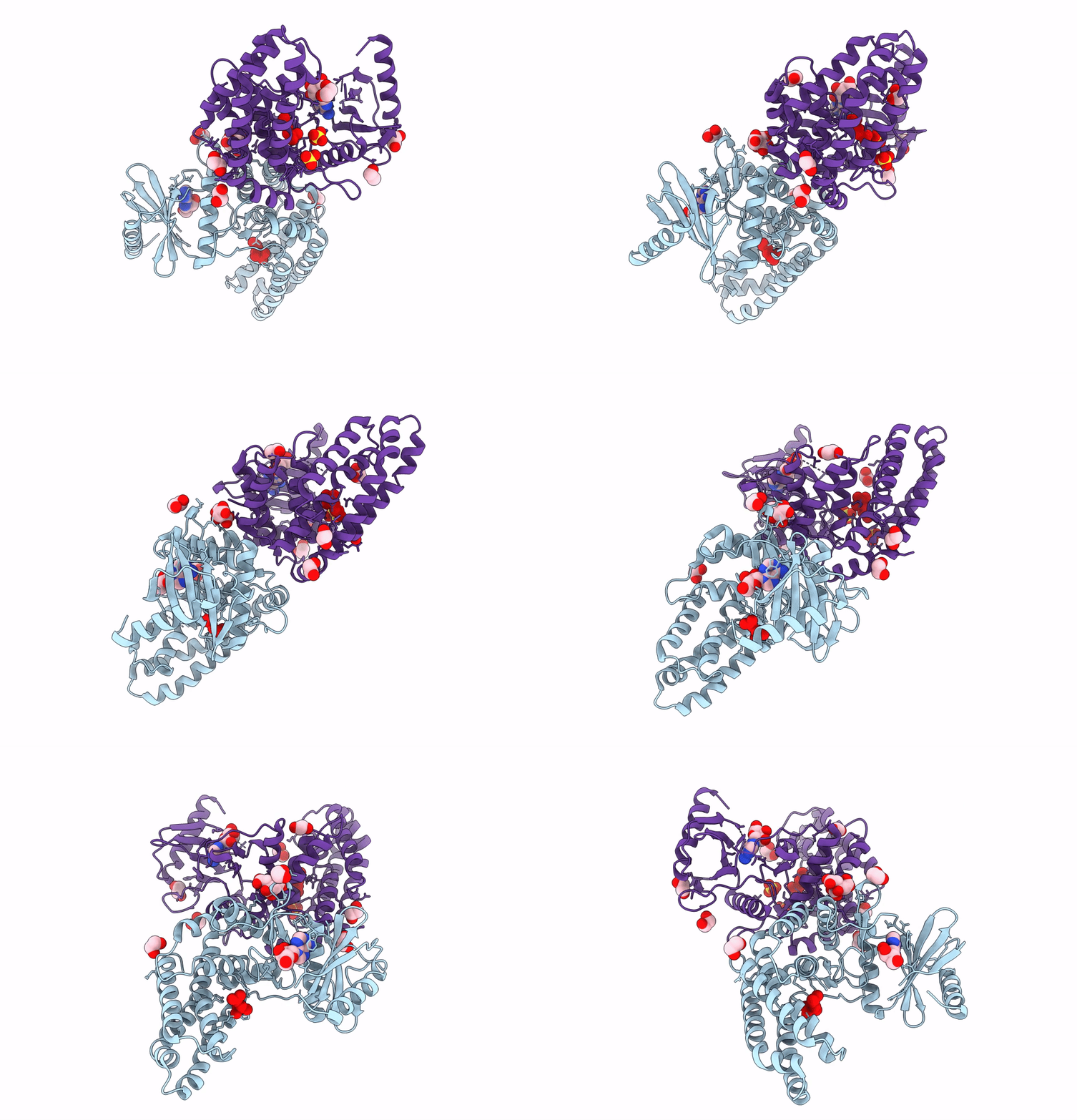
2Q83 image
Deposition Date 2007-06-08
Release Date 2007-06-26
Last Version Date 2024-10-16
Entry Detail
PDB ID:
2Q83
Keywords:
Title:
Crystal structure of ytaA (2635576) from Bacillus subtilis at 2.50 A resolution
Biological Source:
Source Organism:
Host Organism:
Method Details:
Experimental Method:
Resolution:
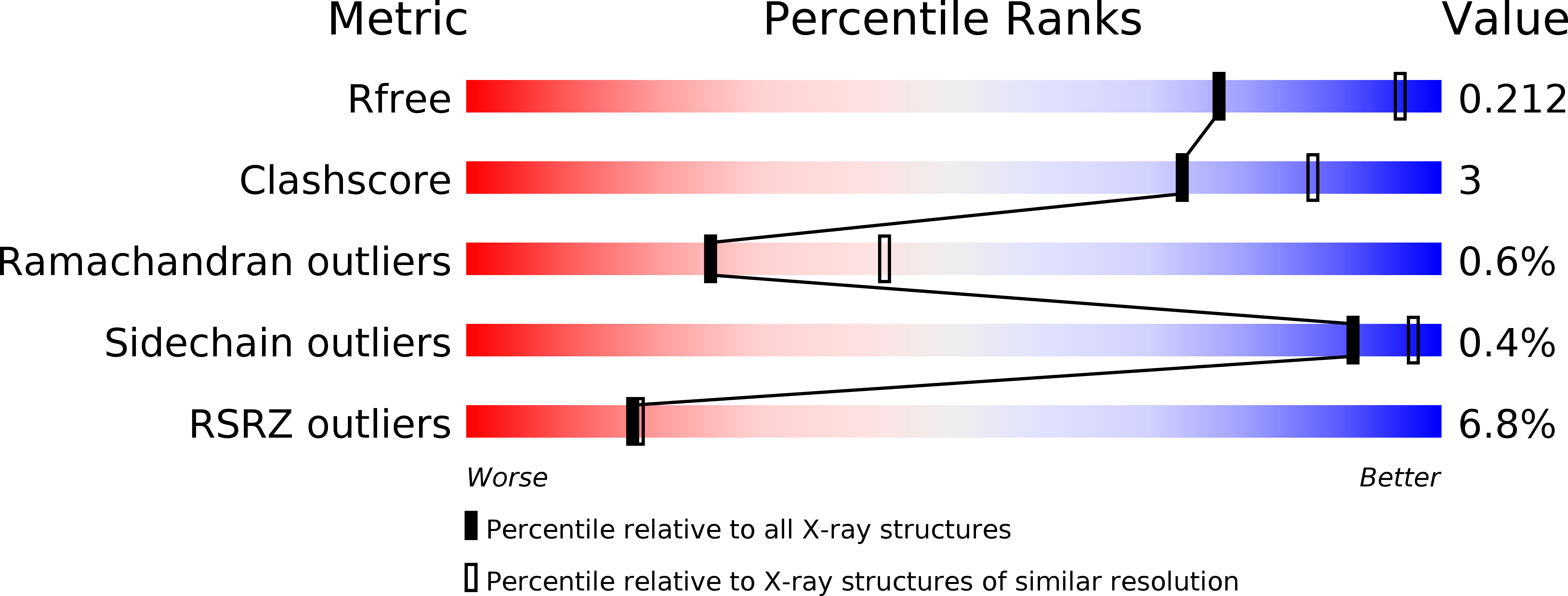
2.50 Å
R-Value Free:
0.21
R-Value Work:
0.19
R-Value Observed:
0.19
Space Group:
P 64 2 2
Macromolecular Entities
Structures with similar UniProt ID
Protein Blast
Polymer Type:polypeptide(L)
Molecule:YtaA protein
Gene (Uniprot):cotI
Chain IDs:A, B
Chain Length:346
Number of Molecules:2
Biological Source:Bacillus subtilis
Modified Residue
Compound ID Chain ID Parent Comp ID Details 2D Image
MSE A MET SELENOMETHIONINE
Primary Citation
Genomics, evolution, and crystal structure of a new family of bacterial spore kinases.
Proteins 78 1470 1482 (2010)
PMID: 20077512 DOI: 10.1002/prot.22663

Abstact

Bacterial spore formation is a complex process of fundamental relevance to biology and human disease. The spore coat structure is complex and poorly understood, and the roles of many of the protein components remain unclear. We describe a new family of spore coat proteins, the bacterial spore kinases (BSKs), and the first crystal structure of a BSK, YtaA (CotI) from Bacillus subtilis. BSKs are widely distributed in spore-forming Bacillus and Clostridium species, and have a dynamic evolutionary history. Sequence and structure analyses indicate that the BSKs are CAKs, a prevalent group of small molecule kinases in bacteria that is distantly related to the eukaryotic protein kinases. YtaA has substantial structural similarity to CAKs, but also displays distinctive features that broaden our understanding of the CAK group. Evolutionary constraint analysis of the protein surfaces indicates that members of the BSK family have distinct clade-conserved patterns in the substrate binding region, and probably bind and phosphorylate distinct targets. Several classes of BSKs have apparently independently lost catalytic activity to become pseudokinases, indicating that the family also has a major noncatalytic function.

Legend

Protein

Chemical

Disease

Primary Citation of related structures
Feedback Form
Name
Email
Institute
Feedback