2PYY image
Deposition Date 2007-05-17
Release Date 2008-01-22
Last Version Date 2023-08-30
Entry Detail
PDB ID:
2PYY
Title:
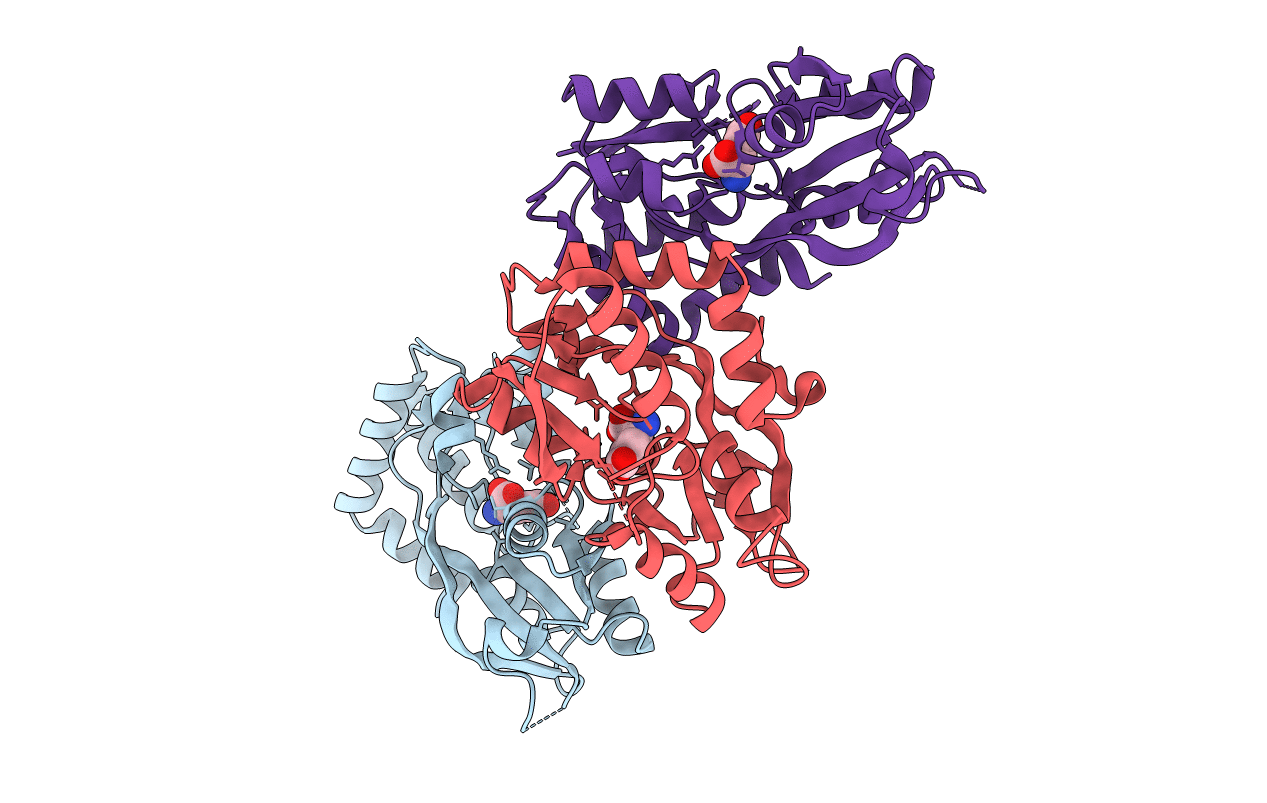
Crystal Structure of the GluR0 ligand-binding core from Nostoc punctiforme in complex with (L)-glutamate
Biological Source:
Source Organism:
Host Organism:
Method Details:
Experimental Method:
Resolution:
2.10 Å
R-Value Free:
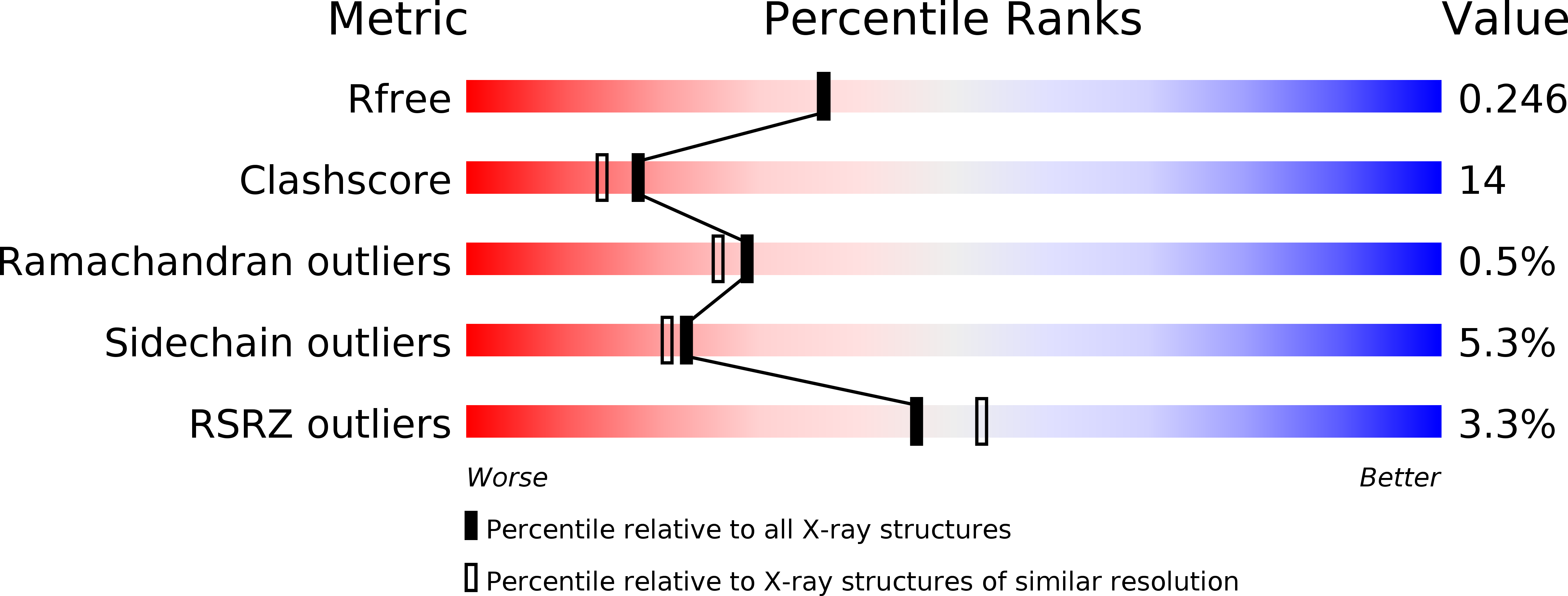
0.26
R-Value Work:
0.23
R-Value Observed:
0.24
Space Group:
C 2 2 21
Macromolecular Entities
Structures with similar UniProt ID
Protein Blast
Polymer Type:polypeptide(L)
Molecule:Ionotropic glutamate receptor bacterial homologue
Chain IDs:A, B, C
Chain Length:228
Number of Molecules:3
Biological Source:Nostoc punctiforme
Ligand Molecules
Primary Citation
Crystal structure of the GluR0 ligand-binding core from Nostoc punctiforme in complex with L-glutamate: structural dissection of the ligand interaction and subunit interface.
J.Mol.Biol. 376 308 316 (2008)
PMID: 18164033 DOI: 10.1016/j.jmb.2007.10.081

Abstact

GluR0 from Nostoc punctiforme (NpGluR0) is a bacterial homologue of the ionotropic glutamate receptor (iGluR). We have solved the crystal structure of the ligand-binding core of NpGluR0 in complex with l-glutamate at a resolution of 2.1 A. The structure exhibits a noncanonical ligand interaction and two distinct subunit interfaces. The side-chain guanidium group of Arg80 forms a salt bridge with the gamma-carboxyl group of bound L-glutamate: in GluR0 from Synechocystis (SGluR0) and other iGluRs, the equivalent residues are Asn or Thr, which cannot form a similar interaction. We suggest that the local positively charged environment and the steric constraint created by Arg80 mediate the selectivity of L-glutamate binding by preventing the binding of positively charged and hydrophobic amino acids. In addition, the NpGluR0 ligand-binding core forms a new subunit interface in which the two protomers are arranged differently than the known iGluR and SGluR0 dimer interfaces. The significance of there being two different dimer interfaces was investigated using analytical ultracentrifugation analysis.

Legend

Protein

Chemical

Disease

Primary Citation of related structures
Feedback Form
Name
Email
Institute
Feedback