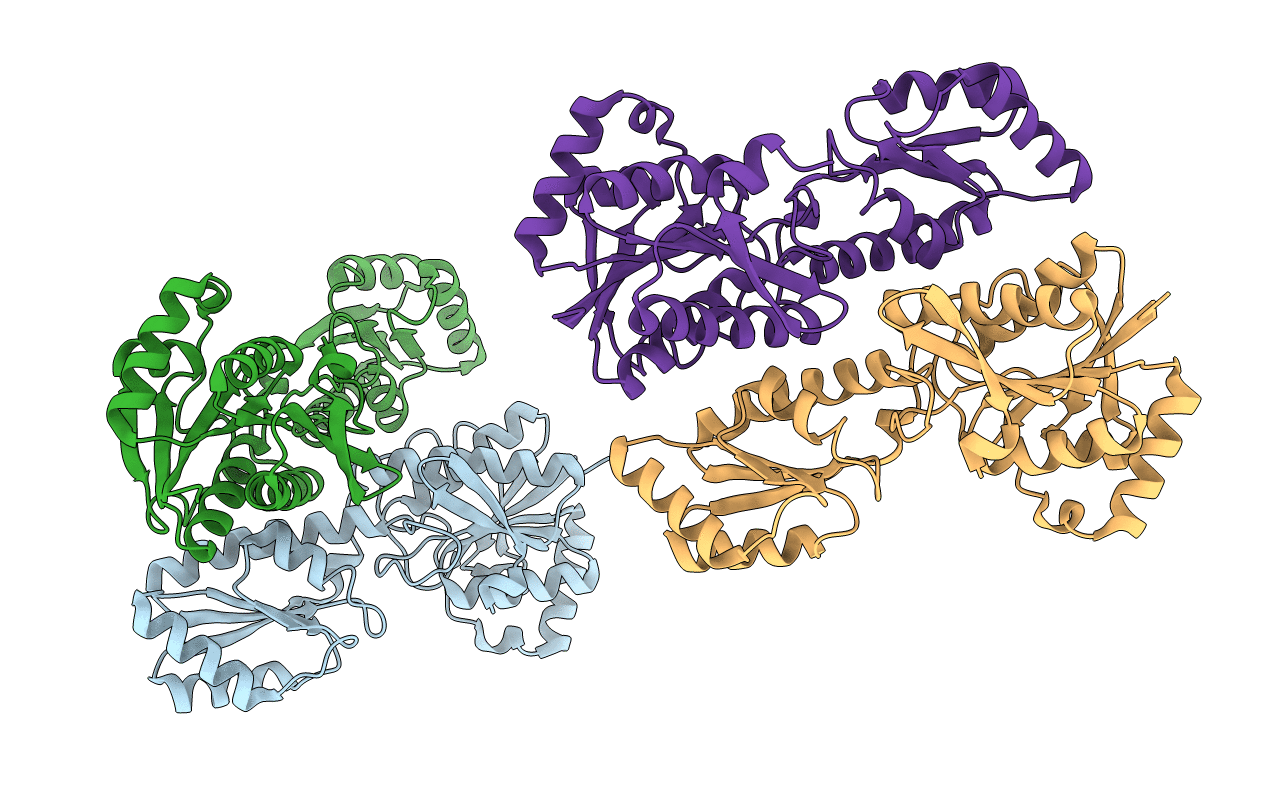
2PFK image
Deposition Date 1988-01-25
Release Date 1989-01-09
Last Version Date 2024-02-21
Entry Detail
PDB ID:
2PFK
Title:
THE CRYSTAL STRUCTURE OF UNLIGANDED PHOSPHOFRUCTOKINASE FROM ESCHERICHIA COLI
Biological Source:
Source Organism(s):
Escherichia coli (Taxon ID: 562)
Expression System(s):
Method Details:
Experimental Method:
Resolution:
2.40 Å
R-Value Observed:
0.16
Space Group:
C 1 21 1

Macromolecular Entities
Structures with similar UniProt ID
Protein Blast
Polymer Type:polypeptide(L)
Molecule:6-PHOSPHOFRUCTOKINASE ISOZYME I
Chain IDs:A, B, C, D
Chain Length:320
Number of Molecules:4
Biological Source:Escherichia coli
Primary Citation
Crystal structure of unliganded phosphofructokinase from Escherichia coli.
J.Mol.Biol. 207 805 821 (1989)
PMID: 2527305 DOI: 10.1016/0022-2836(89)90246-5

Abstact

In an attempt to characterize the mechanism of co-operativity in the allosteric enzyme phosphofructokinase from Escherichia coli, crystals were grown in the absence of activating ligands. The crystal structure was determined to a resolution of 2.4 A by the method of molecular replacement, using the known structure of the liganded active state as a starting model, and has been refined to a crystallographic R-factor of 0.168 for all data. Although the crystallization solution would be expected to contain the enzyme in its inactive conformation, with a low affinity for the co-operative substrate fructose 6-phosphate, the structure in these crystals does not show the change in quaternary structure seen in the inactive form of the Bacillus stearothermophilus enzyme (previously determined at low resolution), nor does it show any substantial change in the fructose 6-phosphate site from the structure seen in the liganded form. Compared to the liganded form, there are considerable changes around the allosteric effector site, including the disordering of the last 19 residues of the chain. It seems likely that the observed conformation corresponds an active unliganded form, in which the absence of ligand in the effector site induces structural changes that spread through much of the subunit, but cause only minor changes in the active site. It is not clear why the crystals should contain the enzyme in a high-affinity conformation, which presumably represents only a small fraction of the molecules in the crystallizing solution. However, this structure does identify the conformational changes involved in binding of the allosteric effectors.

Legend

Protein

Chemical

Disease

Primary Citation of related structures
Feedback Form
Name
Email
Institute
Feedback