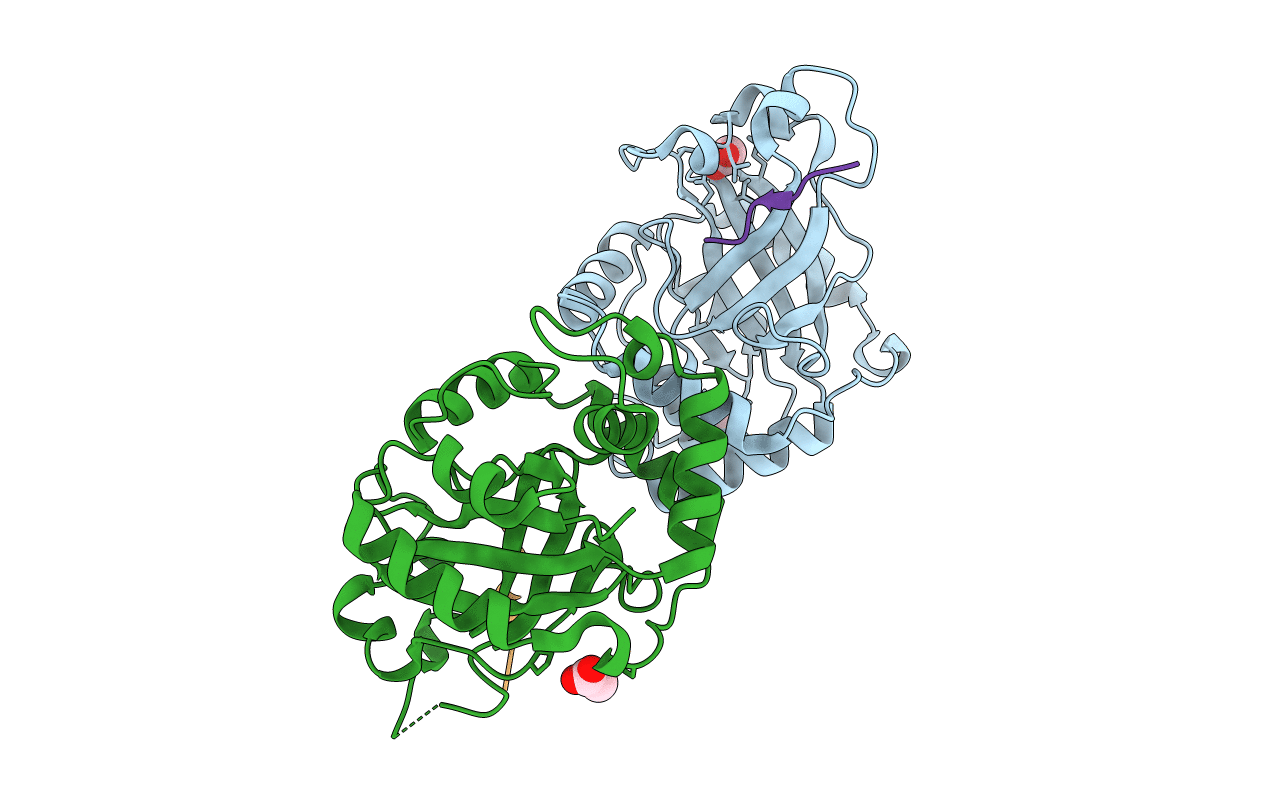
2PBK image
Deposition Date 2007-03-28
Release Date 2007-12-25
Last Version Date 2024-10-16
Entry Detail
PDB ID:
2PBK
Title:
Crystal structure of KSHV protease in complex with hexapeptide phosphonate inhibitor
Biological Source:
Source Organism(s):
Expression System(s):
Method Details:
Experimental Method:
Resolution:
1.73 Å
R-Value Free:
0.20
R-Value Work:
0.16
R-Value Observed:
0.16
Space Group:
P 1 21 1

Macromolecular Entities
Structures with similar UniProt ID
Protein Blast
Polymer Type:polypeptide(L)
Molecule:KSHV protease
Mutagens:S204G
Chain IDs:A, B
Chain Length:228
Number of Molecules:2
Biological Source:Human herpesvirus
Polymer Type:polypeptide(L)
Molecule:hexapeptide phosphonate inhibitor
Chain IDs:C, D
Chain Length:7
Number of Molecules:2
Biological Source:
Modified Residue
Compound ID Chain ID Parent Comp ID Details 2D Image
TBG C VAL 3-METHYL-L-VALINE
Ligand Molecules
Peptide-like Molecules
PRD_000347
Primary Citation
Substrate modulation of enzyme activity in the herpesvirus protease family.
J.Mol.Biol. 373 913 923 (2007)
PMID: 17870089 DOI: 10.1016/j.jmb.2007.07.073

Abstact

The herpesvirus proteases are an example in which allosteric regulation of an enzyme activity is achieved through the formation of quaternary structure. Here, we report a 1.7 A resolution structure of Kaposi's sarcoma-associated herpesvirus protease in complex with a hexapeptide transition state analogue that stabilizes the dimeric state of the enzyme. Extended substrate binding sites are induced upon peptide binding. In particular, 104 A2 of surface are buried in the newly formed S4 pocket when tyrosine binds at this site. The peptide inhibitor also induces a rearrangement of residues that stabilizes the oxyanion hole and the dimer interface. Concomitant with the structural changes, an increase in catalytic efficiency of the enzyme results upon extended substrate binding. A nearly 20-fold increase in kcat/KM results upon extending the peptide substrate from a tetrapeptide to a hexapeptide exclusively due to a KM effect. This suggests that the mechanism by which herpesvirus proteases achieve their high specificity is by using extended substrates to modulate both the structure and activity of the enzyme.

Legend

Protein

Chemical

Disease

Primary Citation of related structures
Feedback Form
Name
Email
Institute
Feedback