Planned Maintenance: Some services may turn out to be unavailable from 15th January, 2026 to 16th January, 2026. We apologize for the inconvenience!

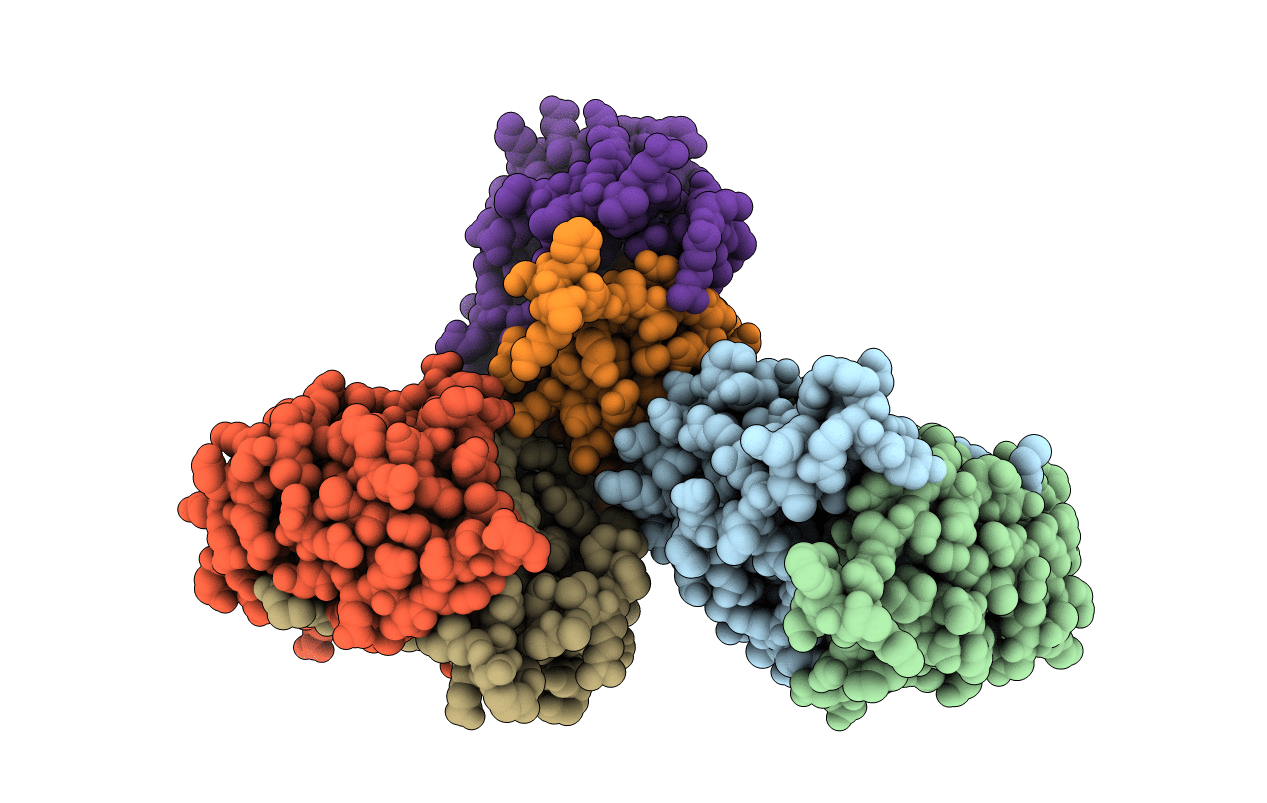
2P7M image
Deposition Date 2007-03-20
Release Date 2007-07-17
Last Version Date 2023-08-30
Entry Detail
PDB ID:
2P7M
Title:
Crystal structure of monoclinic form of genomically encoded fosfomycin resistance protein, FosX, from Listeria monocytogenes at pH 6.5
Biological Source:
Source Organism(s):
Expression System(s):
Method Details:
Experimental Method:
Resolution:
1.85 Å
R-Value Free:
0.26
R-Value Work:
0.23
Space Group:
C 1 2 1
Macromolecular Entities
Structures with similar UniProt ID
Protein Blast
Polymer Type:polypeptide(L)
Molecule:Glyoxalase family protein
Chain IDs:A, B, C, D, E, F
Chain Length:133
Number of Molecules:6
Biological Source:Listeria monocytogenes
Primary Citation
Structure and Mechanism of the Genomically Encoded Fosfomycin Resistance Protein, FosX, from Listeria monocytogenes.
Biochemistry 46 8110 8120 (2007)
PMID: 17567049 DOI: 10.1021/bi700625p

Abstact

The fosfomycin resistance protein, FosX, catalyzes the hydration of the antibiotic fosfomycin, (1R,2S)-epoxypropylphosphonic acid. Genes encoding the enzyme are found in several pathogenic microorganisms. The structure and mechanism of action of the genomically encoded FosX enzyme from Listeria monocytogenes (FosXLMATCC) obtained from the American Type Culture Collection are reported. The gene harbors 31 point mutations, and as a consequence, the protein differs in 10 amino acid residues from the previously reported FosX encoded in the genome of the EGD strain of L. monocytogenes (FosXLMEGD). The FosXLMATCC enzyme is shown to catalyze the addition of water to the C1 position of the antibiotic with inversion of configuration at C1. The reaction involves Mn(II) activation of the oxirane oxygen and E44 acting as a general base. The structure of the enzyme has been determined from six different crystal forms of the protein. The structures of the enzyme without metal bound are similar but differ in the loop regions. Perhaps the most informative structure is the one with the product bound. This structure shows that the phosphonate group of the product is bound in an orientation that is different than that of fosfomycin bound to the related enzyme, FosA. The implication is that the substrate may also be bound in a different orientation in FosX. A high-resolution structure (1.44 A resolution) of the enzyme reveals a unique conformation in which the C-terminal tail of the protein coordinates to the Mn(II) center via the carboxylate of E126. The kinetic characterization of the E126Q mutant indicates that this conformation of the protein is probably not relevant to the function of the enzyme. Kinetic analysis of mutants of active site residue E44 is consistent with its proposed roll as a general base catalyst in the addition of water to the antibiotic.

Legend

Protein

Chemical

Disease

Primary Citation of related structures
Feedback Form
Name
Email
Institute
Feedback