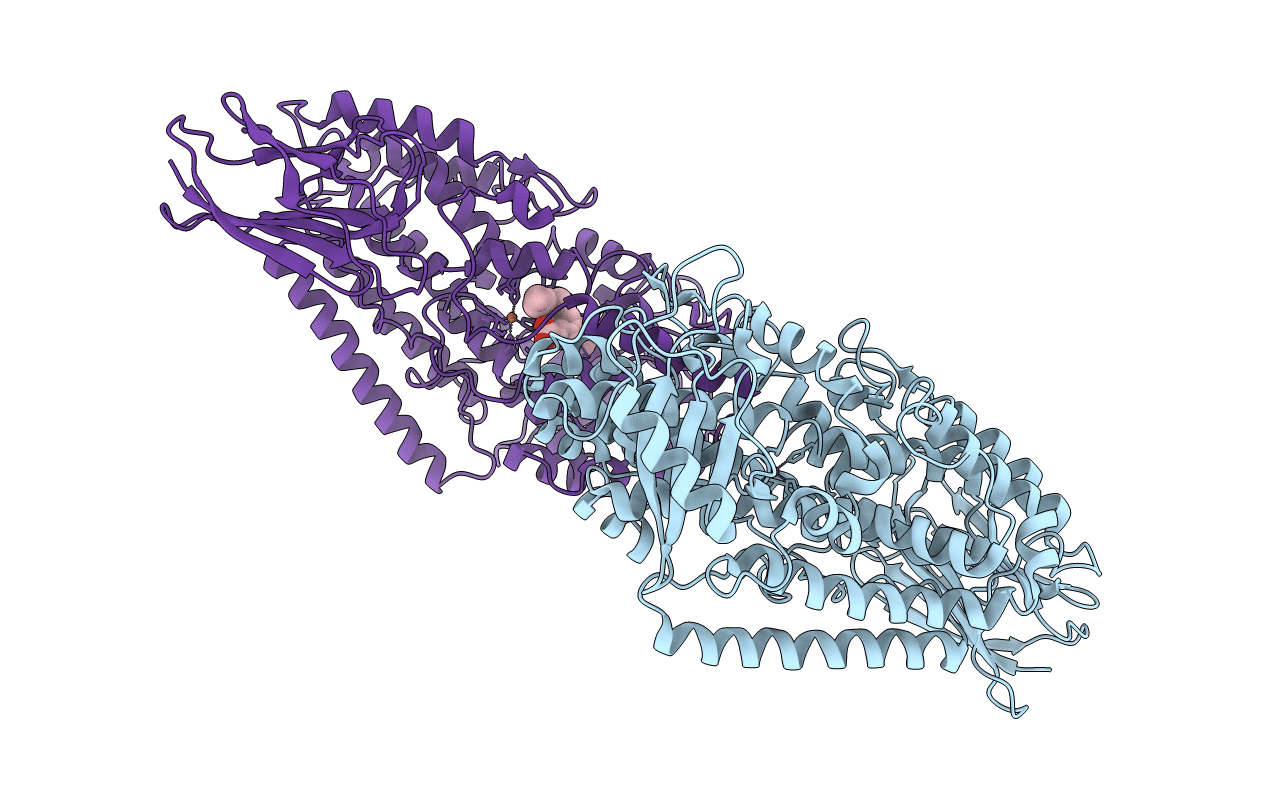
2P0M image
Deposition Date 2007-02-28
Release Date 2007-10-09
Last Version Date 2024-03-13
Entry Detail
PDB ID:
2P0M
Keywords:
Title:
Revised structure of rabbit reticulocyte 15S-lipoxygenase
Biological Source:
Source Organism:
Method Details:
Experimental Method:
Resolution:
2.40 Å
R-Value Free:
0.23
R-Value Work:
0.19
R-Value Observed:
0.19
Space Group:
H 3
Macromolecular Entities
Structures with similar UniProt ID
Protein Blast
Polymer Type:polypeptide(L)
Molecule:Arachidonate 15-lipoxygenase
Gene (Uniprot):ALOX15
Chain IDs:A, B
Chain Length:662
Number of Molecules:2
Biological Source:Oryctolagus cuniculus
Primary Citation
Conformational flexibility in mammalian 15S-lipoxygenase: Reinterpretation of the crystallographic data.
Proteins 70 1023 1032 (2008)
PMID: 17847087 DOI: 10.1002/prot.21590

Abstact

Lipoxygenases (LOXs) are a family of nonheme iron dioxygenases that catalyze the regioselective and stereospecific hydroperoxidation of polyunsaturated fatty acids, and are involved in a variety of inflammatory diseases and cancers. The crystal structure of rabbit 15S-LOX1 that was reported by Gillmor et al. in 1997 has played key roles for understanding the properties of mammalian LOXs. In this structure, three segments, including 12 residues in the superficial alpha2 helix, are absent and have usually been described as "disordered." By reinterpreting the original crystallographic data we were able to elucidate two different conformations of the molecule, both having well ordered alpha2 helices. Surprisingly, one molecule contained an inhibitor and the other did not, thereby adopting a closed and an open form, respectively. They differed in the conformation of the segments that were absent in the original structure, which is highlighted by a 12 A movement of alpha2. Consequently, they showed a difference in the size and shape of the substrate-binding cavity. The new model should provide new insight into the catalytic mechanism involving induced conformational change of the binding pocket. It may also be helpful for the structure-based design of LOX inhibitors.

Legend

Protein

Chemical

Disease

Primary Citation of related structures
Feedback Form
Name
Email
Institute
Feedback