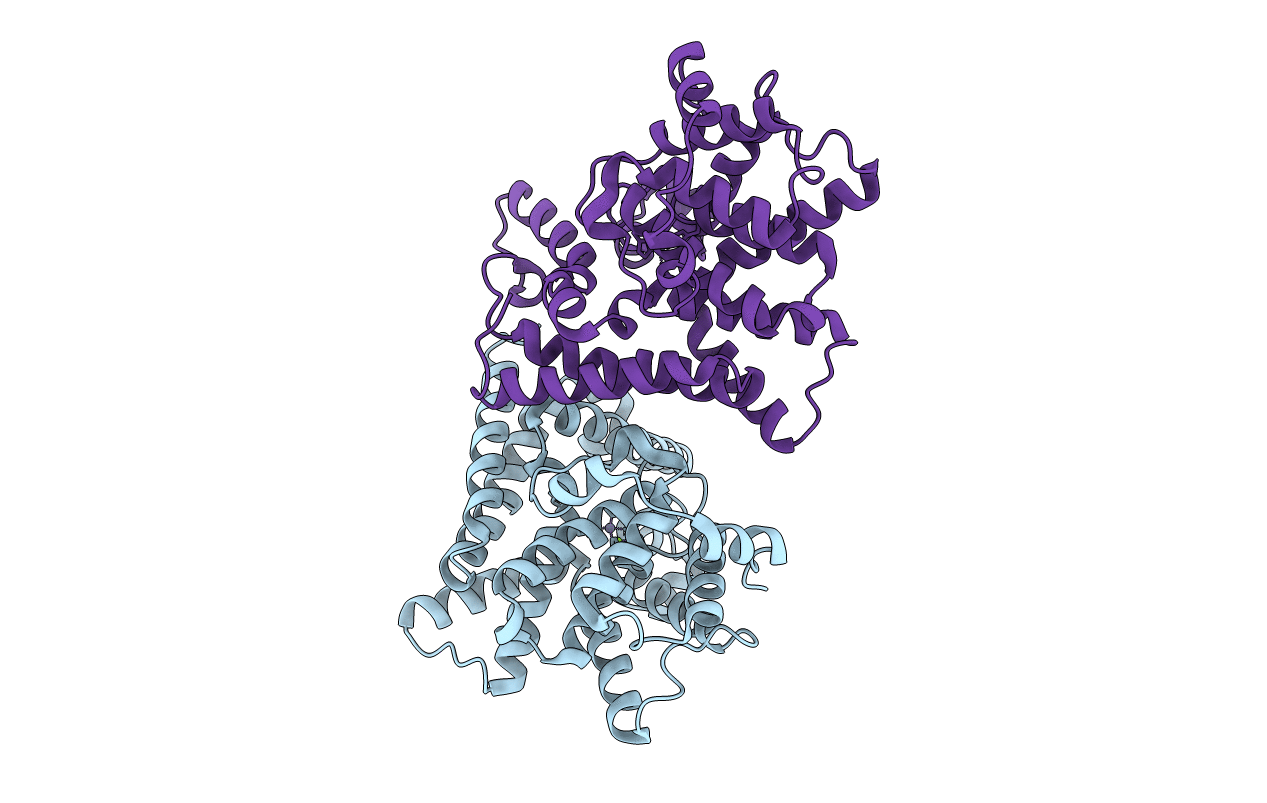
2OUV image
Deposition Date 2007-02-12
Release Date 2007-03-20
Last Version Date 2024-04-03
Entry Detail
PDB ID:
2OUV
Keywords:
Title:
crystal structure of pde10a2 mutant of D564N
Biological Source:
Source Organism:
Homo sapiens (Taxon ID: 9606)
Host Organism:
Method Details:
Experimental Method:
Resolution:
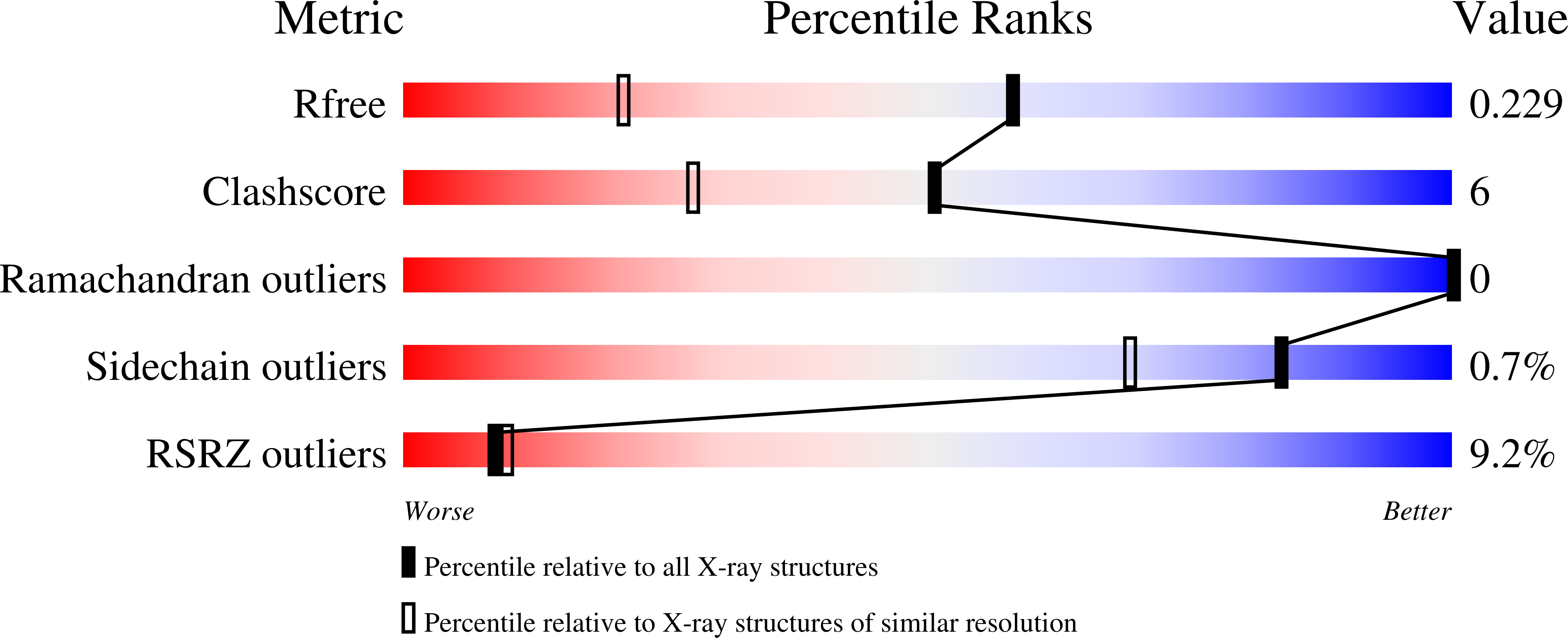
1.56 Å
R-Value Free:
0.22
R-Value Work:
0.20
Space Group:
P 21 21 21
Macromolecular Entities
Structures with similar UniProt ID
Protein Blast
Polymer Type:polypeptide(L)
Molecule:cAMP and cAMP-inhibited cGMP 3',5'-cyclic phosphodiesterase 10A
Gene (Uniprot):PDE10A
Mutagens:D564N
Chain IDs:A, B
Chain Length:331
Number of Molecules:2
Biological Source:Homo sapiens
Primary Citation
From the Cover: Structural insight into substrate specificity of phosphodiesterase 10.
Proc.Natl.Acad.Sci.Usa 104 5782 5787 (2007)
PMID: 17389385 DOI: 10.1073/pnas.0700279104

Abstact

Phosphodiesterases (PDEs) hydrolyze the second messengers cAMP and cGMP. It remains unknown how individual PDE families selectively recognize cAMP and cGMP. This work reports structural studies on substrate specificity. The crystal structures of the catalytic domains of the D674A and D564N mutants of PDE10A2 in complex with cAMP and cGMP reveal that two substrates bind to the active site with the same syn configuration but different orientations and interactions. The products AMP and GMP bind PDE10A2 with the anti configuration and interact with both divalent metals, in contrast to no direct contact of the substrates. The structures suggest that the syn configurations of cAMP and cGMP are the genuine substrates for PDE10 and the specificity is achieved through the different interactions and conformations of the substrates. The PDE10A2 structures also show that the conformation of the invariant glutamine is locked by two hydrogen bonds and is unlikely to switch for substrate recognition. Sequence alignment shows a potential pocket, in which variation of amino acids across PDE families defines the size and shape of the pocket and thus determines the substrate specificity.

Legend

Protein

Chemical

Disease

Primary Citation of related structures
Feedback Form
Name
Email
Institute
Feedback