2ORG image
Deposition Date 2007-02-02
Release Date 2007-03-27
Last Version Date 2023-08-30
Entry Detail
PDB ID:
2ORG
Keywords:
Title:
Directing Macromolecular Conformation Through Halogen Bonds
Biological Source:
Source Organism:
Method Details:
Experimental Method:
Resolution:
2.00 Å
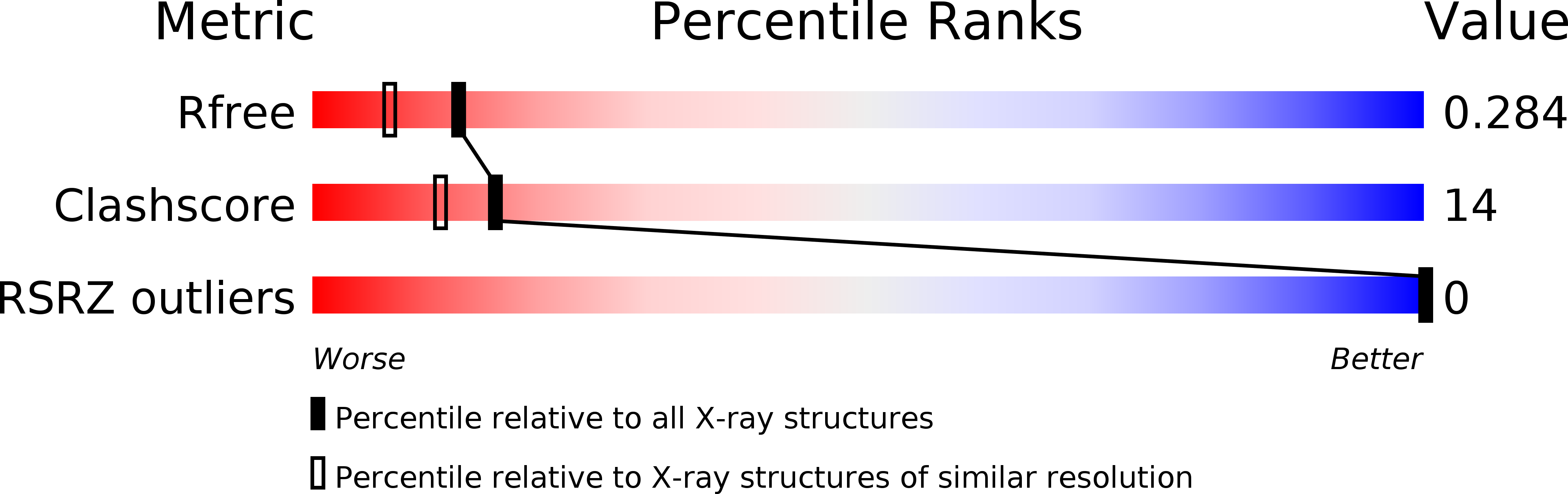
R-Value Free:
0.27
R-Value Work:
0.21
R-Value Observed:
0.21
Space Group:
C 1 2 1
Macromolecular Entities
Polymer Type:polydeoxyribonucleotide
Molecule:DNA (5'-D(*CP*CP*GP*GP*TP*AP*(BRU)P*CP*GP*G)-3')
Chain IDs:A
Chain Length:10
Number of Molecules:1
Biological Source:
Modified Residue
Compound ID Chain ID Parent Comp ID Details 2D Image
BRU A DU ?
Primary Citation
Directing macromolecular conformation through halogen bonds.
Proc.Natl.Acad.Sci.Usa 104 6188 6193 (2007)
PMID: 17379665 DOI: 10.1073/pnas.0610531104

Abstact

The halogen bond, a noncovalent interaction involving polarizable chlorine, bromine, or iodine molecular substituents, is now being exploited to control the assembly of small molecules in the design of supramolecular complexes and new materials. We demonstrate that a halogen bond formed between a brominated uracil and phosphate oxygen can be engineered to direct the conformation of a biological molecule, in this case to define the conformational isomer of a four-stranded DNA junction when placed in direct competition against a classic hydrogen bond. As a result, this bromine interaction is estimated to be approximately 2-5 kcal/mol stronger than the analogous hydrogen bond in this environment, depending on the geometry of the halogen bond. This study helps to establish halogen bonding as a potential tool for the rational design and construction of molecular materials with DNA and other biological macromolecules.

Legend

Protein

Chemical

Disease

Primary Citation of related structures
Feedback Form
Name
Email
Institute
Feedback