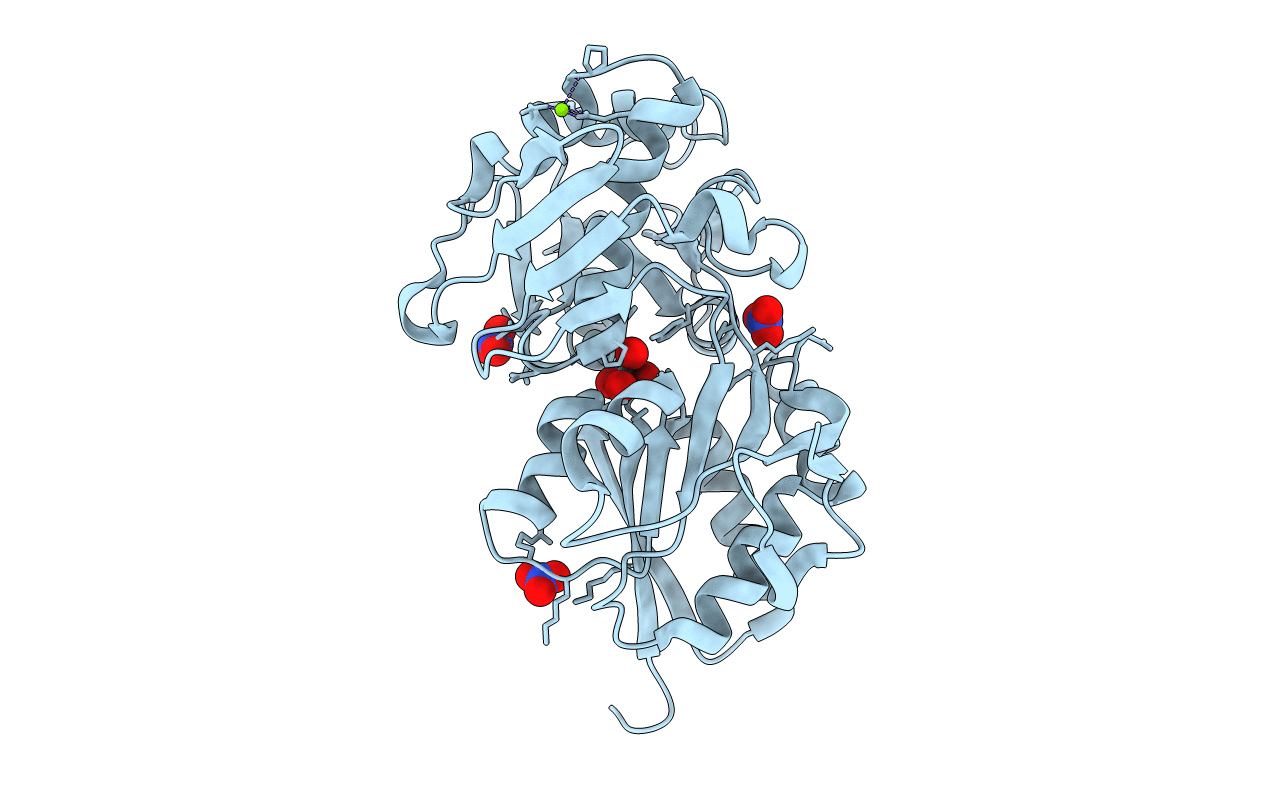
2ONR image
Deposition Date 2007-01-24
Release Date 2007-03-06
Last Version Date 2023-12-27
Entry Detail
PDB ID:
2ONR
Title:
Crystal structure of A. fulgidus periplasmic binding protein ModA with bound molybdate
Biological Source:
Source Organism:
Host Organism:
Method Details:
Experimental Method:
Resolution:
1.60 Å
R-Value Free:
0.23
R-Value Work:
0.17
R-Value Observed:
0.17
Space Group:
P 41 21 2

Macromolecular Entities
Structures with similar UniProt ID
Protein Blast
Polymer Type:polypeptide(L)
Molecule:UPF0100 protein AF_0094
Gene (Uniprot):wtpA
Chain IDs:A
Chain Length:314
Number of Molecules:1
Biological Source:Archaeoglobus fulgidus DSM 4304
Primary Citation
Structure of an ABC transporter in complex with its binding protein.
Nature 446 213 216 (2007)
PMID: 17322901 DOI: 10.1038/nature05626

Abstact

ATP-binding cassette (ABC) transporter proteins carry diverse substrates across cell membranes. Whereas clinically relevant ABC exporters are implicated in various diseases or cause multidrug resistance of cancer cells, bacterial ABC importers are essential for the uptake of nutrients, including rare elements such as molybdenum. A detailed understanding of their mechanisms requires direct visualization at high resolution and in distinct conformations. Our recent structure of the multidrug ABC exporter Sav1866 has revealed an outward-facing conformation of the transmembrane domains coupled to a closed conformation of the nucleotide-binding domains, reflecting the ATP-bound state. Here we present the 3.1 A crystal structure of a putative molybdate transporter (ModB2C2) from Archaeoglobus fulgidus in complex with its binding protein (ModA). Twelve transmembrane helices of the ModB subunits provide an inward-facing conformation, with a closed gate near the external membrane boundary. The ATP-hydrolysing ModC subunits reveal a nucleotide-free, open conformation, whereas the attached binding protein aligns the substrate-binding cleft with the entrance to the presumed translocation pathway. Structural comparison of ModB2C2A with Sav1866 suggests a common alternating access and release mechanism, with binding of ATP promoting an outward-facing conformation and dissociation of the hydrolysis products promoting an inward-facing conformation.

Legend

Protein

Chemical

Disease

Primary Citation of related structures
Feedback Form
Name
Email
Institute
Feedback