2OKS image
Deposition Date 2007-01-17
Release Date 2007-02-13
Last Version Date 2023-08-30
Entry Detail
PDB ID:
2OKS
Keywords:
Title:
X-ray Structure of a DNA Repair Substrate Containing an Alkyl Interstrand Crosslink at 1.65 Resolution
Biological Source:
Source Organism:
Method Details:
Experimental Method:
Resolution:
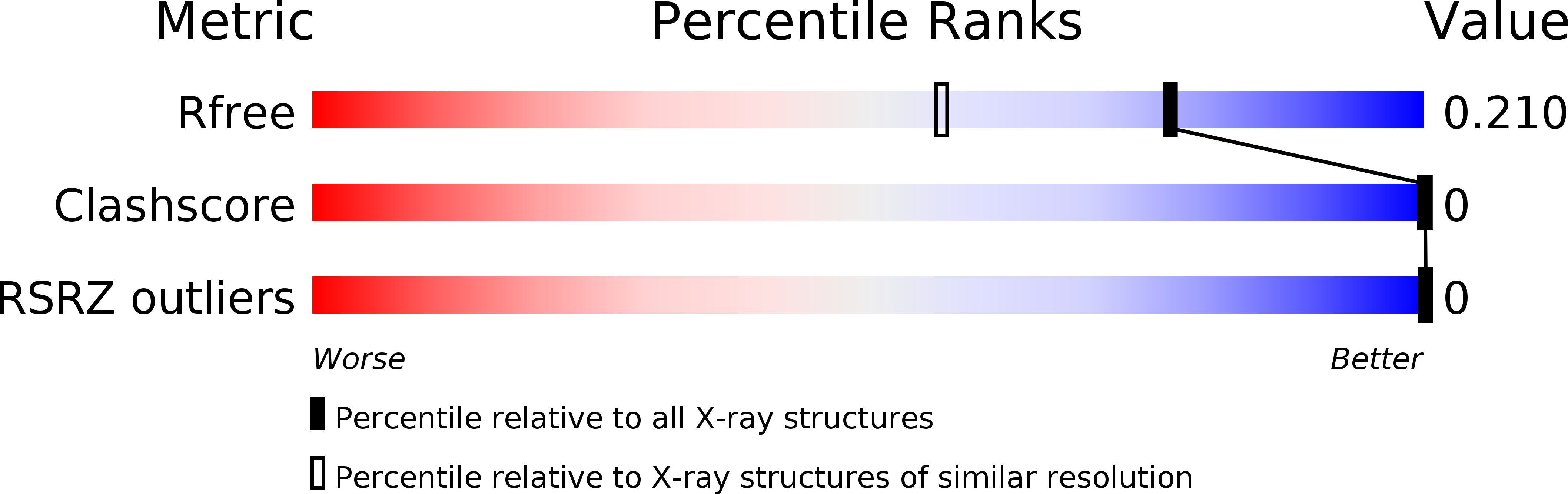
1.65 Å
R-Value Free:
0.20
R-Value Work:
0.18
Space Group:
C 1 2 1
Macromolecular Entities
Polymer Type:polydeoxyribonucleotide
Molecule:5'-D(*CP*CP*AP*AP*(C34)P*GP*TP*TP*GP*G)-3'
Chain IDs:A
Chain Length:10
Number of Molecules:1
Biological Source:
Modified Residue
Compound ID Chain ID Parent Comp ID Details 2D Image
C34 A DC ?
Ligand Molecules
Primary Citation
Structure of a DNA repair substrate containing an alkyl interstrand cross-link at 1.65 a resolution.
Biochemistry 46 4545 4553 (2007)
PMID: 17375936 DOI: 10.1021/bi700109r

Abstact

Chemotherapeutic alkylating agents, such as bifunctional nitrogen mustards and cisplatins, generate interstrand DNA cross-links that inhibit cell proliferation by arresting DNA transcription and replication. A synthetic N4C-ethyl-N4C interstrand cross-link between opposing cytidines mimics the DNA damage produced by this class of clinically important compounds and can be synthesized in large quantities to study the repair, physical properties, and structures of these DNA adducts. The X-ray structure of a DNA duplex d(CCAAC*GTTGG)2 containing a synthetic N4C-ethyl-N4C interstrand cross-link between the cytosines of the central CpG step (*) has been determined at 1.65 A resolution. This structure reveals that the ethyl cross-link in the CpG major groove does not significantly disrupt the B-form DNA helix. Comparison of the N4C-ethyl-N4C cross-linked structure with the structure of an un-cross-linked oligonucleotide of the same sequence reveals that the cross-link selectively stabilizes a preexisting alternative conformation. The conformation preferred by the cross-linked DNA is constrained by the geometry of the ethyl group bridging the cytosine amines. Characteristics of the cross-linked CpG step include subtle differences in the roll of the base pairs, optimized Watson-Crick hydrogen bonds, and loss of a divalent cation binding site. Given that the N4C-ethyl-N4C cross-link stabilizes a preexisting conformation of the CpG step, this synthetically accessible substrate presents an ideal model system for studying the genomic effects of covalently coupling the DNA strands, independent of gross alterations in DNA structure.

Legend

Protein

Chemical

Disease

Primary Citation of related structures
Feedback Form
Name
Email
Institute
Feedback