2OJT image
Deposition Date 2007-01-14
Release Date 2007-04-03
Last Version Date 2023-08-30
Entry Detail
PDB ID:
2OJT
Title:
Structure and mechanism of kainate receptor modulation by anions
Biological Source:
Source Organism:
Host Organism:
Method Details:
Experimental Method:
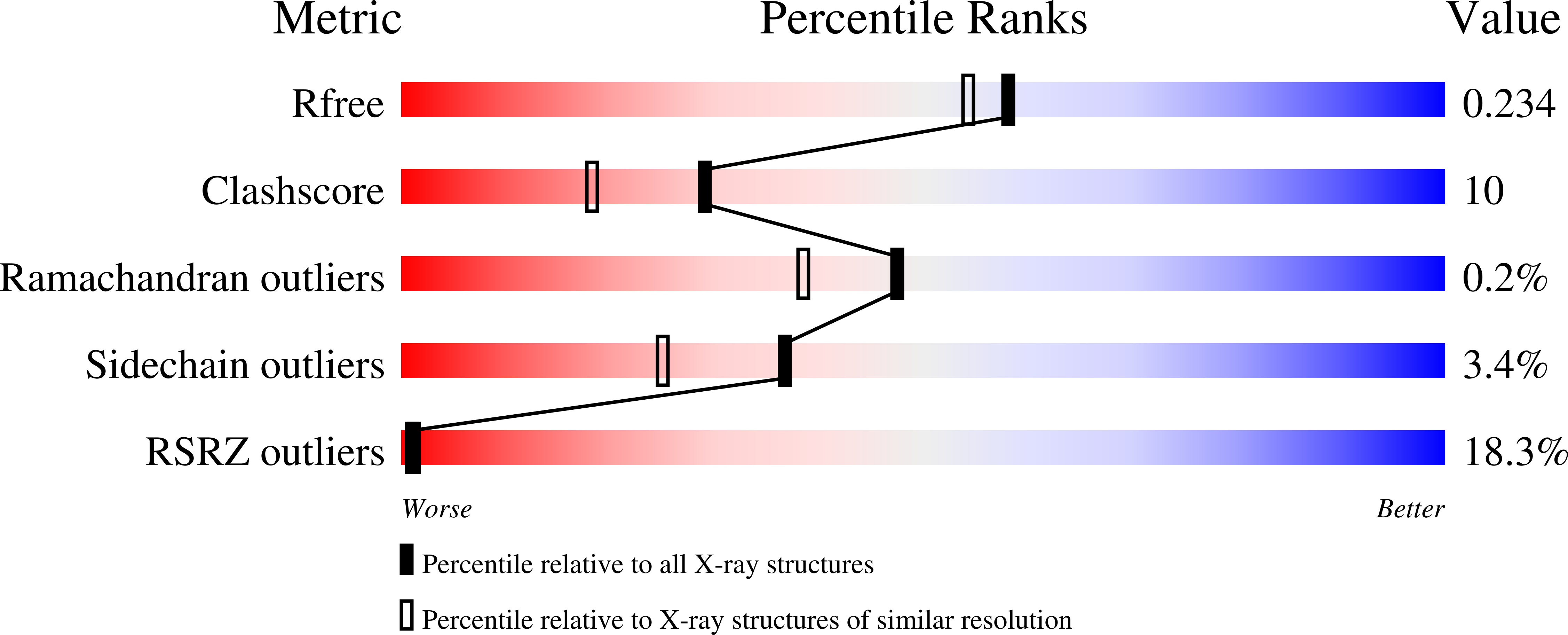
Resolution:
1.95 Å
R-Value Free:
0.23
R-Value Work:
0.19
R-Value Observed:
0.19
Space Group:
C 2 2 21
Macromolecular Entities
Structures with similar UniProt ID
Protein Blast
Polymer Type:polypeptide(L)
Molecule:Glutamate receptor, ionotropic kainate 1
Gene (Uniprot):Grik1
Mutagens:E821S
Chain IDs:A, B
Chain Length:258
Number of Molecules:2
Biological Source:Rattus norvegicus
Primary Citation
Structure and mechanism of kainate receptor modulation by anions.
Neuron 53 829 841 (2007)
PMID: 17359918 DOI: 10.1016/j.neuron.2007.02.025

Abstact

L-glutamate, the major excitatory neurotransmitter in the human brain, activates a family of ligand-gated ion channels, the major subtypes of which are named AMPA, kainate, and NMDA receptors. In common with many signal transduction proteins, glutamate receptors are modulated by ions and small molecules, including Ca(2+), Mg(2+), Zn(2+), protons, polyamines, and steroids. Strikingly, the activation of kainate receptors by glutamate requires the presence of both Na(+) and Cl(-) in the extracellular solution, and in the absence of these ions, receptor activity is abolished. Here, we identify the site and mechanism of action of anions. Surprisingly, we find that Cl(-) ions are essential structural components of kainate receptors. Cl(-) ions bind in a cavity formed at the interface between subunits in a dimer pair. In the absence of Cl(-), dimer stability is reduced, the rate of desensitization increases, and the fraction of receptors competent for activation by glutamate drops precipitously.

Legend

Protein

Chemical

Disease

Primary Citation of related structures
Feedback Form
Name
Email
Institute
Feedback