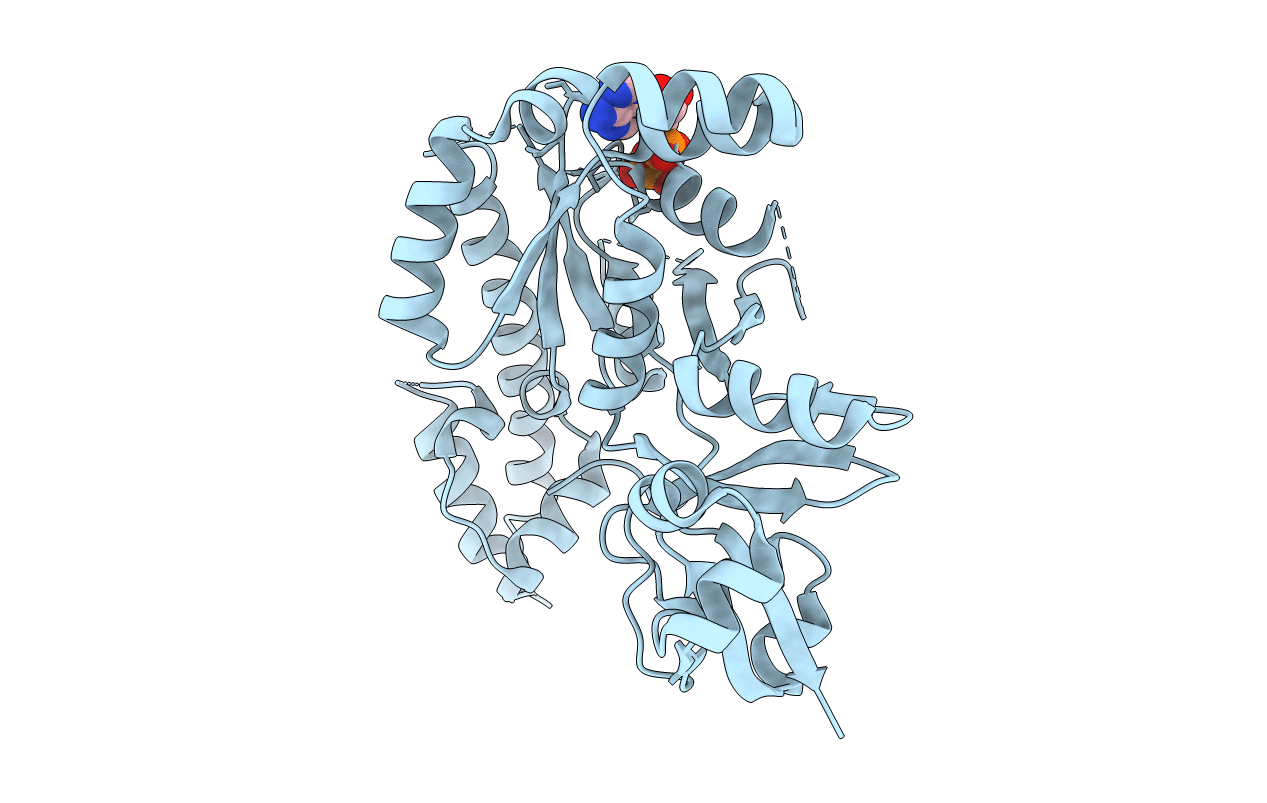
2OHF image
Deposition Date 2007-01-10
Release Date 2007-04-24
Last Version Date 2023-08-30
Entry Detail
PDB ID:
2OHF
Keywords:
Title:
Crystal structure of human OLA1 in complex with AMPPCP
Biological Source:
Source Organism:
Homo sapiens (Taxon ID: 9606)
Host Organism:
Method Details:
Experimental Method:
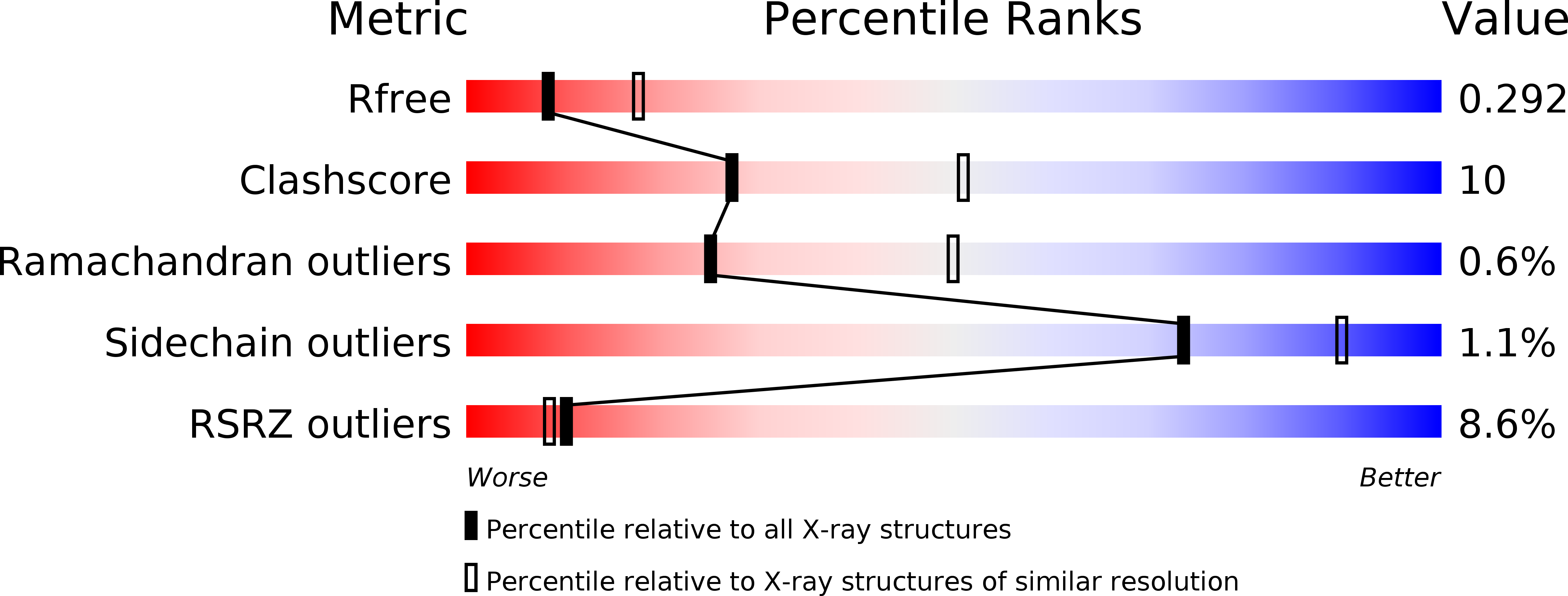
Resolution:
2.70 Å
R-Value Free:
0.28
R-Value Work:
0.23
R-Value Observed:
0.23
Space Group:
C 2 2 21
Macromolecular Entities
Structures with similar UniProt ID
Protein Blast
Polymer Type:polypeptide(L)
Molecule:GTP-binding protein 9
Chain IDs:A
Chain Length:396
Number of Molecules:1
Biological Source:Homo sapiens
Ligand Molecules
Primary Citation
Human OLA1 defines an ATPase subfamily in the Obg family of GTP-binding proteins
J.Biol.Chem. 282 19928 19937 (2007)
PMID: 17430889 DOI: 10.1074/jbc.M700541200

Abstact

Purine nucleotide-binding proteins build the large family of P-loop GTPases and related ATPases, which perform essential functions in all kingdoms of life. The Obg family comprises a group of ancient GTPases belonging to the TRAFAC (for translation factors) class and can be subdivided into several distinct protein subfamilies. The founding member of one of these subfamilies is the bacterial P-loop NTPase YchF, which had so far been assumed to act as GTPase. We have biochemically characterized the human homologue of YchF and found that it binds and hydrolyzes ATP more efficiently than GTP. For this reason, we have termed the protein hOLA1, for human Obg-like ATPase 1. Further biochemical characterization of YchF proteins from different species revealed that ATPase activity is a general but previously missed feature of the YchF subfamily of Obg-like GTPases. To explain ATP specificity of hOLA1, we have solved the x-ray structure of hOLA1 bound to the nonhydrolyzable ATP analogue AMPPCP. Our structural data help to explain the altered nucleotide specificity of YchF homologues and identify the Ola1/YchF subfamily of the Obg-related NTPases as an exceptional example of a single protein subfamily, which has evolved altered nucleotide specificity within a distinct protein family of GTPases.

Legend

Protein

Chemical

Disease

Primary Citation of related structures
Feedback Form
Name
Email
Institute
Feedback