2OD8 image
Deposition Date 2006-12-21
Release Date 2007-05-01
Last Version Date 2023-08-30
Entry Detail
PDB ID:
2OD8
Keywords:
Title:
Structure of a peptide derived from Cdc9 bound to PCNA
Biological Source:
Source Organism:
Method Details:
Experimental Method:
Resolution:
2.80 Å
R-Value Free:
0.28
R-Value Work:
0.24
R-Value Observed:
0.24
Space Group:
I 2 3
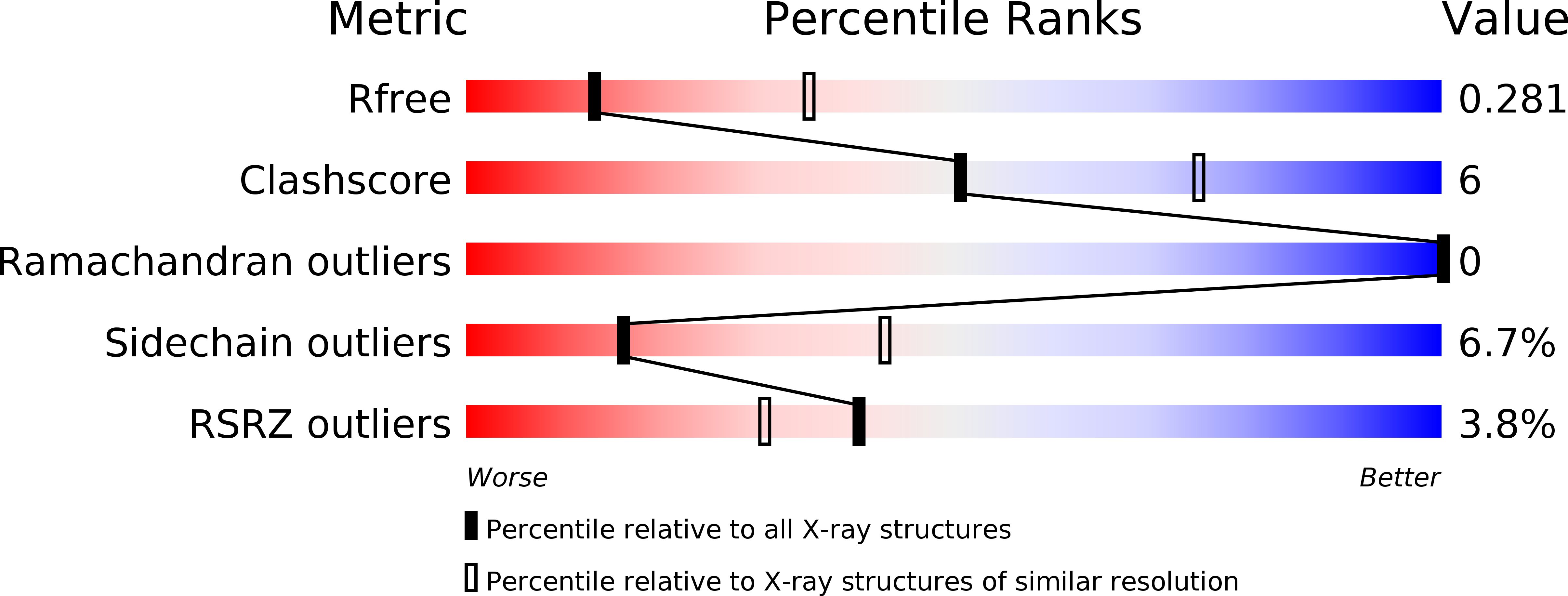
Macromolecular Entities
Structures with similar UniProt ID
Protein Blast
Polymer Type:polypeptide(L)
Molecule:Proliferating cell nuclear antigen
Gene (Uniprot):POL30
Chain IDs:A
Chain Length:258
Number of Molecules:1
Biological Source:Saccharomyces cerevisiae
Structures with similar UniProt ID
Protein Blast
Polymer Type:polypeptide(L)
Molecule:DNA ligase I, mitochondrial precursor
Gene (Uniprot):CDC9
Chain IDs:B
Chain Length:22
Number of Molecules:1
Biological Source:
Primary Citation
The C-terminal domain of yeast PCNA is required for physical and functional interactions with Cdc9 DNA ligase.
Nucleic Acids Res. 35 1624 1637 (2007)
PMID: 17308348 DOI: 10.1093/nar/gkm006

Abstact

There is compelling evidence that proliferating cell nuclear antigen (PCNA), a DNA sliding clamp, co-ordinates the processing and joining of Okazaki fragments during eukaryotic DNA replication. However, a detailed mechanistic understanding of functional PCNA:ligase I interactions has been incomplete. Here we present the co-crystal structure of yeast PCNA with a peptide encompassing the conserved PCNA interaction motif of Cdc9, yeast DNA ligase I. The Cdc9 peptide contacts both the inter-domain connector loop (IDCL) and residues near the C-terminus of PCNA. Complementary mutational and biochemical results demonstrate that these two interaction interfaces are required for complex formation both in the absence of DNA and when PCNA is topologically linked to DNA. Similar to the functionally homologous human proteins, yeast RFC interacts with and inhibits Cdc9 DNA ligase whereas the addition of PCNA alleviates inhibition by RFC. Here we show that the ability of PCNA to overcome RFC-mediated inhibition of Cdc9 is dependent upon both the IDCL and the C-terminal interaction interfaces of PCNA. Together these results demonstrate the functional significance of the beta-zipper structure formed between the C-terminal domain of PCNA and Cdc9 and reveal differences in the interactions of FEN-1 and Cdc9 with the two PCNA interfaces that may contribute to the co-ordinated, sequential action of these enzymes.

Legend

Protein

Chemical

Disease

Primary Citation of related structures
Feedback Form
Name
Email
Institute
Feedback