2O03 image
Deposition Date 2006-11-27
Release Date 2007-02-13
Last Version Date 2023-12-27
Entry Detail
PDB ID:
2O03
Keywords:
Title:
Crystal structure of FurB from M. tuberculosis- a Zinc uptake regulator
Biological Source:
Source Organism:
Host Organism:
Method Details:
Experimental Method:
Resolution:
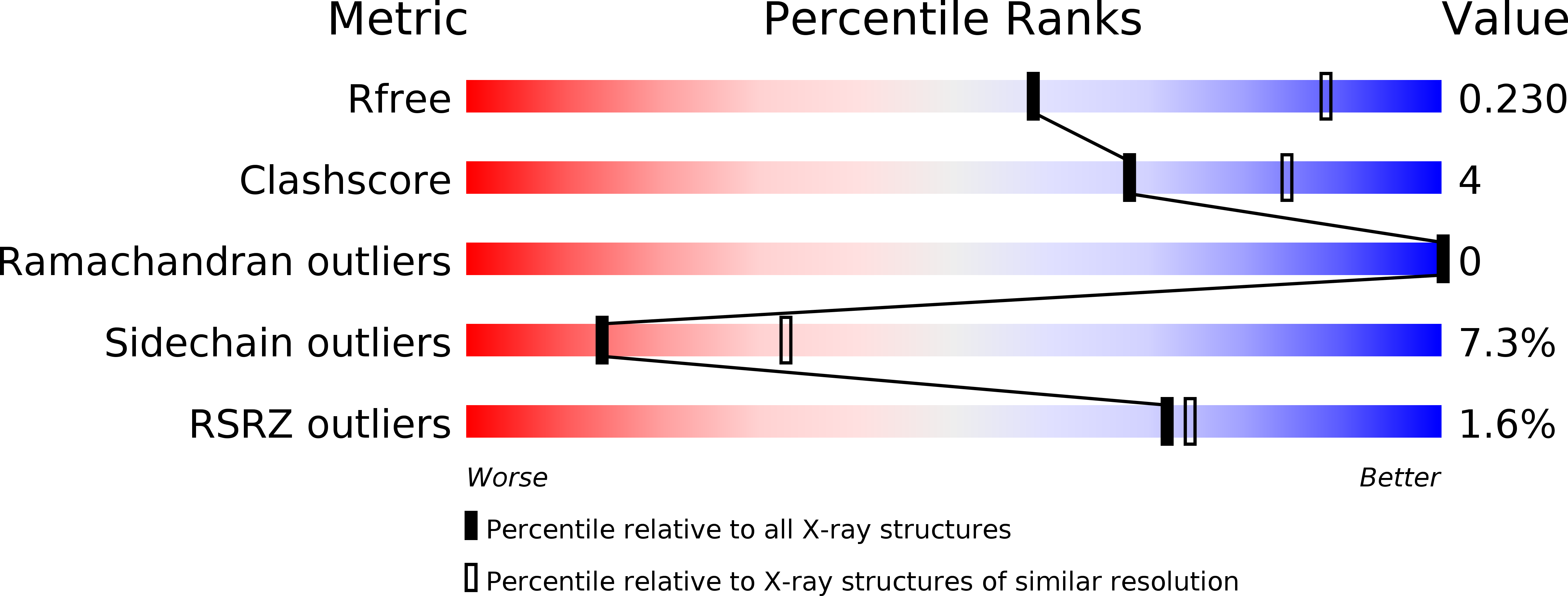
2.70 Å
R-Value Free:
0.23
R-Value Work:
0.23
R-Value Observed:
0.23
Space Group:
P 41 21 2
Macromolecular Entities
Structures with similar UniProt ID
Protein Blast
Polymer Type:polypeptide(L)
Molecule:probable Zinc uptake regulation protein FurB
Chain IDs:A
Chain Length:131
Number of Molecules:1
Biological Source:Mycobacterium tuberculosis
Ligand Molecules
Primary Citation
Crystal structure and function of the zinc uptake regulator FurB from Mycobacterium tuberculosis.
J.Biol.Chem. 282 9914 9922 (2007)
PMID: 17213192 DOI: 10.1074/jbc.M609974200

Abstact

Members of the ferric/zinc uptake regulator (Fur/Zur) family are the central metal-dependent regulator proteins in many Gram-negative and -positive bacteria. They are responsible for the control of a wide variety of basic physiological processes and the expression of important virulence factors in human pathogens. Therefore, Fur has gathered significant interest as a potential target for novel antibiotics. Here we report the crystal structure of FurB from Mycobacterium tuberculosis at a resolution of 2.7A, and we present biochemical and spectroscopic data that allow us to propose the functional role of this protein. Although the overall fold of FurB with an N-terminal DNA binding domain and a C-terminal dimerization domain is conserved among the Zur/Fur family, large differences in the spatial arrangement of the two domains with respect to each other can be observed. The biochemical and spectroscopic analysis presented here reveals that M. tuberculosis FurB is Zn(II)-dependent and is likely to control genes involved in the bacterial zinc uptake. The combination of the structural, spectroscopic, and biochemical results enables us to determine the structural basis for functional differences in this important family of bacterial regulators.

Legend

Protein

Chemical

Disease

Primary Citation of related structures
Feedback Form
Name
Email
Institute
Feedback