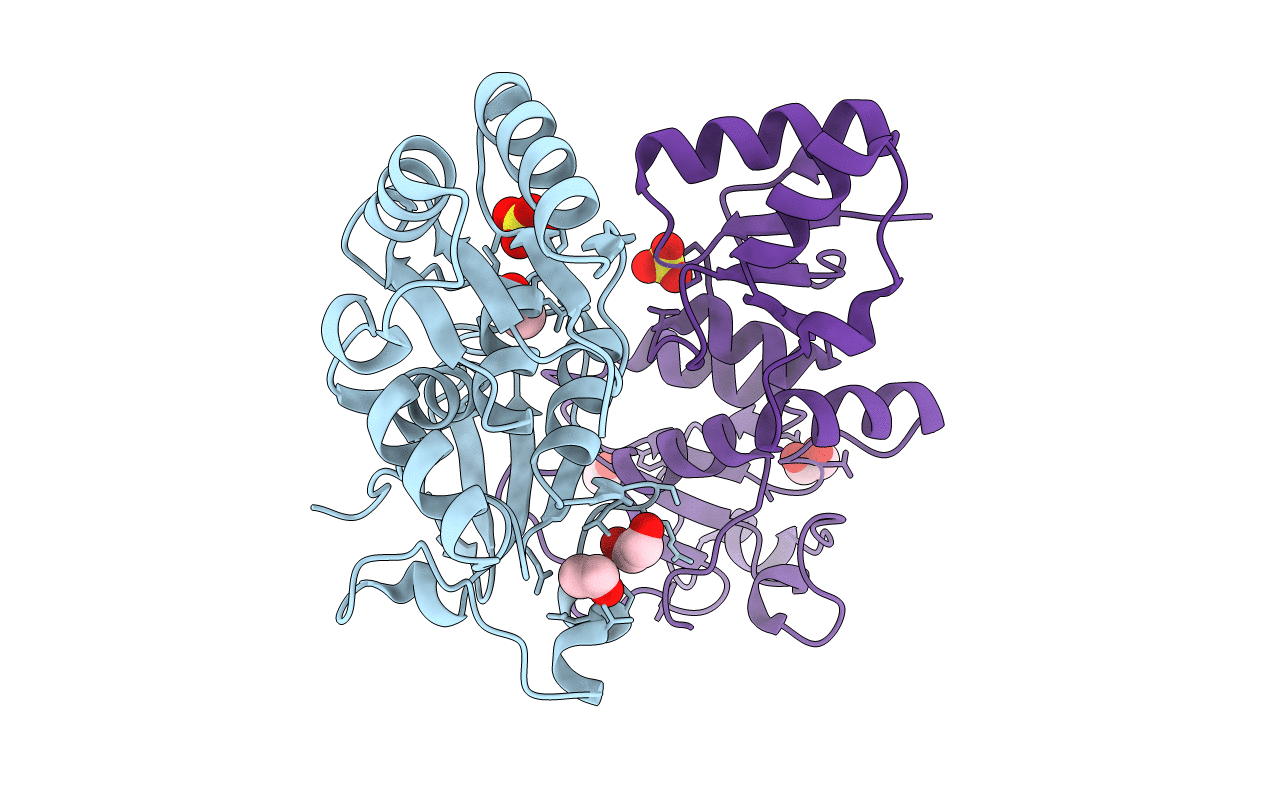
2NTE image
Deposition Date 2006-11-07
Release Date 2007-06-12
Last Version Date 2024-12-25
Entry Detail
PDB ID:
2NTE
Title:
Crystal Structure of the BARD1 BRCT Domains
Biological Source:
Source Organism(s):
Homo sapiens (Taxon ID: 9606)
Expression System(s):
Method Details:
Experimental Method:
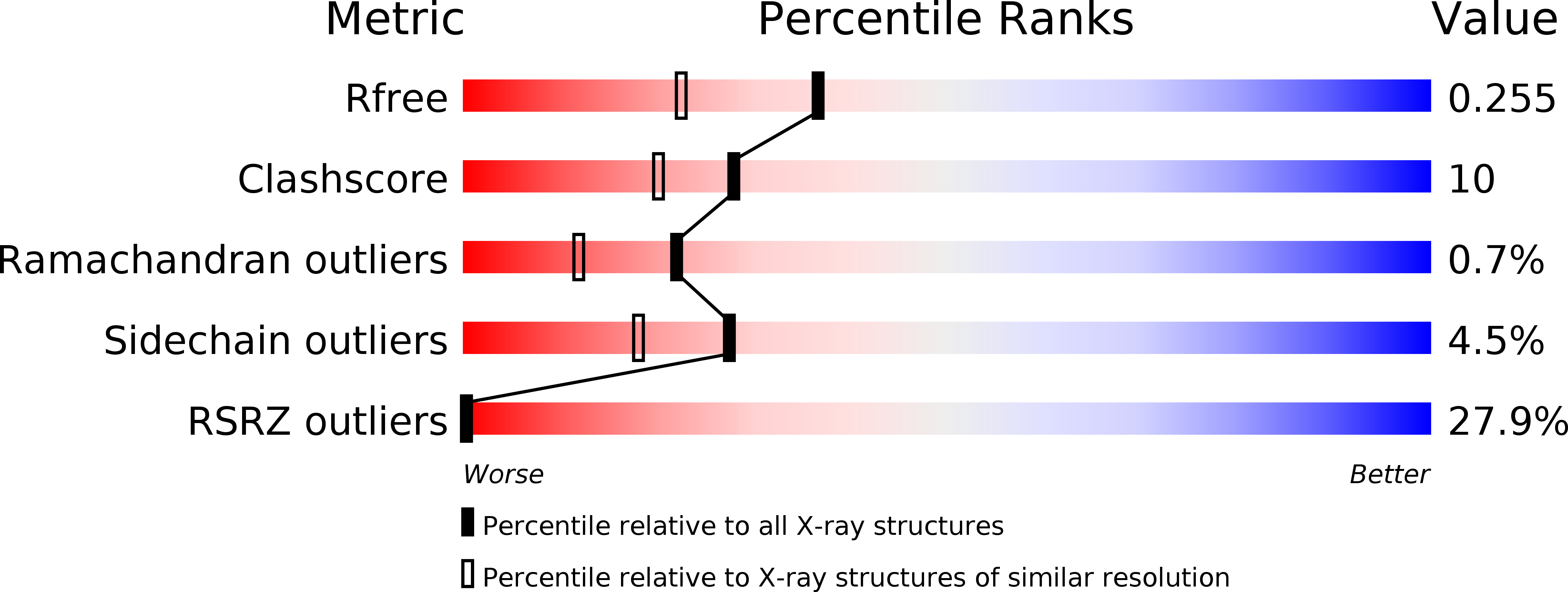
Resolution:
1.90 Å
R-Value Free:
0.24
R-Value Work:
0.19
R-Value Observed:
0.19
Space Group:
P 21 21 21
Macromolecular Entities
Structures with similar UniProt ID
Protein Blast
Polymer Type:polypeptide(L)
Molecule:BRCA1-associated RING domain protein 1
Gene (Uniprot):BARD1
Chain IDs:A, B
Chain Length:210
Number of Molecules:2
Biological Source:Homo sapiens
Primary Citation
Crystal structure of the BARD1 BRCT domains.
Biochemistry 46 7706 7712 (2007)
PMID: 17550235 DOI: 10.1021/bi700323t

Abstact

The interaction of the breast tumor suppressor BRCA1 with the protein BARD1 results in the formation of a heterodimeric complex that has ubiquitin ligase activity and plays central roles in cell cycle checkpoint control and DNA repair. Both BRCA1 and BARD1 possess a pair of tandem BRCT domains that interact in a phosphorylation-dependent manner with target proteins. We determined the crystal structure of the human BARD1 BRCT repeats (residues 568-777) at 1.9 A resolution. The composition and structure of the BARD1 phosphoserine-binding pocket P1 are strikingly similar to those of the BRCA1 and MDC1 BRCT domains, suggesting a similar mode of interaction with the phosphate group of the ligand. By contrast, the BARD1 BRCT selectivity pocket P2 exhibits distinct structural features, including two prominent histidine residues, His685 and His686, which may be important for ligand binding. The protonation state of these histidines has a marked effect on the calculated electrostatic potential in the vicinity of P2, raising the possibility that ligand recognition may be regulated by changes in pH. Importantly, the BARD1 BRCT structure provides insights into the mechanisms by which the cancer-associated missense mutations C645R, V695L, and S761N may adversely affect the structure and function of BARD1.

Legend

Protein

Chemical

Disease

Primary Citation of related structures
Feedback Form
Name
Email
Institute
Feedback